Center for Technology and Behavioral Health, Geisel School of Medicine at Dartmouth, Hanover, USA.
Department of Psychiatry, Harvard Medical School, Boston, USA.
Addict Sci Clin Pract. 2018 Sep 24;13(1):21. doi: 10.1186/s13722-018-0122-4.
While buprenorphine/naloxone (B/N) is approved for opioid use disorder treatment, effective delivery of B/N comes with significant challenges. Most notably, many patients do not take medication daily as prescribed; this non-adherence worsens treatment outcomes, increases healthcare costs, and leads to persistent worries of diversion among providers and policymakers. The present study examines the feasibility, usability, and acceptability of MySafeRx-a mobile technology platform integrating motivational coaching, adherence monitoring, and electronic pill dispensing designed to address the challenges of office-based opioid treatment (OBOT) with B/N.
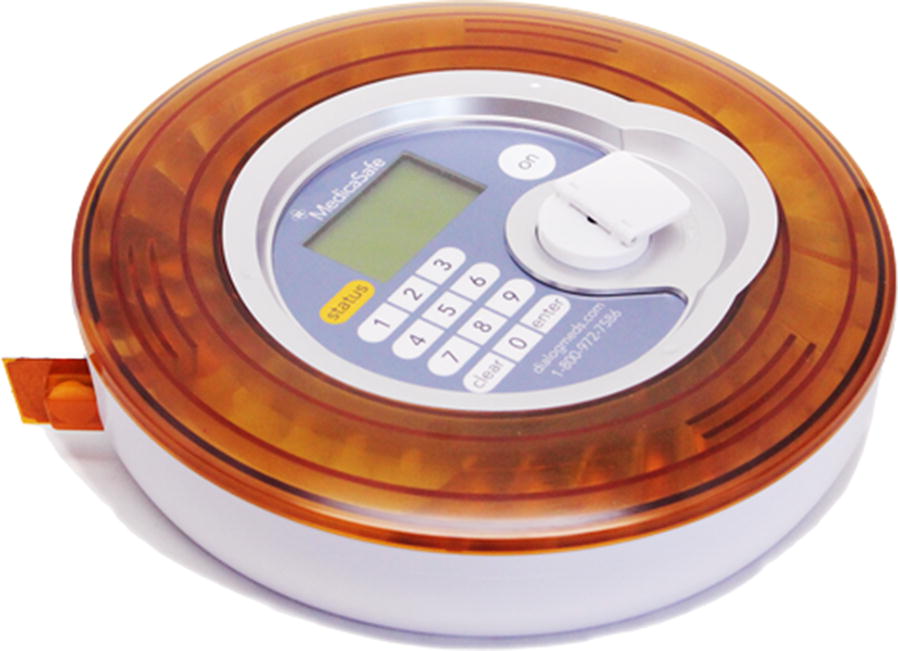
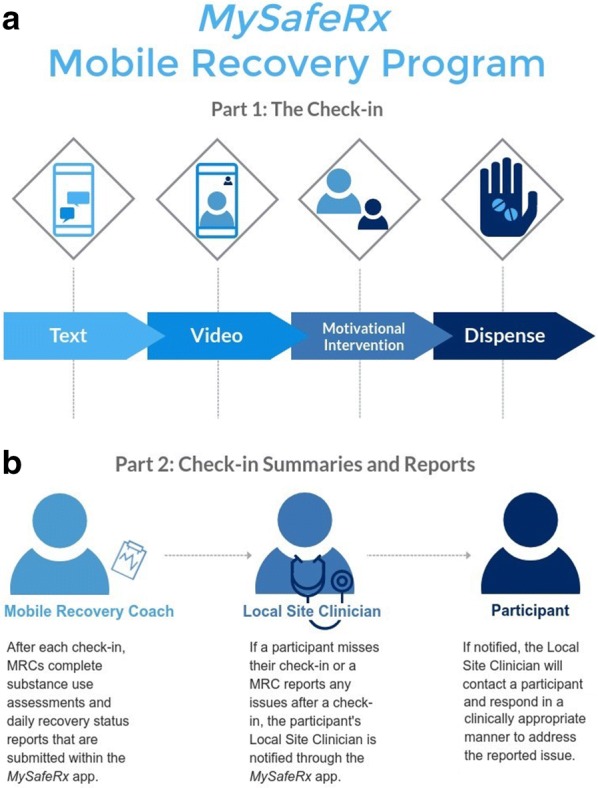
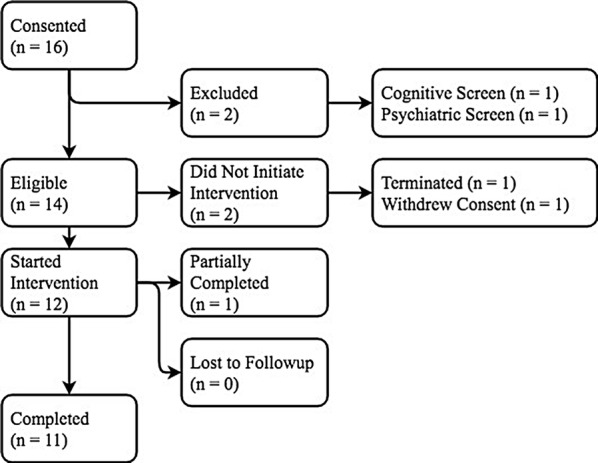
The MySafeRx platform integrates electronic pill dispensers, text-messaging, and videoconferencing to provide supervised self-administration of medication and daily motivational coaching through an Android app interface. High-risk early adults (18-39 years old) who were enrolled in OBOT with B/N and had documented illicit opioid use in the past month during opioid agonist therapy (n = 12) participated in a 28-day single-arm observational study of the MySafeRx platform in addition to standard care.
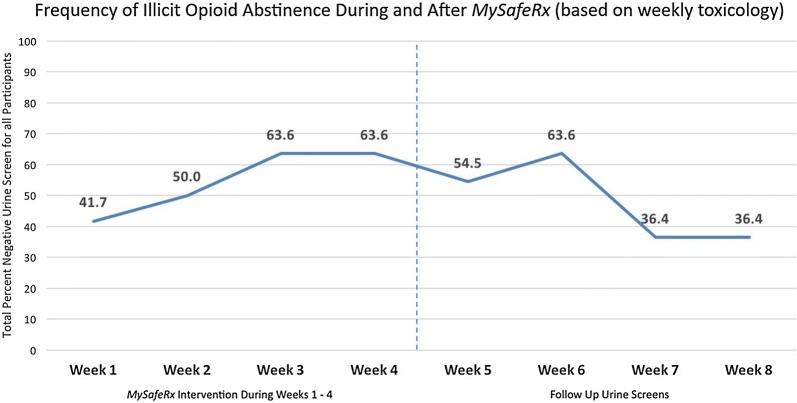
Two-thirds of participants who completed the study achieved an average of > 5 days per week of supervised B/N self-administration. Visual confirmation of medication adherence was demonstrated for an average of 72% of study days among all participants. All participants achieved platform technical proficiency within 60 min, reporting good levels of usability and acceptability. Illicit opioid abstinence rates confirmed by urine toxicology increased by 53% during MySafeRx but fell 43% within 3 weeks post-intervention.
The MySafeRx medication adherence and remote coaching mobile platform is acceptable and can be feasibly implemented in real-world opioid use disorder treatment settings during high-risk periods (i.e., initial stabilization, after illicit opioid lapse), resulting in reduced illicit opioid use; however, the effect did not last after intervention completion, suggesting longer duration or extended taper of program may be needed. ClinicalTrials.Gov NCT02942199 10/24/16 https://clinicaltrials.gov/ct2/show/NCT02942199.
布比卡因/纳洛酮(B/N)已获准用于治疗阿片类药物使用障碍,但有效提供 B/N 治疗存在重大挑战。最值得注意的是,许多患者并未按规定每天服药;这种不依从会恶化治疗效果,增加医疗保健成本,并导致提供者和政策制定者持续担心药物滥用。本研究检查了 MySafeRx 的可行性、可用性和可接受性,MySafeRx 是一个移动技术平台,集成了动机辅导、依从性监测和电子药丸分配,旨在解决基于办公室的阿片类药物治疗(OBOT)中使用 B/N 治疗的挑战。
MySafeRx 平台通过 Android 应用程序界面整合了电子药丸分配器、短信和视频会议,为高危早期成年人(18-39 岁)提供药物监督自我管理和每日动机辅导,这些成年人在阿片类激动剂治疗期间(n=12)参加了 OBOT 并记录了过去一个月内非法阿片类药物的使用。
完成研究的参与者中有三分之二平均每周有超过 5 天接受监督的 B/N 自我管理。所有参与者中有平均 72%的研究日都证明了药物依从性的视觉确认。所有参与者在 60 分钟内都达到了平台技术熟练程度,报告了良好的可用性和可接受性。MySafeRx 期间,通过尿液毒理学确认的非法阿片类药物戒断率提高了 53%,但在干预后 3 周内下降了 43%。
MySafeRx 药物依从性和远程辅导移动平台是可以接受的,可以在高危时期(即初始稳定期、非法阿片类药物滥用后)在现实世界中的阿片类药物使用障碍治疗环境中切实实施,从而减少非法阿片类药物的使用;然而,干预完成后效果并未持续,这表明可能需要更长的时间或延长方案的缩减。临床Trials.Gov NCT02942199 10/24/16 https://clinicaltrials.gov/ct2/show/NCT02942199.