Division of Perinatal Medicine, Policlinico Abano Terme, Piazza Colombo 1, 35031, Abano Terme, Italy.
Department of Anesthesia, University of Toronto, Toronto, ON, Canada.
Ital J Pediatr. 2018 Sep 24;44(1):111. doi: 10.1186/s13052-018-0570-1.
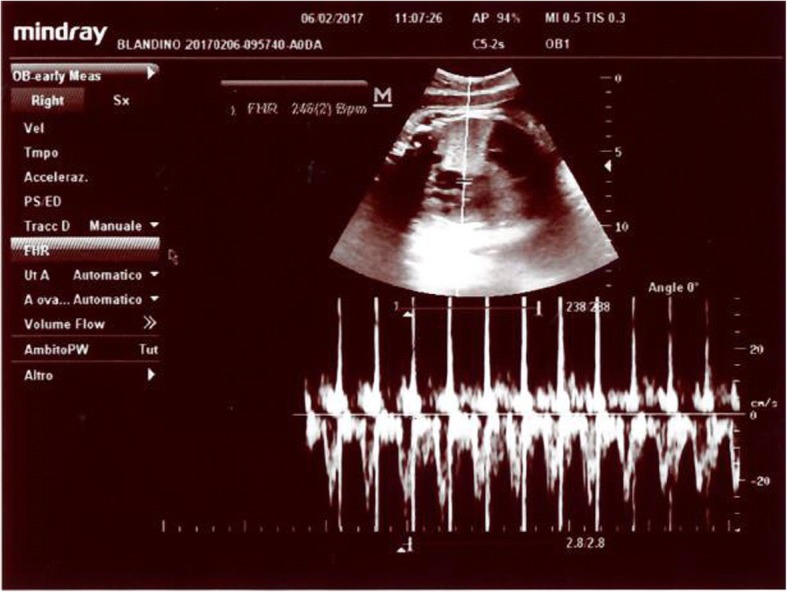
Fetal supraventricular tachycardia (SVT), characterized by fetal heart rate between 220 and 260 bpm, is a rare but most commonly encountered fetal cardiac arrhythmia in pregnancy that may be associated with adverse perinatal outcome.
We describe a 36/6 week near term fetus who presented morphine-induced SVT after maternal treatment of a renal colic. Following emergency cesarean section, the neonate had resolution of symptoms.
The pathophysiology of morphine-related SVT, previously documented in experimental animal models, and for the first time reported in the human fetus, is presented.
胎儿室上性心动过速(SVT)的特征是胎儿心率在 220 至 260 bpm 之间,是妊娠中最常见但也是罕见的胎儿心律失常之一,可能与围产期不良结局有关。
我们描述了一例 36/6 周足月胎儿,在母亲治疗肾绞痛后出现吗啡诱导的 SVT。紧急剖宫产术后,新生儿症状缓解。
本文首次在人类胎儿中报道了吗啡相关 SVT 的病理生理学,此前在实验动物模型中已有相关记载。