Sir William Dunn School of Pathology, University of Oxford, Oxford, OX1 3RE, UK.
Institut Pasteur, 28 rue du Dr Roux, 75015, Paris, France.
Cell Death Dis. 2018 Sep 24;9(10):973. doi: 10.1038/s41419-018-1053-4.
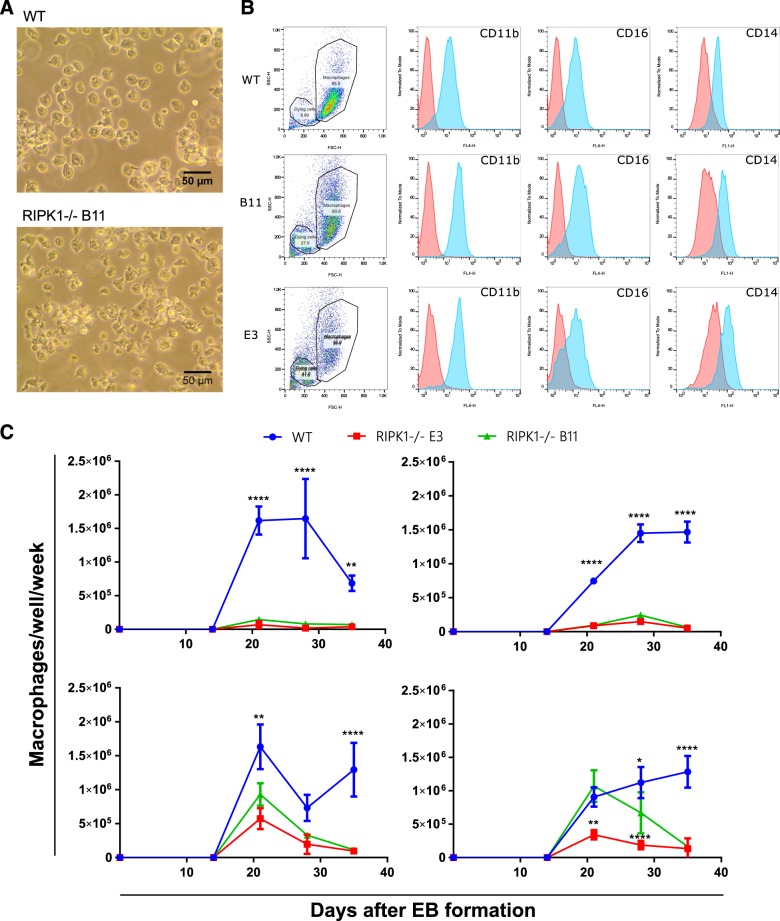
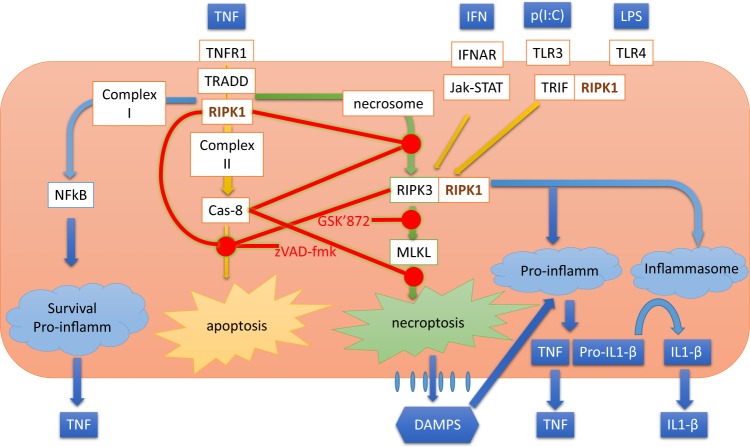
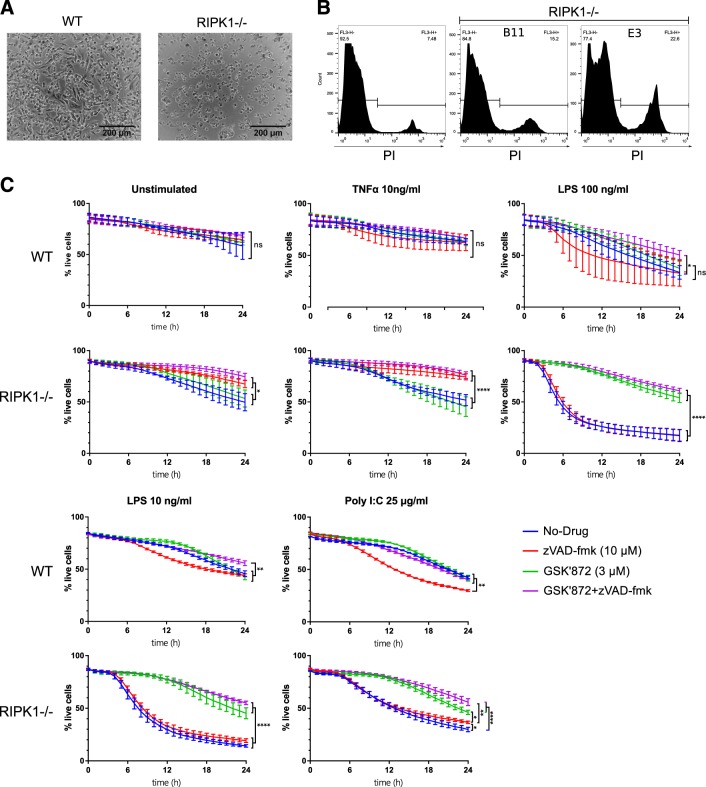
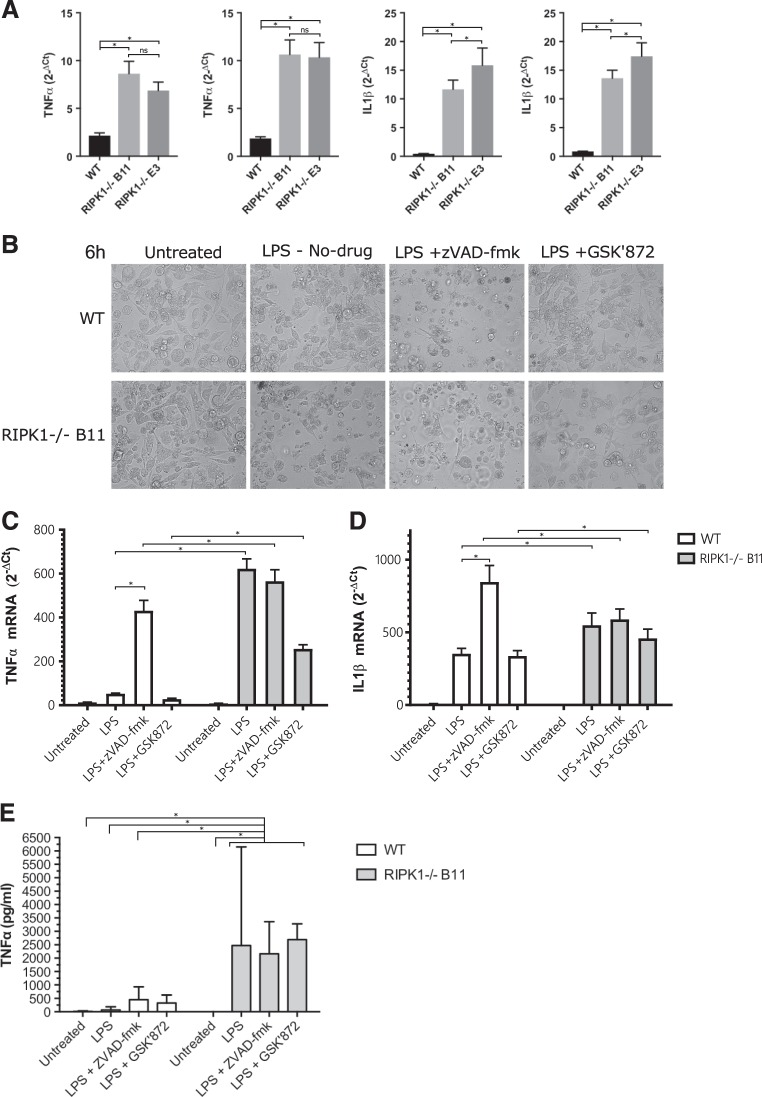
In this study, we took advantage of human-induced pluripotent stem cells (hiPSC) and CRISPR/Cas9 technology to investigate the potential roles of RIPK1 in regulating hematopoiesis and macrophage differentiation, proinflammatory activation, and cell death pathways. Knock-out of RIPK1 in hiPSCs demonstrated that this protein is not required for erythro-myeloid differentiation. Using a well-established macrophage differentiation protocol, knock-out of RIPK1 did not block the differentiation of iPSC-derived macrophages, which displayed a similar phenotype to WT hiPSC-derived macrophages. However, knock-out of RIPK1 leads to a TNFα-dependent apoptotic death of differentiated hiPSC-derived macrophages (iPS-MΦ) and progressive loss of iPS-MΦ production irrespective of external pro-inflammatory stimuli. Live video analysis demonstrated that TLR3/4 activation of RIPK1 KO hiPSC-derived macrophages triggered TRIF and RIPK3-dependent necroptosis irrespective of caspase-8 activation. In contrast, TLR3/4 activation of WT macrophages-induced necroptosis only when caspases were inhibited, confirming the modulating effect of RIPK1 on RIPK3-mediated necroptosis through the FADD, Caspase-8 pathway. Activation of these inflammatory pathways required RIPK3 kinase activity while RIPK1 was dispensable. However, loss of RIPK1 sensitizes macrophages to activate RIPK3 in response to inflammatory stimuli, thereby exacerbating a potentially pathological inflammatory response. Taken together, these results reveal that RIPK1 has an important role in regulating the potent inflammatory pathways in authentic human macrophages that are poised to respond to external stimuli. Consequently, RIPK1 activity might be a valid target in the development of novel therapies for chronic inflammatory diseases.
在这项研究中,我们利用人类诱导多能干细胞(hiPSC)和 CRISPR/Cas9 技术来研究 RIPK1 在调节造血、巨噬细胞分化、促炎激活和细胞死亡途径中的潜在作用。在 hiPSCs 中敲除 RIPK1 表明该蛋白对于红系-髓系分化不是必需的。使用成熟的巨噬细胞分化方案,敲除 RIPK1 并没有阻止 iPSC 衍生的巨噬细胞的分化,这些细胞表现出与 WT hiPSC 衍生的巨噬细胞相似的表型。然而,敲除 RIPK1 导致分化的 hiPSC 衍生巨噬细胞(iPS-MΦ)依赖 TNFα 的凋亡性死亡,并且无论是否存在外部促炎刺激,iPS-MΦ 的产生都会逐渐丧失。实时视频分析表明,TLR3/4 激活 RIPK1 KO hiPSC 衍生的巨噬细胞触发 TRIF 和 RIPK3 依赖性坏死,而不依赖于 caspase-8 的激活。相比之下,TLR3/4 激活 WT 巨噬细胞诱导的坏死仅在抑制 caspase 时发生,证实了 RIPK1 通过 FADD、Caspase-8 途径对 RIPK3 介导的坏死的调节作用。这些炎症途径的激活需要 RIPK3 激酶活性,而 RIPK1 是可有可无的。然而,RIPK1 的缺失使巨噬细胞对炎症刺激更敏感,从而加剧潜在的病理性炎症反应。总之,这些结果表明 RIPK1 在调节对外部刺激有反应的真正人类巨噬细胞中的强效炎症途径中具有重要作用。因此,RIPK1 活性可能是开发慢性炎症性疾病新疗法的有效靶点。