Department of Human Biology and Movement Sciences, NUTRIM School of Nutrition and Translational Research in Metabolism, Maastricht University Medical Centre+, P.O. Box 616, 6200 MD, Maastricht, The Netherlands.
Department of Work and Social Psychology, Maastricht University, P.O. Box 616, 6200 MD, Maastricht, The Netherlands.
Int J Behav Nutr Phys Act. 2018 Sep 25;15(1):92. doi: 10.1186/s12966-018-0727-8.
Metabolic health in people with obesity is determined by body composition. In this study, we examined the influence of a combined strength exercise and motivational programme -embedded in the school curriculum- on adolescents body composition and daily physical activity.
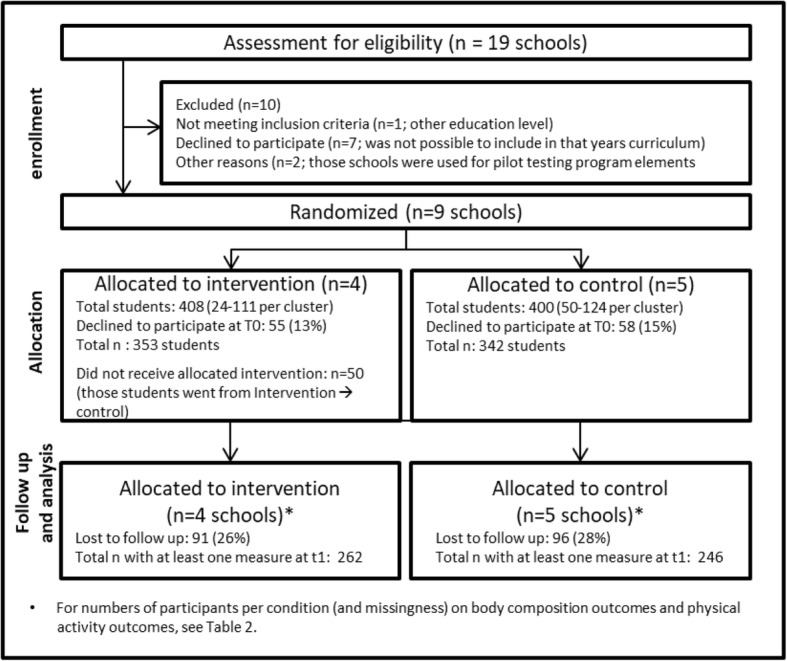
A total of 695 adolescents (11-15y) from nine Dutch secondary schools participated in a one year cluster randomised controlled trial (RCT). In the intervention schools, physical education teachers were instructed to spend 15-30 min of all physical education lessons (2× per week) on strength exercises. Monthly motivational lessons were given to stimulate students to be more physically active. Control schools followed their usual curriculum. The primary outcome measure was body composition assessed by the deuterium dilution technique. Daily physical activity and sedentary behaviour measured by accelerometry served as a secondary outcome.
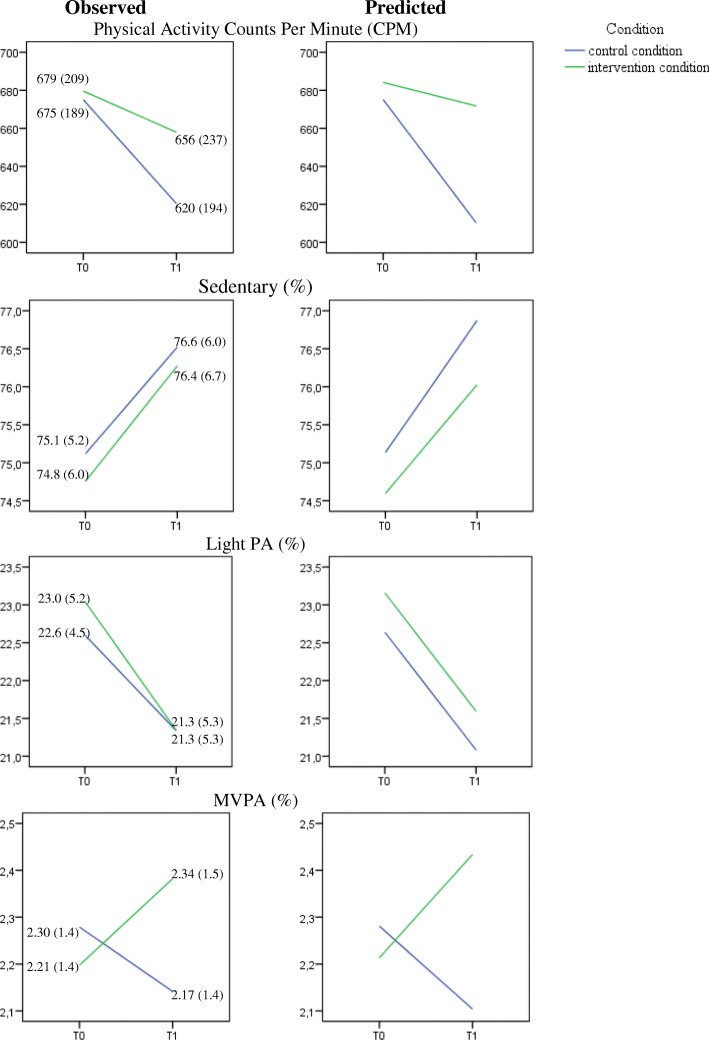
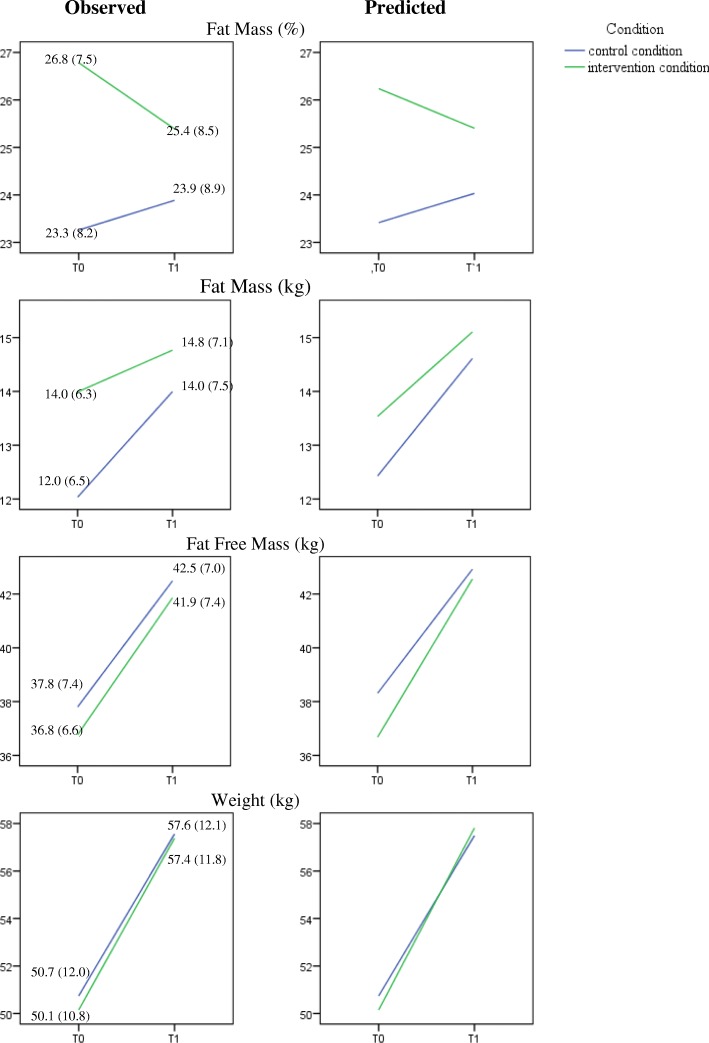
After 1 year, a 1.6% fat mass difference was found in favour of the intervention group (p = .007). This reflected a 0.9 kg difference in fat free mass (intervention>control; p = .041) and 0.7 kg difference in fat mass (intervention<control; p = .054). Daily physical activity decreased from baseline to posttest in both groups, but less so in the intervention group (p = .049). After 1 year, a difference of 0.4% was found for moderate to vigorous physical activities in favour of the intervention group (p = .046). No differences in sedentary behaviour, or light physical activity were found between groups.
In 11-15 year olds, the combination of strength exercises plus motivational lessons contributed to an improvement in body composition and a smaller decrease in physical activity level. TRIAL REGISTRATION ID: ( NTR5676 - retrospectively registered 8 February 2016; enrolment of first participant: 2 March 2015).
肥胖人群的代谢健康取决于身体成分。在这项研究中,我们研究了将力量训练与动机课程相结合——嵌入学校课程——对青少年身体成分和日常身体活动的影响。
共有 695 名来自荷兰 9 所中学的青少年(11-15 岁)参与了一项为期一年的群组随机对照试验(RCT)。在干预学校,体育教师被要求在每节体育课(每周 2 次)中安排 15-30 分钟的力量训练。每月还会安排动机课程,以激发学生更多地进行身体活动。对照组则按照常规课程进行。主要结局指标是通过氘稀释技术评估身体成分。使用加速度计测量日常身体活动和久坐行为作为次要结局。
1 年后,干预组的脂肪量差异有统计学意义(p = .007),有利于干预组,差值为 1.6%。这反映了脂肪量(干预>对照组;p = .041)和脂肪质量(干预<对照组;p = .054)分别减少了 0.9 公斤和 0.7 公斤。两组的日常身体活动均从基线下降到试验后,但干预组下降幅度较小(p = .049)。1 年后,干预组的中等到剧烈身体活动的比例差值为 0.4%,有利于干预组(p = .046)。组间在久坐行为或轻度身体活动方面无差异。
在 11-15 岁青少年中,力量训练与动机课程相结合有助于改善身体成分,并减少身体活动水平的下降。
(NTR5676 - 2016 年 2 月 8 日回溯注册;第一批参与者入组:2015 年 3 月 2 日)。