Li Jiayu, Dong Rong, Yu Jiali, Yi Sun, Da Jingjing, Yu Fuxun, Zha Yan
Guizhou University School of Medicine, Guizhou University.
Department of Nephrology, Guizhou Provincial People's Hospital,
Drug Des Devel Ther. 2018 Sep 11;12:2887-2896. doi: 10.2147/DDDT.S171638. eCollection 2018.
To explore the anti-inflammatory mechanism of IGF1R inhibitor in diabetic nephropathy.
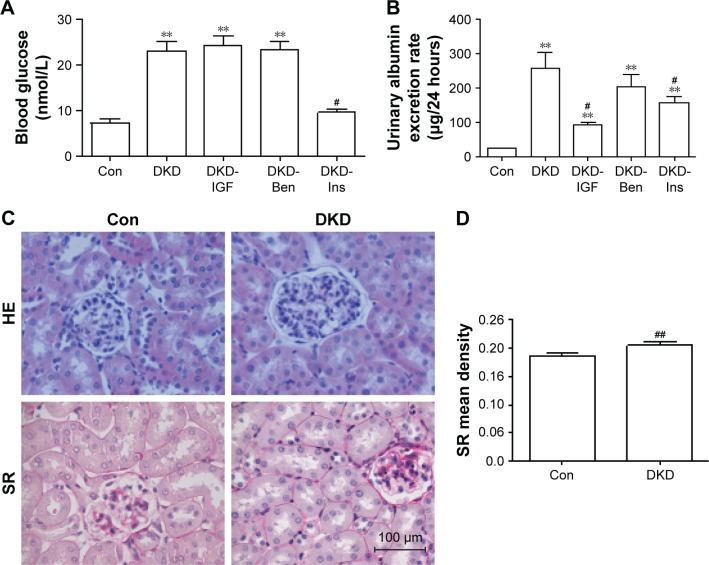
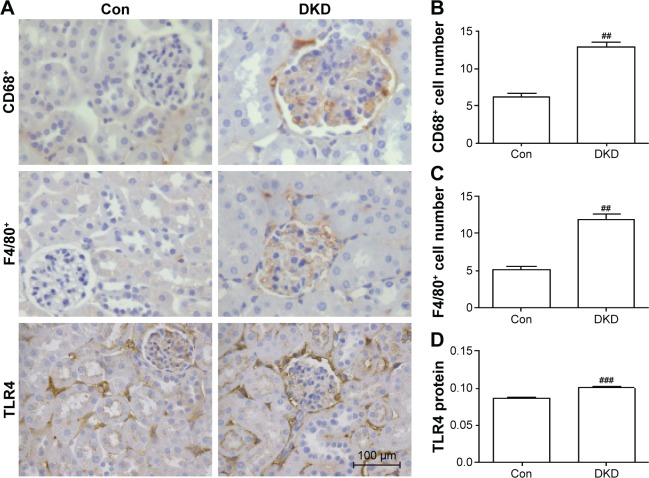
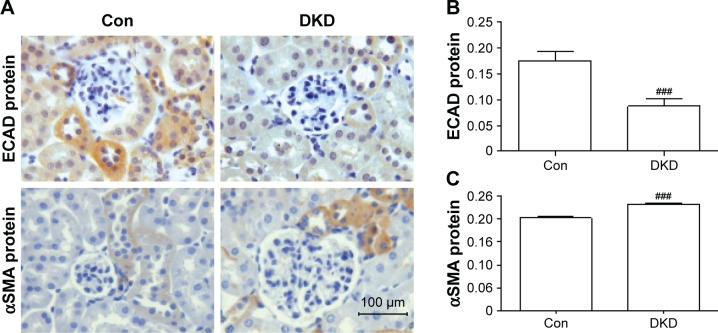
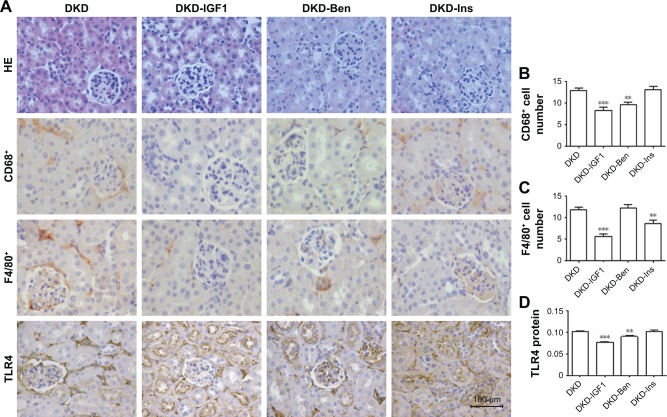
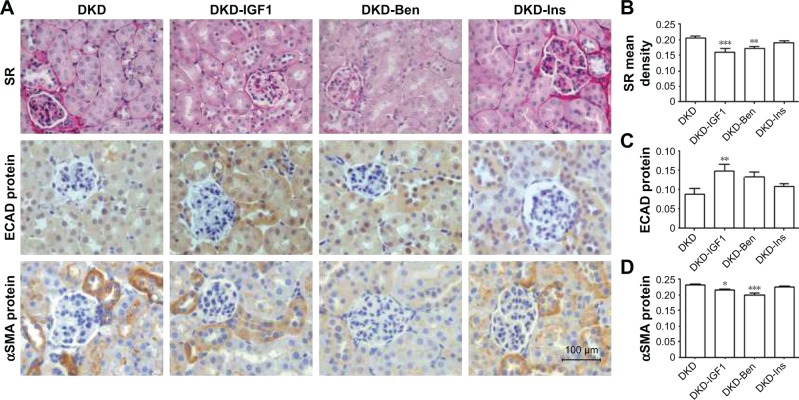
C57/BL6 mice were reared with high-fat diet for 8 weeks, then were injected 30 mg/kg streptozotocin intraperitoneally to induce type 2 diabetes. After 8 weeks, the type 2 diabetes nephropathy model was successfully set up the different drugs were administrated to mice with diabetes (insulin 1-2 U/day, benazepril 10 mg/kg per day intragastrically, IGF-1R inhibitor 30 mg/kg per day intragastrically). After 8 weeks drugs administration, all mice were collected the kidney tissue, measured levels of inflammatory factor (F4/80, TLR4and CD68) and fibrosis markers(αSMA, E-cadherin and SR) using immunohistochemistry and in situ hybridization.
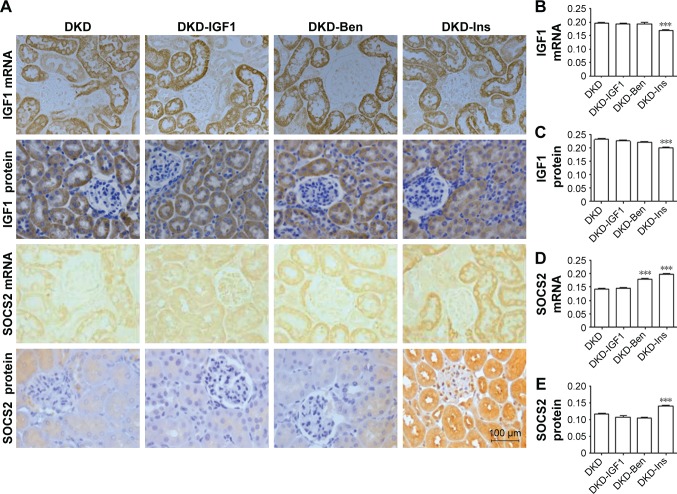
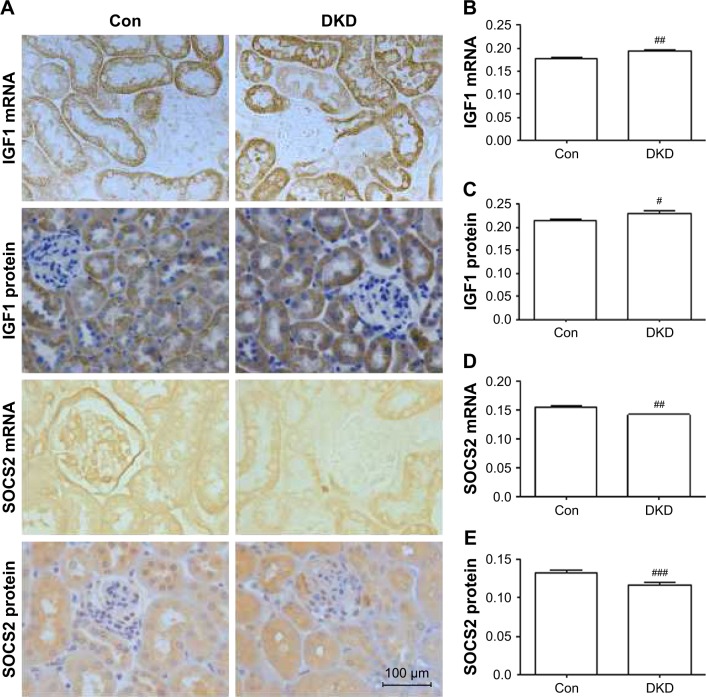
The type 2 diabetes nephropathy model was built successfully, which along with increased urinary protein excretion rate and increased inflammatory infiltration, and the correlation was characterized by increased CD68, F4/80 cells and increased TLR4, αSMA, SR expression. IGF-1R inhibitors reversed this changes, but benazepril and insulin were without significant changes. The insulin decreased the expression level of IGF-1, and increased the levels of suppressor of cytokine signaling 2 (SOCS2). Benazepril and IGF-1R inhibitor were no significant changes like insulin.
Inhibition of IGF1R was a more effective choice for inflammation treatment than Ben or Ins in diabetic kidney disease (DKD). The IGF1R inhibitor blocked pathological changes induced by the over-expression of IGF1 in DKD without up-regulating SOCS2 protein levels.
探讨胰岛素样生长因子1受体(IGF1R)抑制剂在糖尿病肾病中的抗炎机制。
将C57/BL6小鼠用高脂饮食饲养8周,然后腹腔注射30mg/kg链脲佐菌素诱导2型糖尿病。8周后,成功建立2型糖尿病肾病模型,对糖尿病小鼠给予不同药物(胰岛素1 - 2U/天,苯那普利10mg/kg/天灌胃,IGF - 1R抑制剂30mg/kg/天灌胃)。给药8周后,收集所有小鼠的肾脏组织,采用免疫组织化学和原位杂交法检测炎症因子(F4/80、TLR4和CD68)水平及纤维化标志物(αSMA、E - 钙黏蛋白和SR)。
成功建立2型糖尿病肾病模型,伴有尿蛋白排泄率增加和炎症浸润增加,其相关性表现为CD68、F4/80细胞增加以及TLR4、αSMA、SR表达增加。IGF - 1R抑制剂可逆转这种变化,但苯那普利和胰岛素无明显变化。胰岛素降低了IGF - 1的表达水平,并增加了细胞因子信号转导抑制因子2(SOCS2)的水平。苯那普利和IGF - 1R抑制剂与胰岛素一样无明显变化。
在糖尿病肾病(DKD)中,抑制IGF1R比苯那普利或胰岛素是更有效的炎症治疗选择。IGF1R抑制剂可阻断DKD中IGF1过表达诱导的病理变化,而不会上调SOCS2蛋白水平。