Latunji O O, Akinyemi O O
Association for Reproductive and Family Health, Ibadan, Nigeria.
Department of Health Policy and Management, College of Medicine, University of Ibadan, Ibadan, Nigeria.
Ann Ib Postgrad Med. 2018 Jun;16(1):52-60.
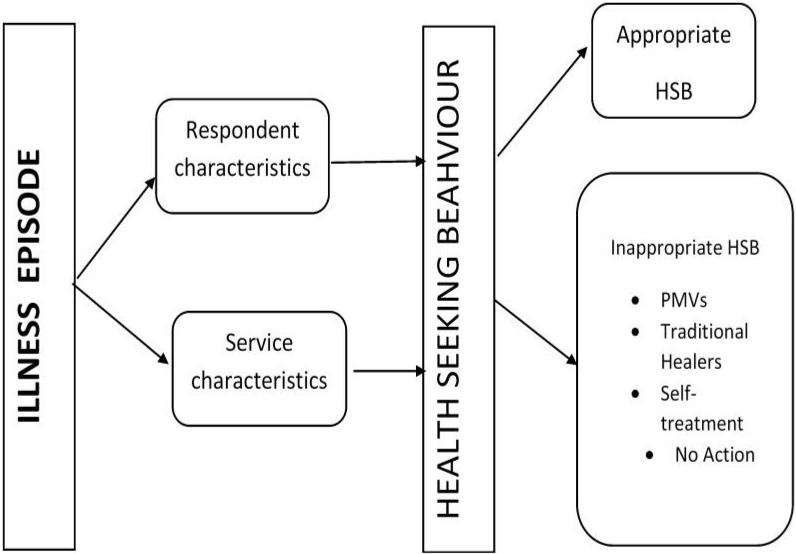
Health-seeking behaviours (HSB) are closely linked with the health status of a nation and thus its economic development. Several studies have described HSB within the context of various diseases. However, knowledge of HSB among population sub-groups is still scanty. This study aims to determine factors most important to civil servants when seeking health care.
A descriptive cross-sectional study was conducted among 337 civil servants working in the Federal Secretariat, Ibadan, Nigeria. An intervieweradministered semi-structured questionnaire was used to collect information. Chi-square tests were used to test for associations while binary logistic regression test was used for determining predictors. All data analysis were done at 5% level of significance.
Members of the poorest quartile were 6 times more likely to have inappropriate HSB than the richest quartile (Q4:Q1= 5.83;O.R: 16.12, 95% C.I: 2.61-11.03). Visits to the hospital or clinic (62.2%) was the most common source of healthcare sought. This was followed by visits to the chemist (33.0%), traditional healers (4.3%). A little more than one-third (34.5%) of respondents considered good service delivery as the most important factor affecting HSB. This was followed by proximity (23.9%), affordability (20.4%), prompt attention (8.8%) and readily-available drugs (7.1%). Completing only basic education [O.R: 0.24 (0.06, 0.96)] and out of pocket payment [O.R: 0.04 (9.16, 82.45)] were associated with a reduction in the likelihood of seeking healthcare from formal sources.
Appropriate health-seeking behaviour was found to be high among civil servants. However, lower cadre workers and those with lower levels of education need to be targeted during policy formulation to improve health-seeking behaviour. In addition, health insurance schemes should be extended to cover more of the population in order to improve health-seeking behaviour.
求医行为(HSB)与一个国家的健康状况及其经济发展密切相关。多项研究在各种疾病的背景下描述了求医行为。然而,关于人群亚组中求医行为的了解仍然很少。本研究旨在确定公务员在寻求医疗保健时最重要的因素。
对尼日利亚伊巴丹联邦秘书处工作的337名公务员进行了描述性横断面研究。使用访谈员管理的半结构化问卷收集信息。卡方检验用于检验关联性,二元逻辑回归检验用于确定预测因素。所有数据分析均在5%的显著性水平上进行。
最贫困四分位数组的成员出现不适当求医行为的可能性是最富有四分位数组的6倍(Q4:Q1 = 5.83;比值比:16.12,95%置信区间:2.61 - 11.03)。去医院或诊所就诊(62.2%)是最常见的求医途径。其次是去药店(33.0%)、传统治疗师处(4.3%)。略多于三分之一(34.5%)的受访者认为优质的服务提供是影响求医行为的最重要因素。其次是便利性(23.9%)、可承受性(20.4%)、及时关注(8.8%)和药品供应充足(7.1%)。仅完成基础教育[比值比:0.24(0.06,0.96)]和自掏腰包支付[比值比:0.04(9.16,82.45)]与从正规渠道寻求医疗保健的可能性降低有关。
发现公务员中适当的求医行为比例较高。然而,在制定政策时,需要针对较低级别的工作人员和教育程度较低的人员,以改善求医行为。此外,应扩大医疗保险计划以覆盖更多人群,以改善求医行为。