Astbury Centre for Structural Molecular Biology, School of Molecular and Cellular Biology, Faculty of Biological Sciences, University of Leeds, Leeds, LS2 9JT, UK.
J Am Soc Mass Spectrom. 2018 Dec;29(12):2413-2426. doi: 10.1007/s13361-018-2067-y. Epub 2018 Sep 28.
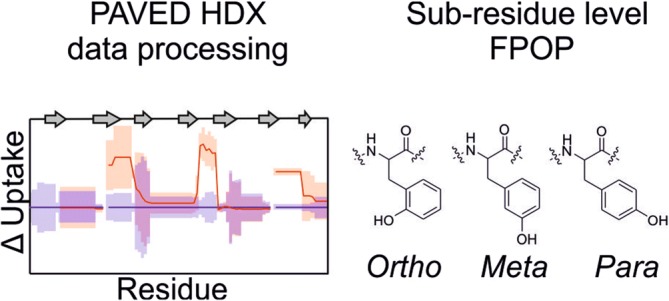
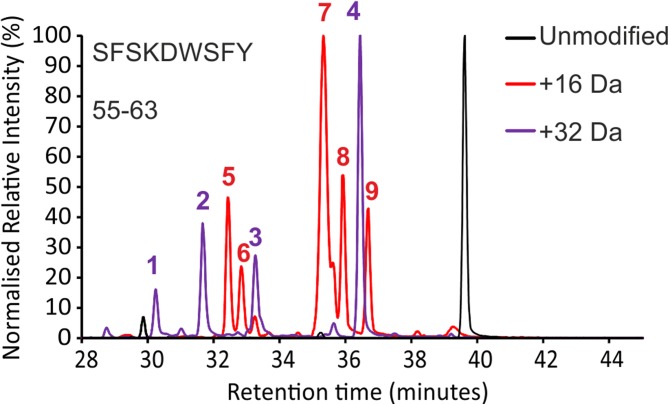
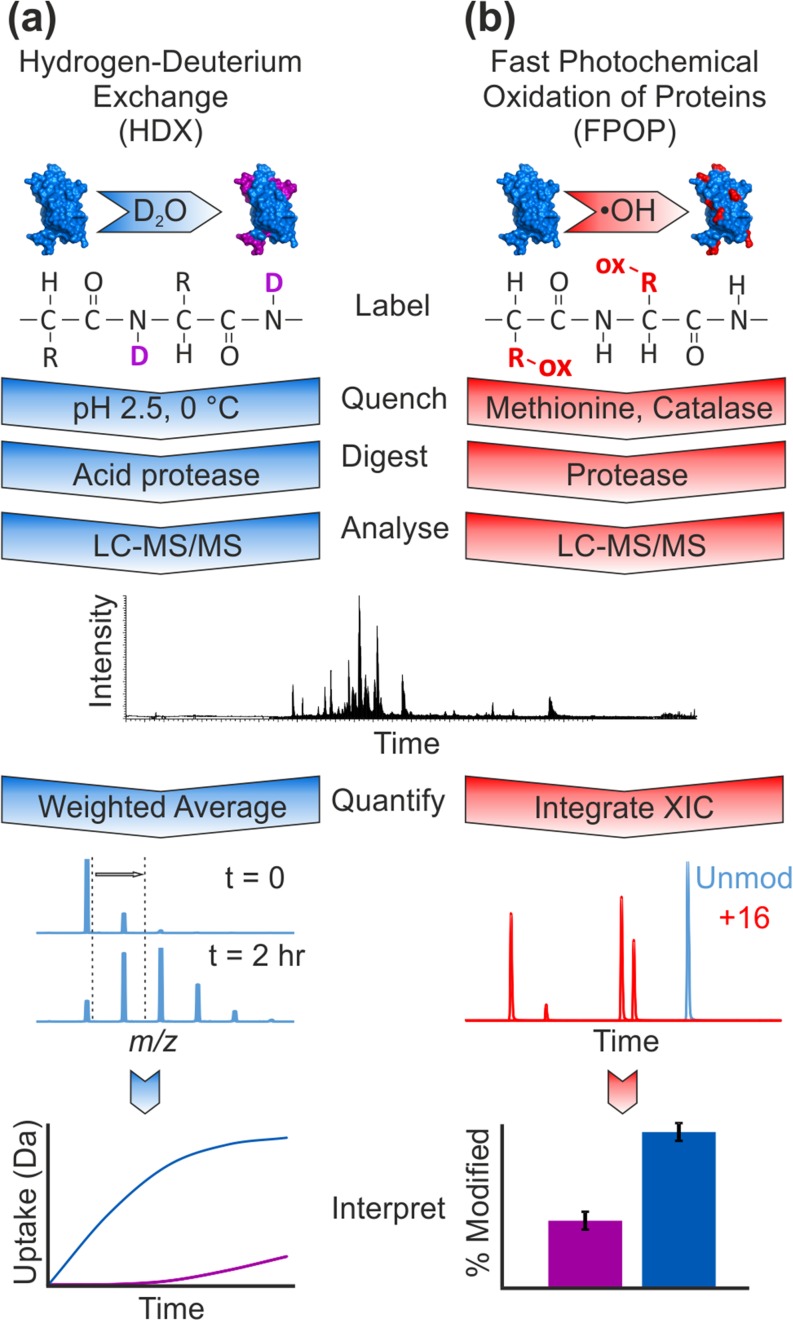
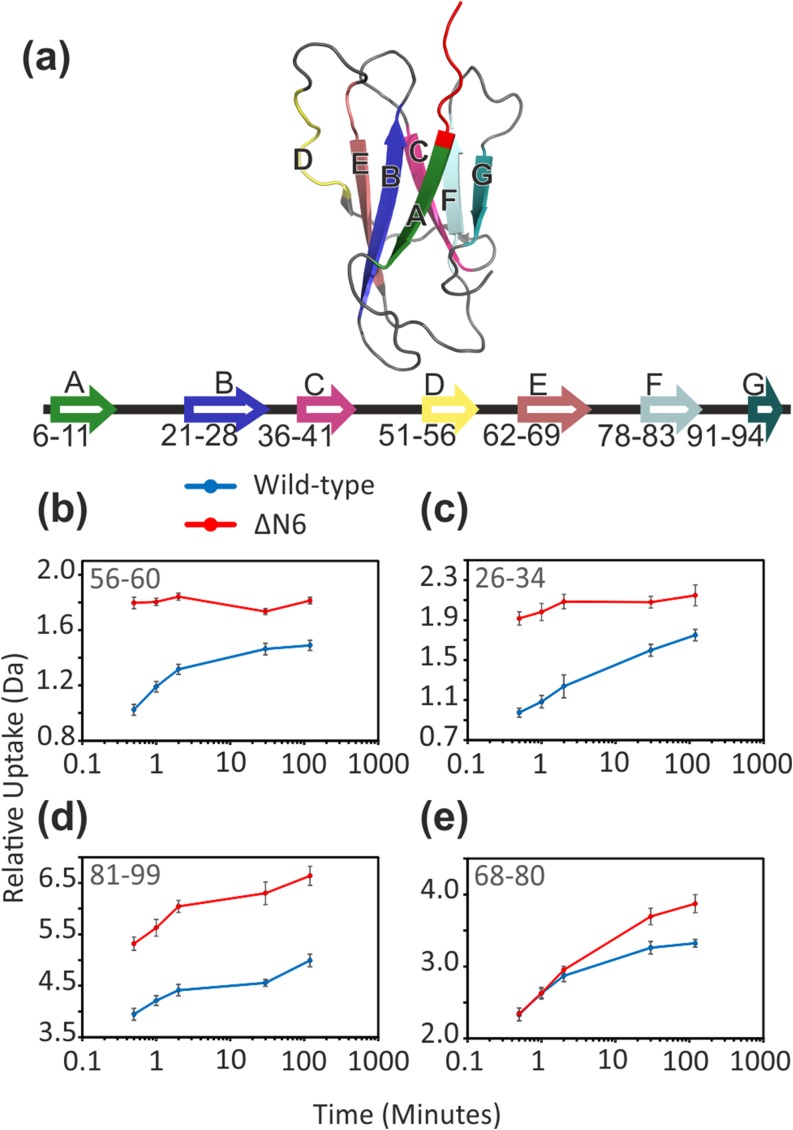
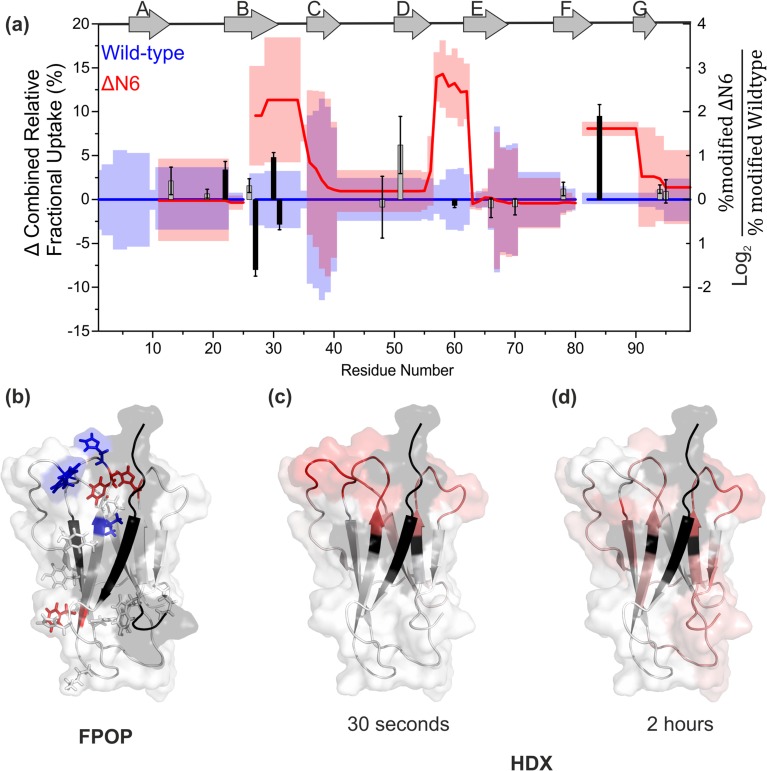
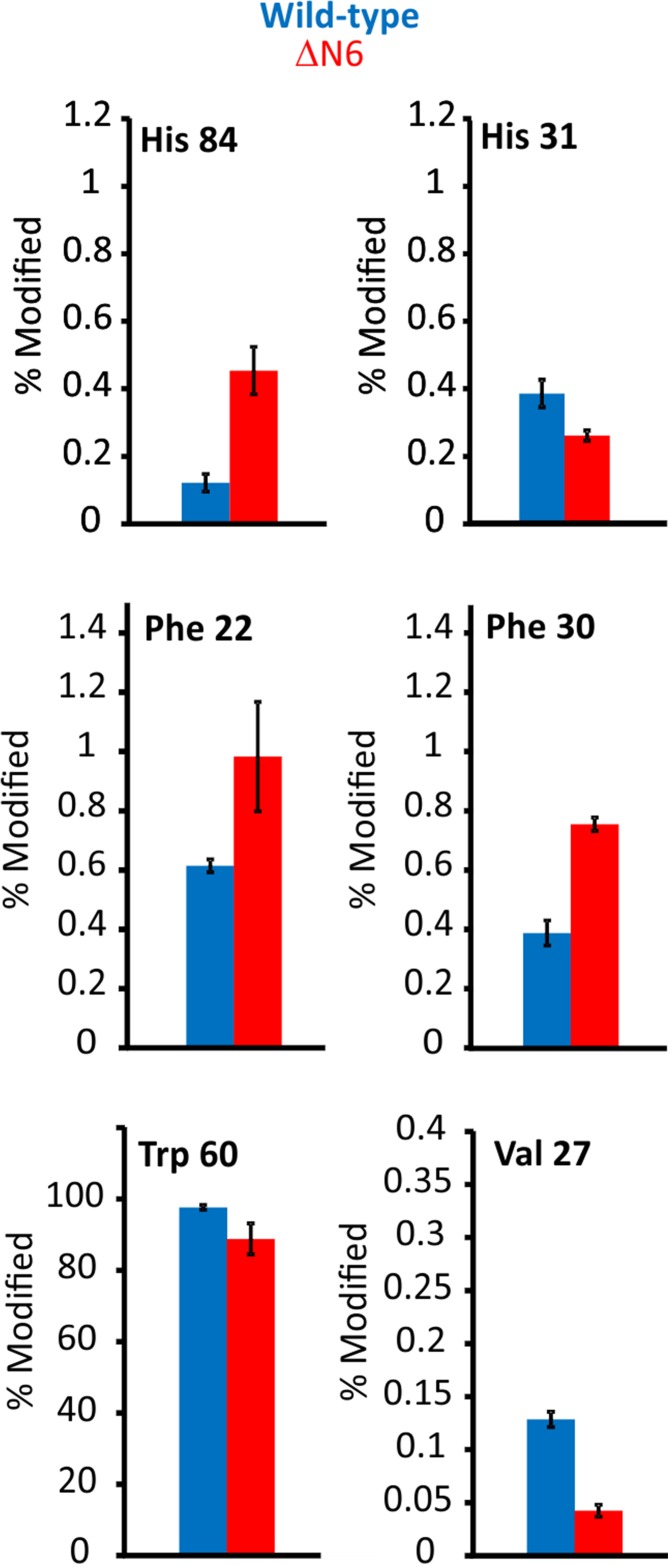
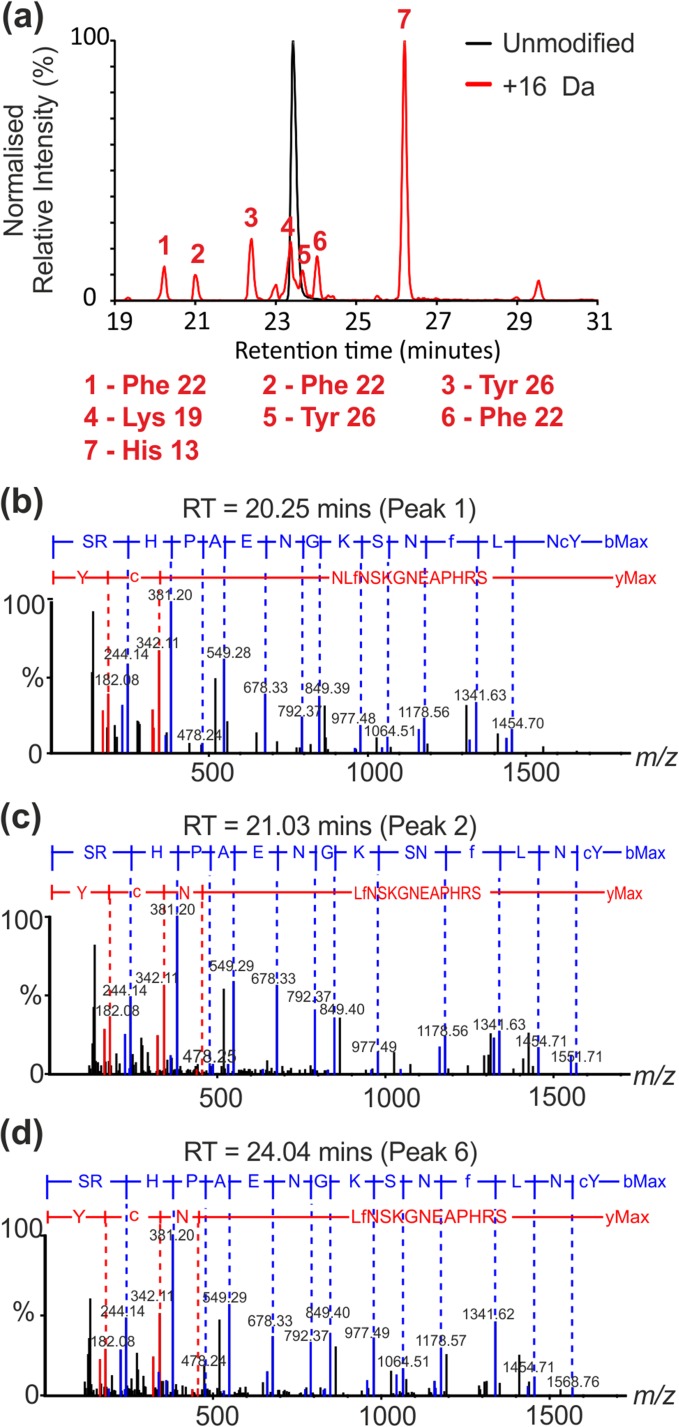
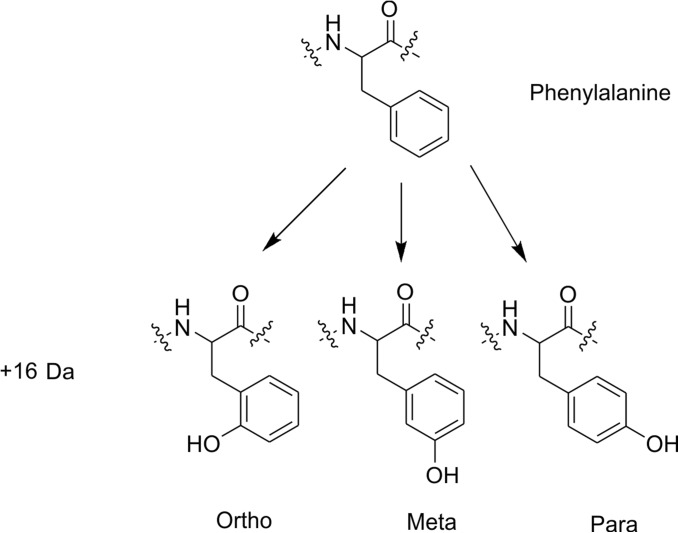
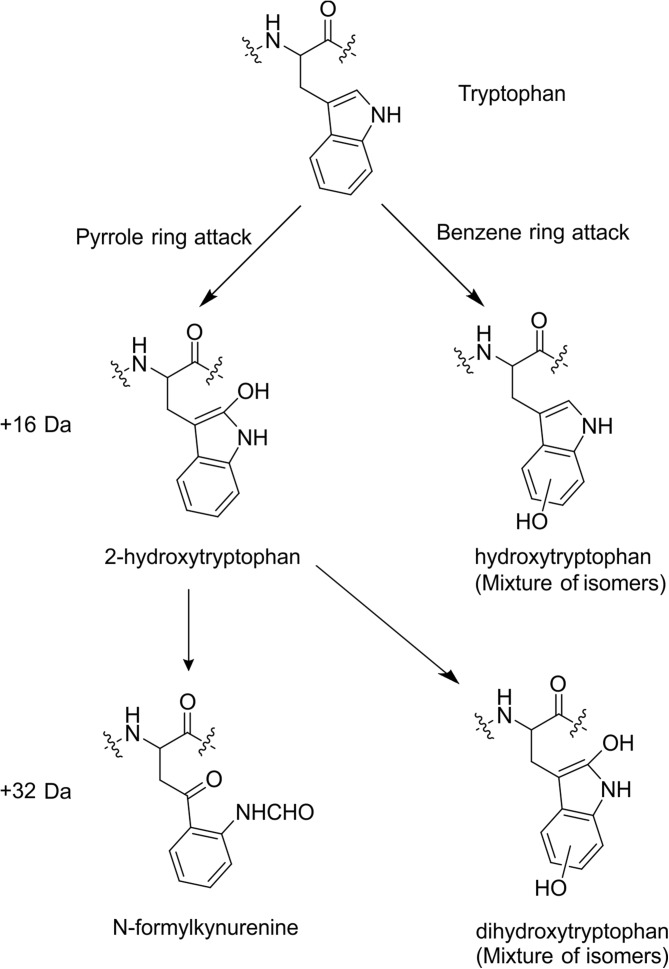
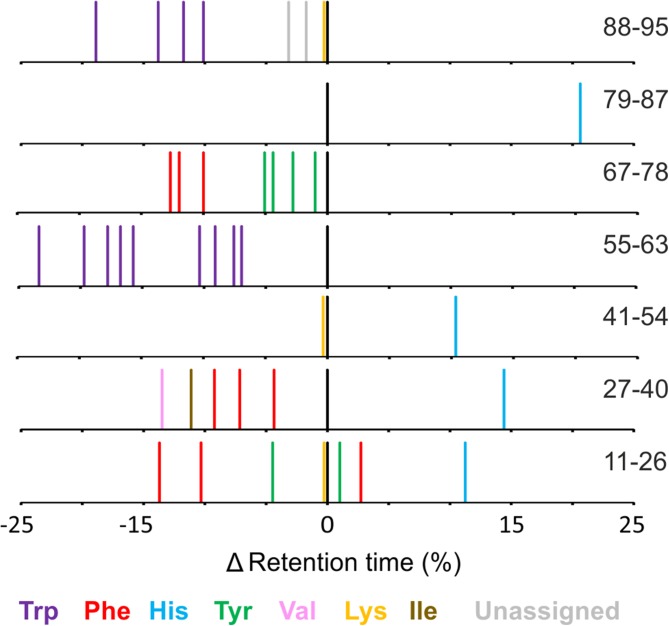
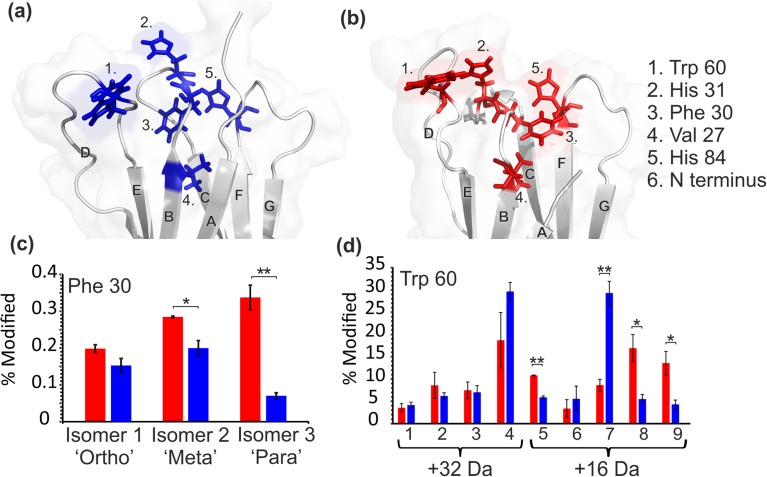
Hydrogen deuterium exchange (HDX) coupled to mass spectrometry (MS) is a well-established technique employed in the field of structural MS to probe the solvent accessibility, dynamics and hydrogen bonding of backbone amides in proteins. By contrast, fast photochemical oxidation of proteins (FPOP) uses hydroxyl radicals, liberated from the photolysis of hydrogen peroxide, to covalently label solvent accessible amino acid side chains on the microsecond-millisecond timescale. Here, we use these two techniques to study the structural and dynamical differences between the protein β-microglobulin (βm) and its amyloidogenic truncation variant, ΔN6. We show that HDX and FPOP highlight structural/dynamical differences in regions of the proteins, localised to the region surrounding the N-terminal truncation. Further, we demonstrate that, with carefully optimised LC-MS conditions, FPOP data can probe solvent accessibility at the sub-amino acid level, and that these data can be interpreted meaningfully to gain more detailed understanding of the local environment and orientation of the side chains in protein structures. Graphical Abstract ᅟ.
氘氢交换(HDX)与质谱(MS)相结合是结构 MS 领域中一种成熟的技术,用于探测蛋白质中骨架酰胺的溶剂可及性、动态性和氢键。相比之下,蛋白质的快速光化学氧化(FPOP)利用过氧化氢光解释放的羟基自由基,在微秒到毫秒的时间尺度上共价标记溶剂可及的氨基酸侧链。在这里,我们使用这两种技术来研究蛋白质β-微球蛋白(βm)与其淀粉样变截断变体 ΔN6 之间的结构和动力学差异。我们表明,HDX 和 FPOP 突出了蛋白质中位于 N 端截断周围区域的区域的结构/动力学差异。此外,我们证明,通过仔细优化的 LC-MS 条件,FPOP 数据可以探测亚氨基酸水平的溶剂可及性,并且可以对这些数据进行有意义的解释,以更详细地了解蛋白质结构中侧链的局部环境和取向。