Stauffer Virginia L, Sides Ryan, Lanteri-Minet Michel, Kielbasa William, Jin Yan, Selzler Katherine J, Tepper Stewart J
Lilly Research Laboratories, Eli Lilly and Company, Indianapolis, IN, USA,
Pain Department, CHU Nice, Nice, France.
Patient Prefer Adherence. 2018 Sep 17;12:1785-1795. doi: 10.2147/PPA.S170636. eCollection 2018.
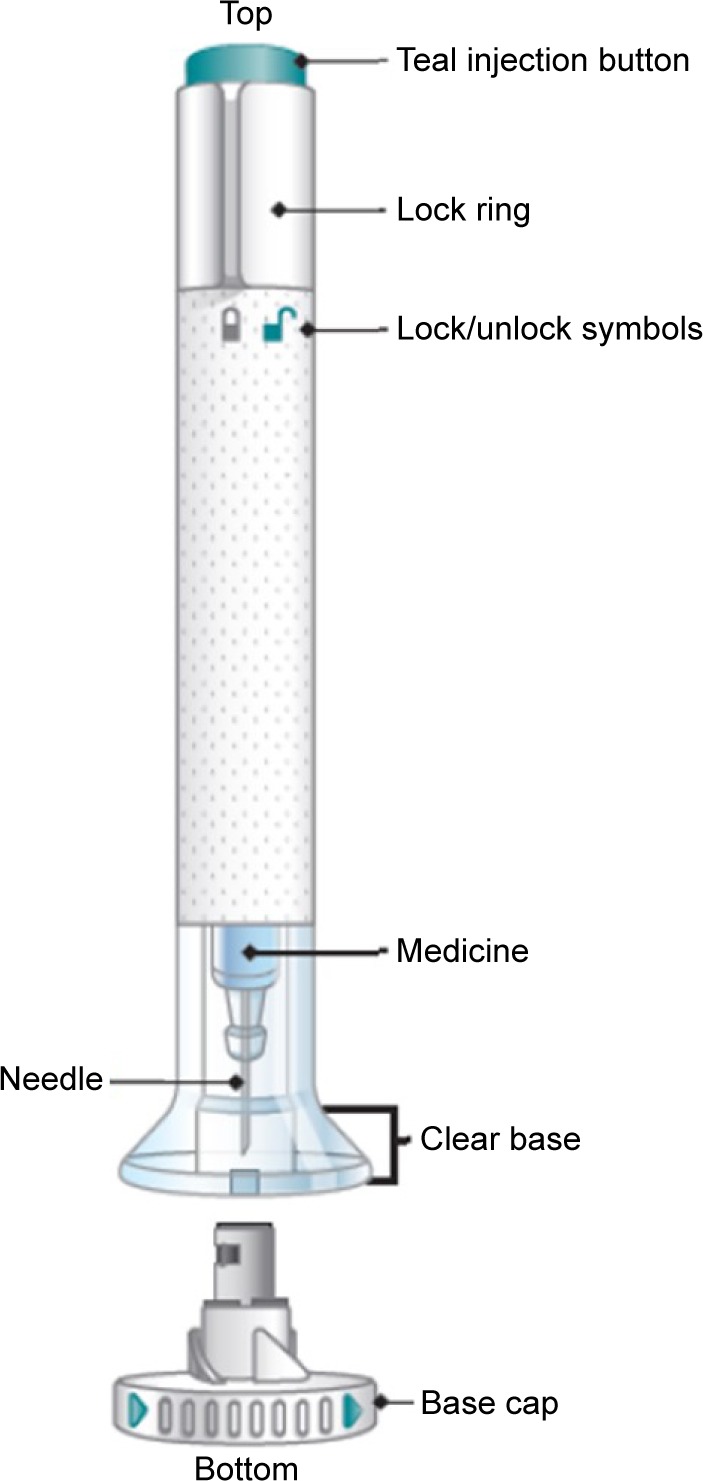
The aim of this study was to compare the usability and patient-rated experiences of an autoinjector with a prefilled syringe in patients with migraine, who self-administered galcanezumab, and to compare pharmacokinetic parameters between these devices.
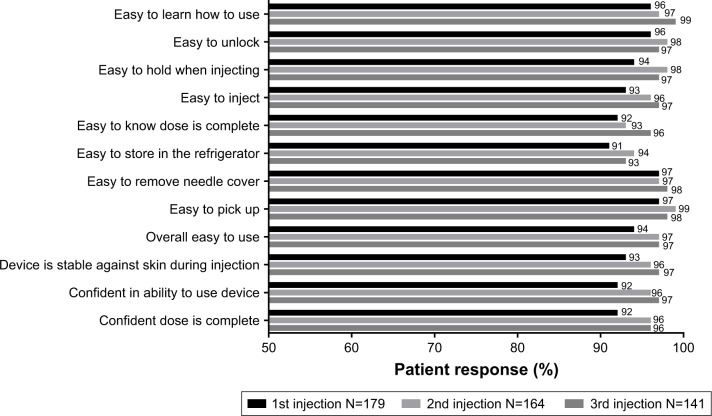
Patient-rated experiences with an investigational autoinjector and a prefilled syringe were compared in an open-label, 12-month study of once-monthly injections of galcanezumab 120 or 240 mg (NCT02614287). Patient-rated ease of usability was assessed with the Subcutaneous Administration Assessment Questionnaire (SQAAQ) and compared between devices. Positive responses on the SQAAQ were rated as "agree or strongly agree" to 12 statements. Tolerability was assessed by the frequency of injection-site-related adverse events (AEs) by device and injection location. In a separate study, galcanezumab pharmacokinetics in healthy subjects was compared between the devices (NCT02836613).
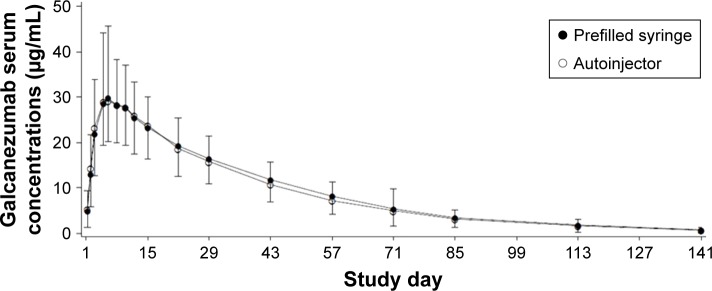
In the open-label clinical trial, 179 patients used both the prefilled syringe and autoinjector at least once. The majority of patients (91%-97%) had positive responses on the SQAAQ to the use of autoinjector across the items assessed. There were 23 injection-site-related AEs with the first self-administered injection with the prefilled syringe (N=7) or autoinjector (N=16; =0.061), with the most common AE for either device being injection-site pain. There were no significant between-device differences in injection-site-related AEs. For pharmacokinetics, the 90% CI for the ratio (autoinjector/prefilled syringe) of geometric least-square means for the galcanezumab area under the curve (AUC) concentration and maximum concentration () was between 0.8 and 1.25, indicating no statistically significant difference in the galcanezumab concentrations regardless of the device used.
The ease of usability with either device was comparable, and there were no significant differences in tolerability between the prefilled syringe and autoinjector with the first self-administration; however, the analysis was not powered to detect a clinically significant difference. Galcanezumab pharmacokinetics were comparable between devices.
本研究旨在比较自动注射器和预填充注射器在自行注射加卡尼单抗的偏头痛患者中的易用性和患者评分体验,并比较这两种装置之间的药代动力学参数。
在一项开放标签、为期12个月、每月注射一次120或240mg加卡尼单抗的研究(NCT02614287)中,比较了患者对研究用自动注射器和预填充注射器的评分体验。使用皮下给药评估问卷(SQAAQ)评估患者对易用性的评分,并在两种装置之间进行比较。对SQAAQ上的12项陈述的肯定回答被评为“同意或强烈同意”。通过装置和注射部位的注射部位相关不良事件(AE)发生频率评估耐受性。在另一项研究中,比较了两种装置在健康受试者中的加卡尼单抗药代动力学(NCT02836613)。
在开放标签临床试验中,179名患者至少使用过一次预填充注射器和自动注射器。在评估的项目中,大多数患者(91%-97%)对使用自动注射器的SQAAQ给出了肯定回答。预填充注射器(N=7)或自动注射器(N=16;P=0.061)首次自行注射时有23例注射部位相关AE,两种装置最常见的AE均为注射部位疼痛。注射部位相关AE在装置之间无显著差异。对于药代动力学,加卡尼单抗曲线下面积(AUC)浓度和最大浓度(Cmax)的几何最小二乘均值之比(自动注射器/预填充注射器)的90%CI在0.8至1.25之间,表明无论使用何种装置,加卡尼单抗浓度均无统计学显著差异。
两种装置的易用性相当,预填充注射器和自动注射器在首次自行给药时的耐受性无显著差异;然而,该分析的效力不足以检测出临床上的显著差异。两种装置之间的加卡尼单抗药代动力学相当。