Kurashige Masako, Kohara Masaharu, Ohshima Kenji, Tahara Shinichiro, Hori Yumiko, Nojima Satoshi, Wada Naoki, Ikeda Jun-Ichiro, Miyamura Koichi, Ito Masafumi, Morii Eiichi
Department of Pathology, Graduate School of Medicine, Osaka University, Yamada-Oka, Suita, Osaka, 565-0871, Japan.
Department of Hematology, Japanese Red Cross Nagoya First Hospital, 3-35 Michishita-cho, Nakamura-ku, Nagoya, Japan.
Commun Biol. 2018 Sep 3;1:131. doi: 10.1038/s42003-018-0137-0. eCollection 2018.
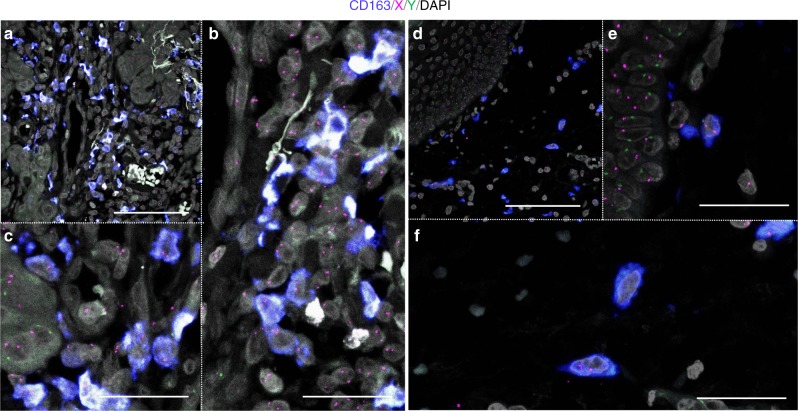
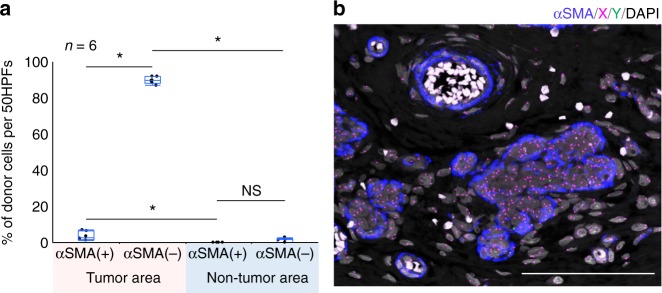
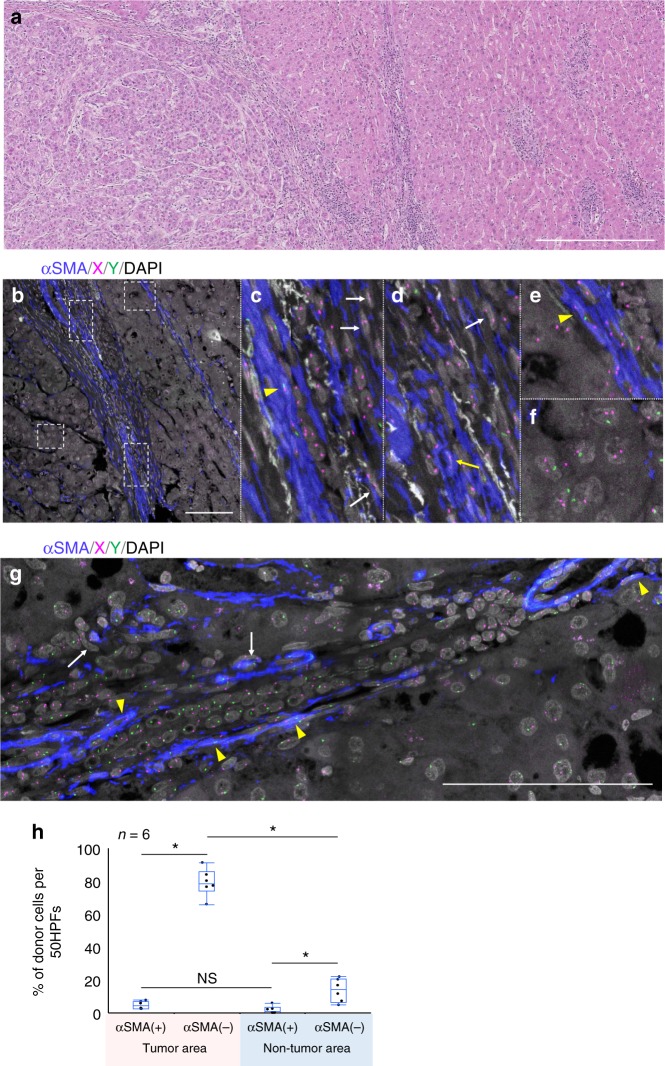
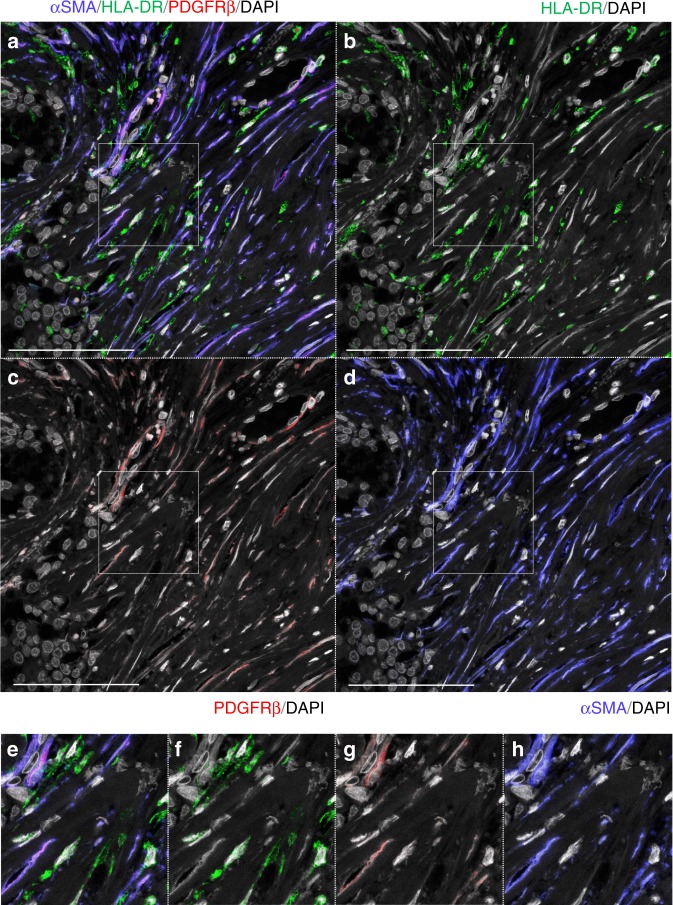
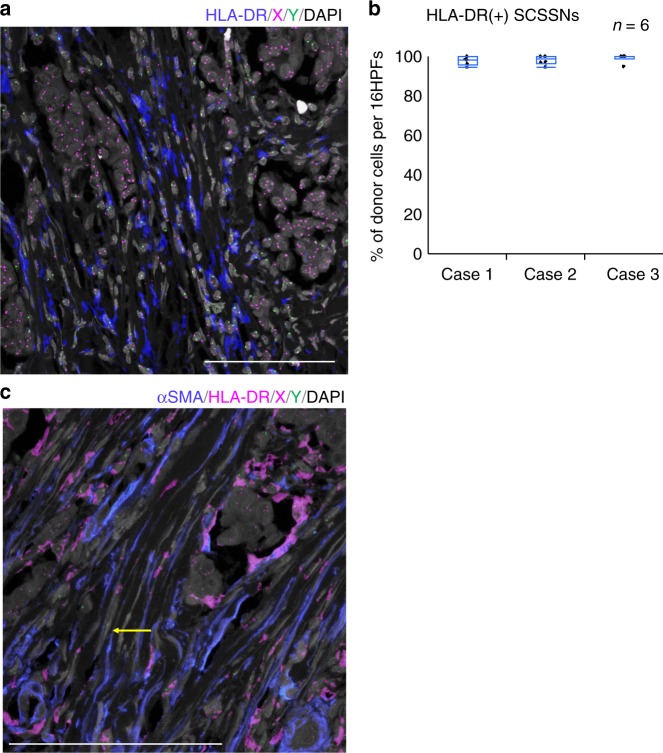
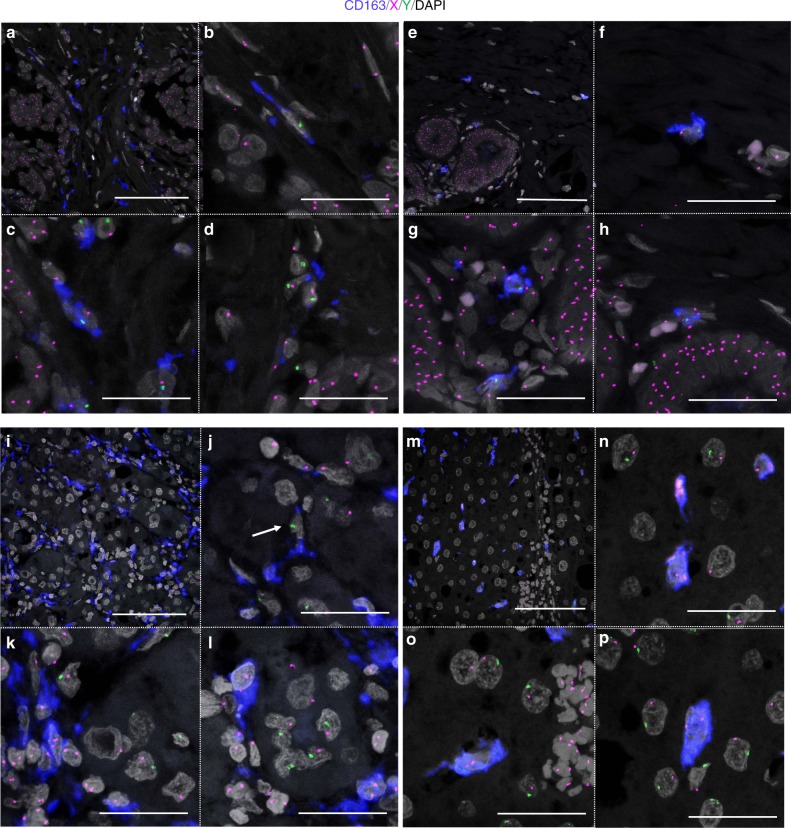
Cancer-associated fibroblasts (CAFs) and tumor-associated macrophages (TAMs) in tumor stroma play a key role in disease progression. Recent studies using mice models suggest that CAFs are partly derived from bone marrow and TAMs primarily originate from bone marrow-derived inflammatory monocytes. However, the origin of these cells in humans remains unclear. Hence, we investigated their human origin, using specimens from human secondary tumors that developed after sex-mismatched bone marrow transplantation, by modified immunofluorescent in situ hybridization analysis and triple immunostaining. We observed that most of the α-smooth muscle actin (αSMA)-positive CAFs in the mammary gland, liver, and oral mucosa specimens obtained 3-19 years after bone marrow transplantation are recipient-derived cells. In contrast, the majority of the peritumoral αSMA-negative fibroblast-like cells are actually bone marrow-derived HLA-DR-positive myeloid cells, such as macrophages and dendritic cells. Furthermore, almost all CD163-positive TAMs and macrophages present in the non-tumor areas are derived from bone marrow.
肿瘤基质中的癌症相关成纤维细胞(CAFs)和肿瘤相关巨噬细胞(TAMs)在疾病进展中起关键作用。最近使用小鼠模型的研究表明,CAFs部分来源于骨髓,而TAMs主要起源于骨髓来源的炎性单核细胞。然而,这些细胞在人类中的起源仍不清楚。因此,我们通过改良的免疫荧光原位杂交分析和三重免疫染色,利用性别不匹配的骨髓移植后发生的人类继发性肿瘤标本,研究了它们在人类中的起源。我们观察到,在骨髓移植后3 - 19年获得的乳腺、肝脏和口腔黏膜标本中,大多数α平滑肌肌动蛋白(αSMA)阳性的CAFs是受体来源的细胞。相比之下,大多数肿瘤周围αSMA阴性的成纤维细胞样细胞实际上是骨髓来源的HLA - DR阳性髓样细胞,如巨噬细胞和树突状细胞。此外,非肿瘤区域中几乎所有CD163阳性的TAMs和巨噬细胞都来源于骨髓。