Wang Xiao-Hong, Yang Jin-Chen, Soohoo Robert, Cotter Devyn, Yuan Mei, Xia Jiangyi, Yaqub Shuja, Doty Jesse, Niu Yu-Qiong, Tassone Flora, Hagerman Randi, Zhang Lin, Olichney John
Department of Neurology, Dalian Municipal Central Hospital, Dalian, China.
Department of Neurology, School of Medicine, University of California, Davis, Davis, CA, United States.
Front Genet. 2018 Sep 18;9:327. doi: 10.3389/fgene.2018.00327. eCollection 2018.
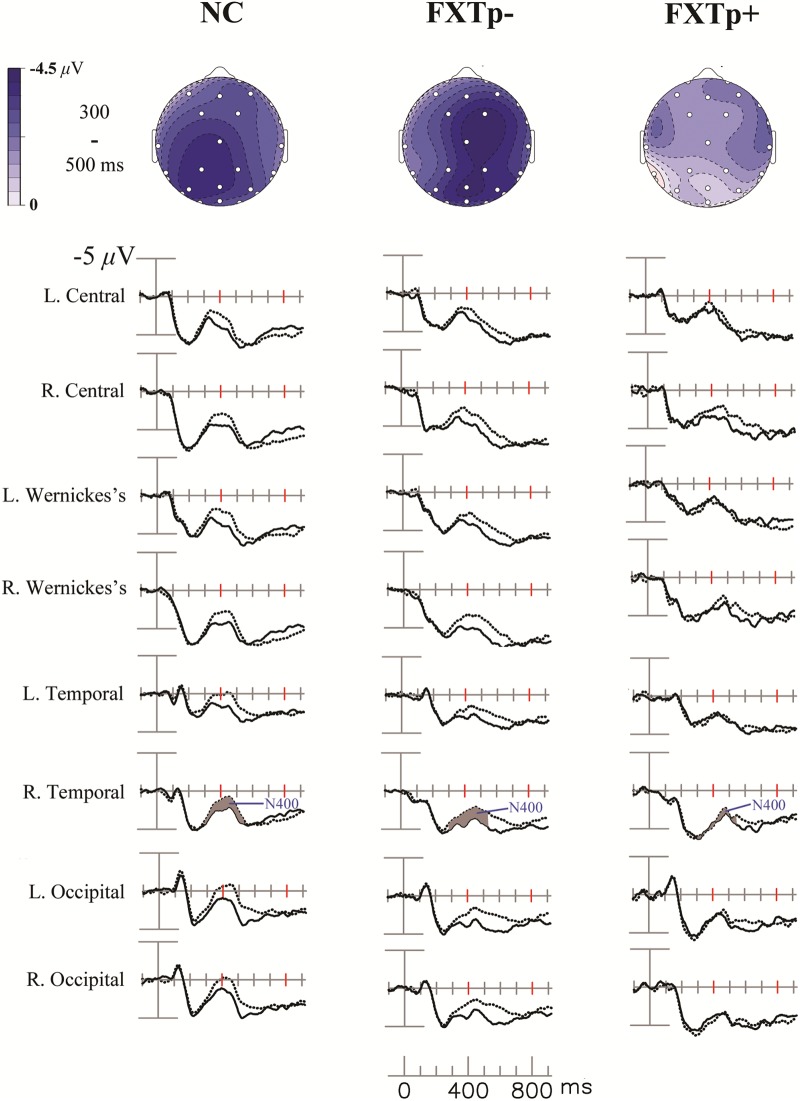
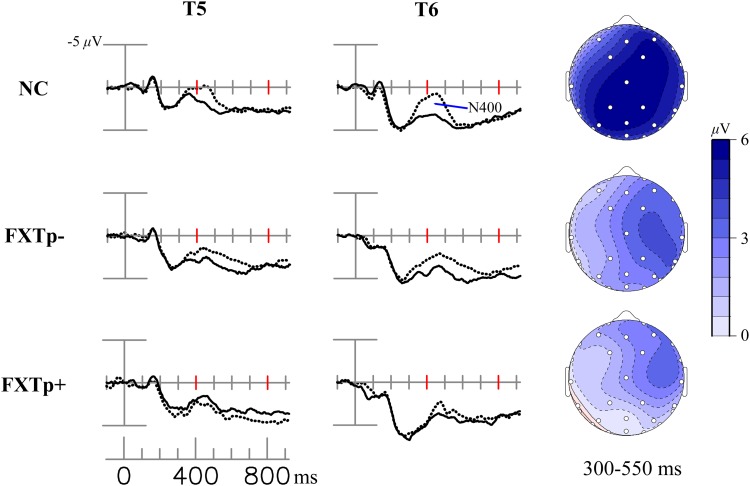
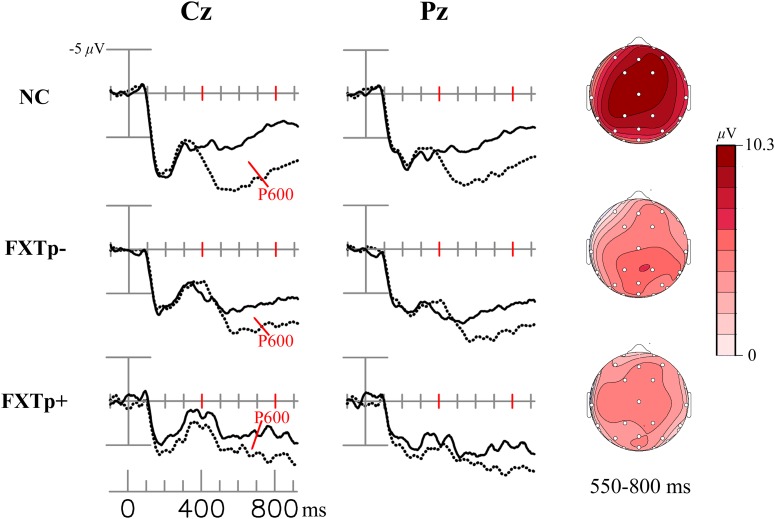
To examine cognitive deficits and associated brain activity in fragile X-associated tremor/ataxia syndrome (FXTAS) patients with parkinsonism (FXTp+), in relation to FXTAS patients without parkinsonism (FXTp-), and normal elderly controls (NC). Retrospective reviews were performed in 65 FXTAS patients who participated in the event-related brain potential (ERP) study and also had either a videotaped neurological examination or a neurological examination for extrapyramidal signs. Parkinsonism was defined as having bradykinesia with at least one of the following: rest tremor, postural instability, hypermyotonia, or rigidity. Eleven FXTp+ patients were identified and compared to 11 matched FXTp- and 11 NC. Main ERP measures included the N400 congruity effect, N400 repetition effect, and the late positive component (LPC) repetition effect. When compared with FXTp- and NC, the FXTp+ group showed more severe deficits in executive function, cued-recall, recognition memory, along with a significantly reduced N400 repetition effect (thought to index semantic processing and verbal learning/memory) which was correlated with poorer verbal memory. Across all patients, mRNA levels were inversely correlated with delayed recall on the California Verbal Learning Test (CVLT). The findings of more prominent executive dysfunction and verbal learning/memory deficits in FXTp+ than FXTp- are consistent with findings in Parkinson's disease (PD), and may indicate that concomitant and/or synergistic pathogenetic mechanisms associated with PD play a role in FXTAS. These results have implications not only for understanding the cognitive impairments associated with the parkinsonism subtype of FXTAS, but also for the development of new interventions for these patients.
为了研究脆性X相关震颤/共济失调综合征(FXTAS)合并帕金森症患者(FXTp+)的认知缺陷及相关脑活动,将其与无帕金森症的FXTAS患者(FXTp-)以及正常老年对照(NC)进行比较。对65名参与事件相关脑电位(ERP)研究且进行过录像神经学检查或锥体外系体征神经学检查的FXTAS患者进行了回顾性分析。帕金森症定义为存在运动迟缓并伴有以下至少一项:静止性震颤、姿势不稳、肌强直或肌张力增高。共识别出11名FXTp+患者,并与11名匹配的FXTp-患者和11名NC进行比较。主要的ERP测量指标包括N400一致性效应、N400重复效应和晚期正成分(LPC)重复效应。与FXTp-和NC相比,FXTp+组在执行功能、线索回忆、识别记忆方面表现出更严重的缺陷,同时N400重复效应显著降低(被认为可反映语义加工及言语学习/记忆),且与较差的言语记忆相关。在所有患者中,mRNA水平与加利福尼亚言语学习测验(CVLT)中的延迟回忆呈负相关。FXTp+组比FXTp-组存在更明显的执行功能障碍和言语学习/记忆缺陷,这一结果与帕金森病(PD)的研究结果一致,可能表明与PD相关的并发和/或协同致病机制在FXTAS中起作用。这些结果不仅有助于理解与FXTAS帕金森症亚型相关的认知障碍,也为这些患者新干预措施的开发提供了依据。