Health Economics and HIV/AIDS Research Division (HEARD), University of KwaZulu-Natal, Durban, South Africa.
Gender and Health Research Unit, South African Medical Research Council, Pretoria, South Africa.
PLoS One. 2018 Oct 3;13(10):e0204956. doi: 10.1371/journal.pone.0204956. eCollection 2018.
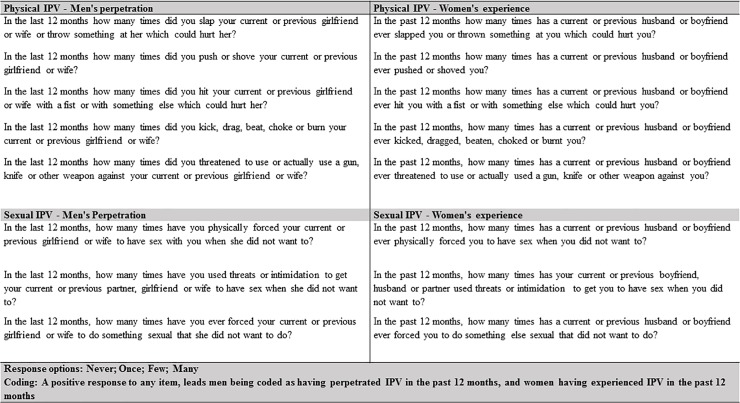
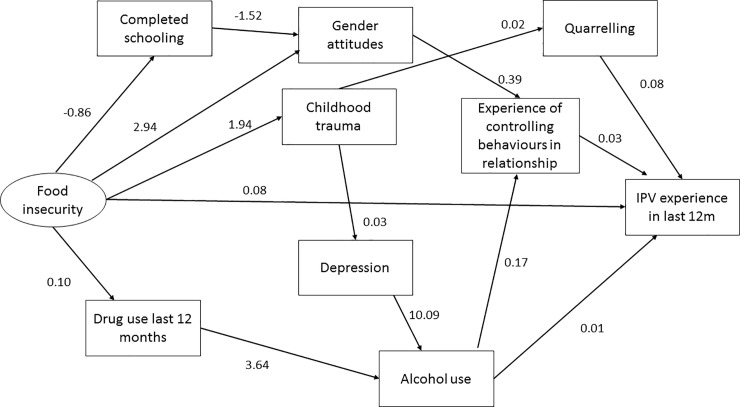
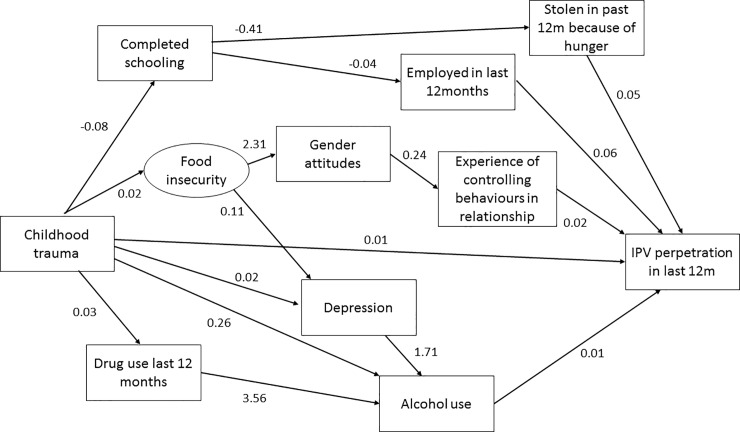
Research suggests that poverty is a key driver of intimate partner violence (IPV), however detailed analysis suggests that this relationship is not clear, either for women's experience or men's perpetration of IPV. We explored associations between poverty and IPV using cross-sectional data from the Stepping Stones and Creating Futures cluster randomized control trial, in urban informal settlements in Durban, South Africa, with young (18-30) people. Using logistic regression and structural equation modelling we assess associations between poverty and women's experience and men's perpetration of physical and/or sexual IPV in the past 12 months. 680 women and 677 men were recruited into the study between September 2015 and September 2016. The analyses highlight how specific forms or measures of poverty intersecting with gender identities shape IPV. For men we found indicators of economic provision were associated with IPV perpetration, while for women food-insecurity was key to IPV experience. We also found similarities between women and men. First, food-insecurity and childhood traumas shaped pathways to substance misuse and poor mental health that increased IPV. Second, there was a resilience pathway in both models, whereby those with more education had increased gender equitable attitudes and fewer controlling behaviours, which reduced IPV. Interventions to reduce IPV need to work to reduce household food insecurity, but these need to be combined with gender transformative interventions. Interventions should also focus on reducing the impact of mental health and substance misuse. Finally, working to increase educational attainment is a long-term critical intervention to reduce IPV.
NCT03022370. Registered 13 January 2017, retrospectively registered.
研究表明贫困是亲密伴侣暴力(IPV)的一个关键驱动因素,但详细分析表明,这种关系对于女性的经历或男性对 IPV 的实施都不明确。我们使用来自南非德班市区非正规住区 Stepping Stones 和 Creating Futures 集群随机对照试验的横断面数据,探索了贫困与 IPV 之间的关联,该试验涉及年轻人(18-30 岁)。我们使用逻辑回归和结构方程模型评估了贫困与女性过去 12 个月经历的身体和/或性 IPV 以及男性实施 IPV 之间的关联。2015 年 9 月至 2016 年 9 月期间,共招募了 680 名女性和 677 名男性参加这项研究。分析强调了贫困的特定形式或衡量标准与性别认同如何相互作用影响 IPV。对于男性,我们发现经济供养指标与 IPV 实施有关,而对于女性,粮食不安全是 IPV 经历的关键。我们还发现了女性和男性之间的相似之处。首先,粮食不安全和儿童创伤塑造了物质滥用和心理健康不良的途径,这些途径增加了 IPV。其次,两个模型都存在一个韧性途径,即那些受过更多教育的人具有更强的性别平等态度和更少的控制行为,这减少了 IPV。减少 IPV 的干预措施需要努力减少家庭粮食不安全,但这需要与性别变革干预措施相结合。干预措施还应侧重于减少心理健康和物质滥用的影响。最后,努力提高教育程度是减少 IPV 的长期关键干预措施。
NCT03022370。于 2017 年 1 月 13 日注册,回溯性注册。