Clinical and Surgery Department, Veterinary School, Minas Gerais Federal University, Campus Pampulha, Belo Horizonte, Minas Gerais, Brazil.
Laboratory of Toxins, Institute of Education and Research, Santa Casa, Belo Horizonte, Minas Gerais, Brazil.
PLoS One. 2018 Oct 4;13(10):e0204948. doi: 10.1371/journal.pone.0204948. eCollection 2018.
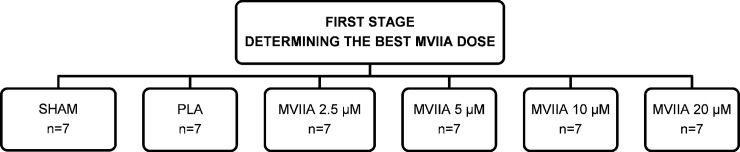
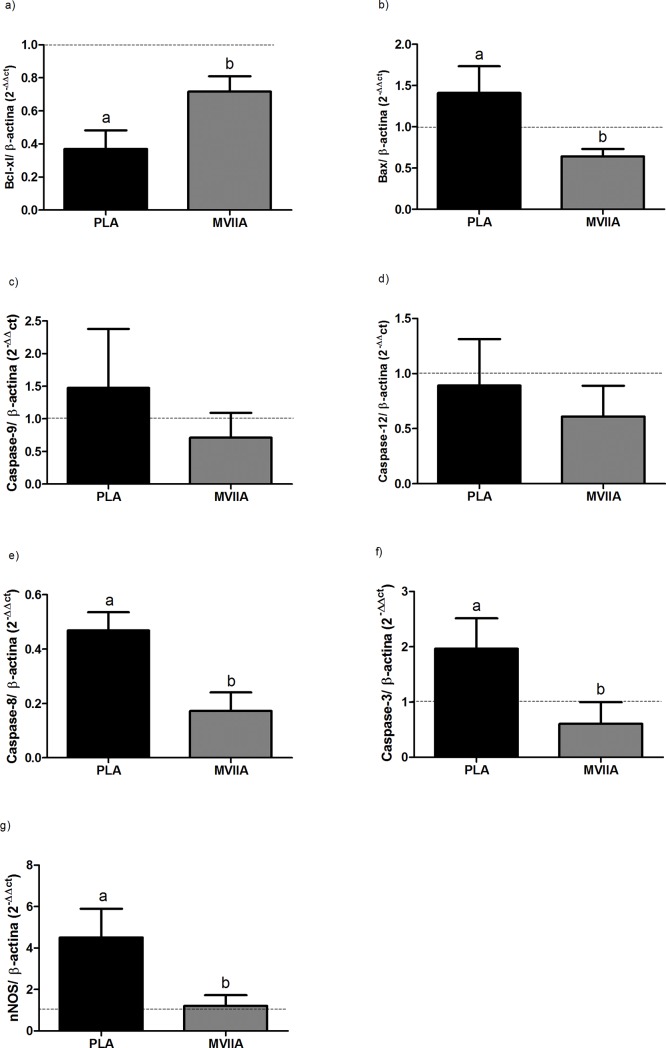
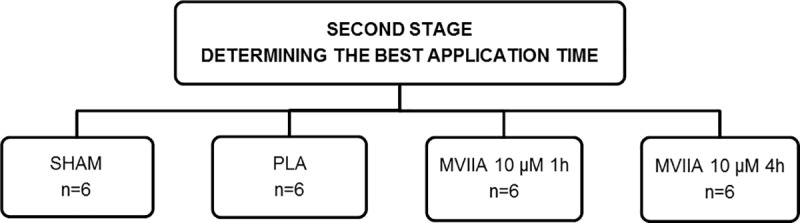
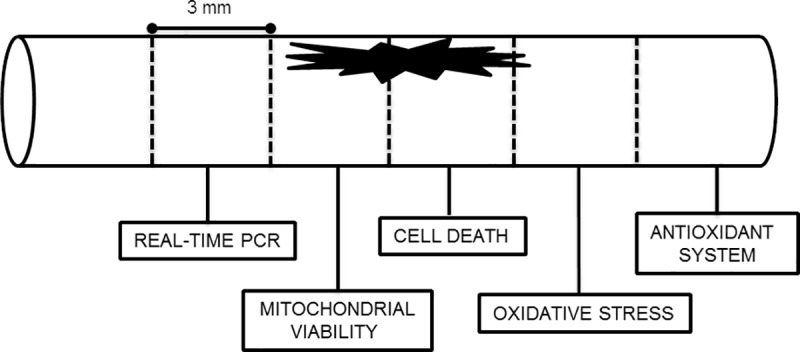
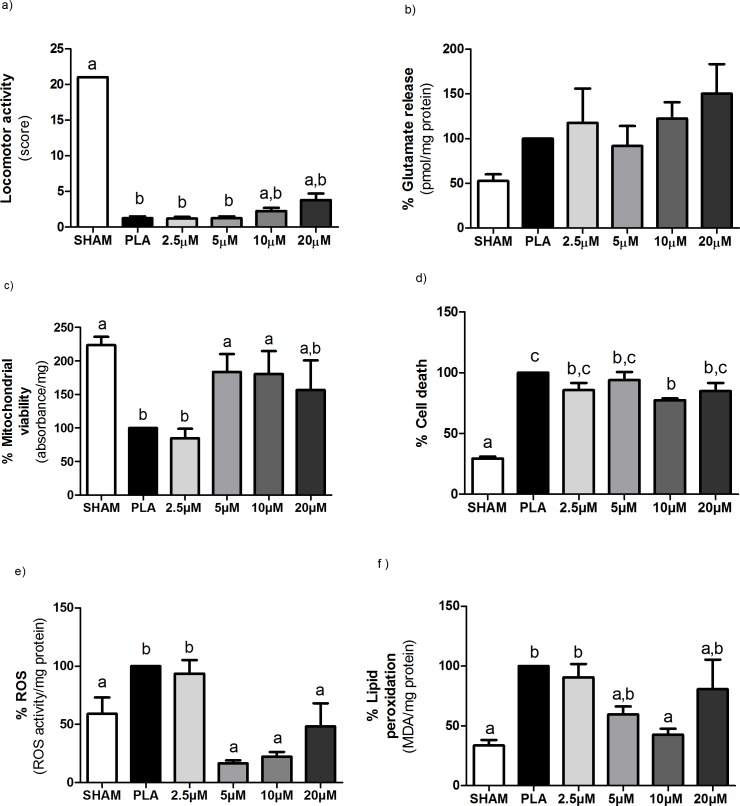
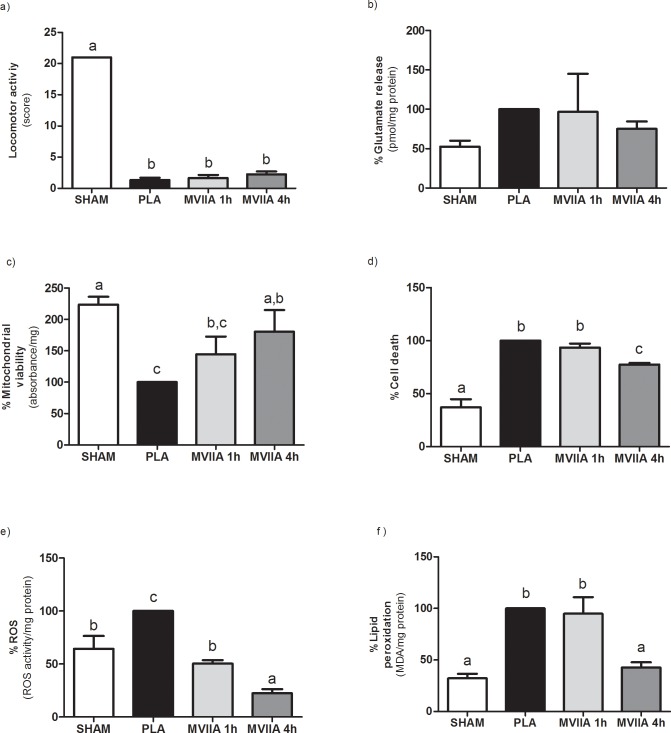
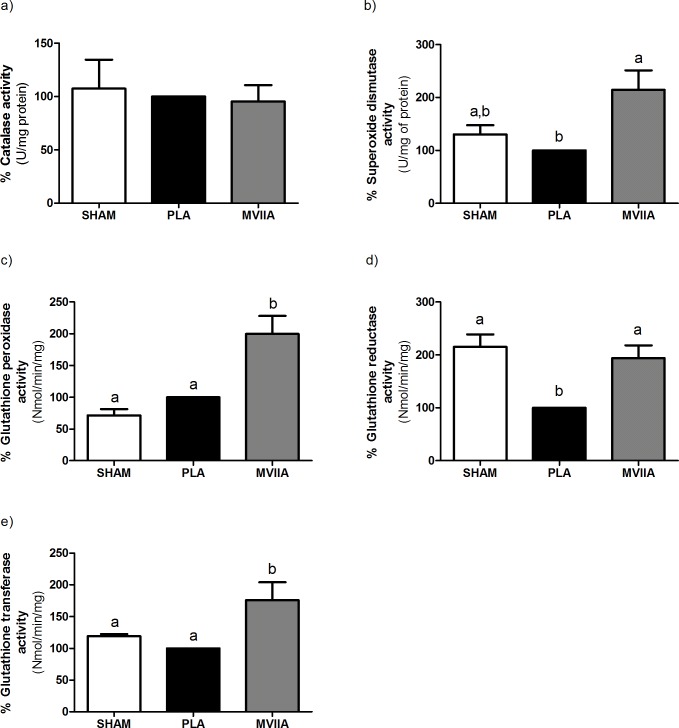
This study evaluates whether intrathecal MVIIA injection after spinal cord injury (SCI) elicits neuroprotective effects. The test rats were randomly distributed into six groups- sham, placebo, MVIIA 2.5 μM, MVIIA 5 μM, MVIIA 10 μM, and MVIIA 20 μM-and were administered the treatment four hours after SCI. After the optimal MVIIA dose (MVIIA 10 μM) was defined, the best time for application, one or four hours, was analyzed. Locomotor hind limb function and side effects were assessed. Forty-eight hours after the injury and immediately after euthanasia, spinal cord segments were removed from the test rats. Cell viability, reactive oxygen species, lipid peroxidation, and glutamate release were investigated. To examine the MVIIA mechanism of action, the gene expressions of pro-apoptotic (Bax, nNOS, and caspase-3, -8, -9, -12) and anti-apoptotic (Bcl-xl) factors in the spinal cord tissue samples were determined by real-time PCR, and the activities of antioxidant enzymes were also investigated. Application of intrathecal MVIIA 10 μM four hours after SCI prompted a neuroprotective effect: neuronal death decreased (22.46%), oxidative stress diminished, pro-apoptotic factors (Bax, nNOS, and caspase-3, -8) were expressed to a lesser extent, and mitochondrial viability as well as anti-apoptotic factor (Bcl-xl) expression increased. These results suggested that MVIIA provided neuroprotection through antioxidant effects. Indeed, superoxide dismutase (188.41%), and glutathione peroxidase (199.96%), reductase (193.86%), and transferase (175.93%) expressions increased. Therefore, intrathecal MVIIA (MVIIA 10 μM, 4 h) application has neuroprotective potential, and the possible mechanisms are related to antioxidant agent modulation and to intrinsic and extrinsic apoptotic pathways.
本研究评估了鞘内注射 MVIIA 对脊髓损伤(SCI)后的神经保护作用。实验大鼠随机分为六组:假手术组、安慰剂组、2.5μM MVIIA 组、5μM MVIIA 组、10μM MVIIA 组和 20μM MVIIA 组,SCI 后 4 小时给予治疗。确定最佳 MVIIA 剂量(10μM MVIIA)后,分析了最佳应用时间,即 1 小时或 4 小时。评估运动后肢功能和副作用。损伤后 48 小时,处死大鼠后取出脊髓节段。检测细胞活力、活性氧、脂质过氧化和谷氨酸释放。为了研究 MVIIA 的作用机制,通过实时 PCR 检测脊髓组织样本中促凋亡(Bax、nNOS 和 caspase-3、-8、-9、-12)和抗凋亡(Bcl-xl)因子的基因表达,同时还研究了抗氧化酶的活性。SCI 后 4 小时鞘内注射 10μM MVIIA 可产生神经保护作用:神经元死亡减少(22.46%),氧化应激减轻,促凋亡因子(Bax、nNOS 和 caspase-3、-8)表达减少,线粒体活力以及抗凋亡因子(Bcl-xl)表达增加。这些结果表明,MVIIA 通过抗氧化作用提供神经保护。事实上,超氧化物歧化酶(188.41%)、谷胱甘肽过氧化物酶(199.96%)、还原酶(193.86%)和转移酶(175.93%)的表达增加。因此,鞘内注射 MVIIA(10μM,4h)具有神经保护潜力,其可能的机制与抗氧化剂调节以及内在和外在凋亡途径有关。