Skin and Endothelium Research Division (SERD), Department of Dermatology, Medical University of Vienna, Vienna, Austria.
Division of Cardiovascular Surgery, Hospital of the University of Pennsylvania, Perelman School of Medicine, Philadelphia, Pennsylvania, United States of America.
PLoS One. 2018 Oct 5;13(10):e0205067. doi: 10.1371/journal.pone.0205067. eCollection 2018.
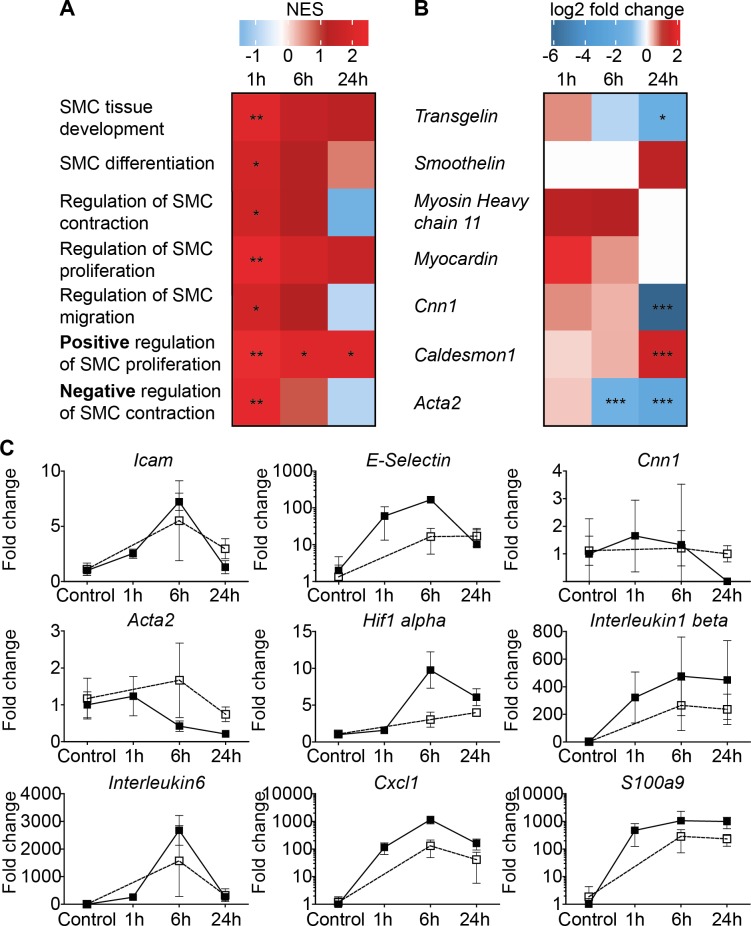
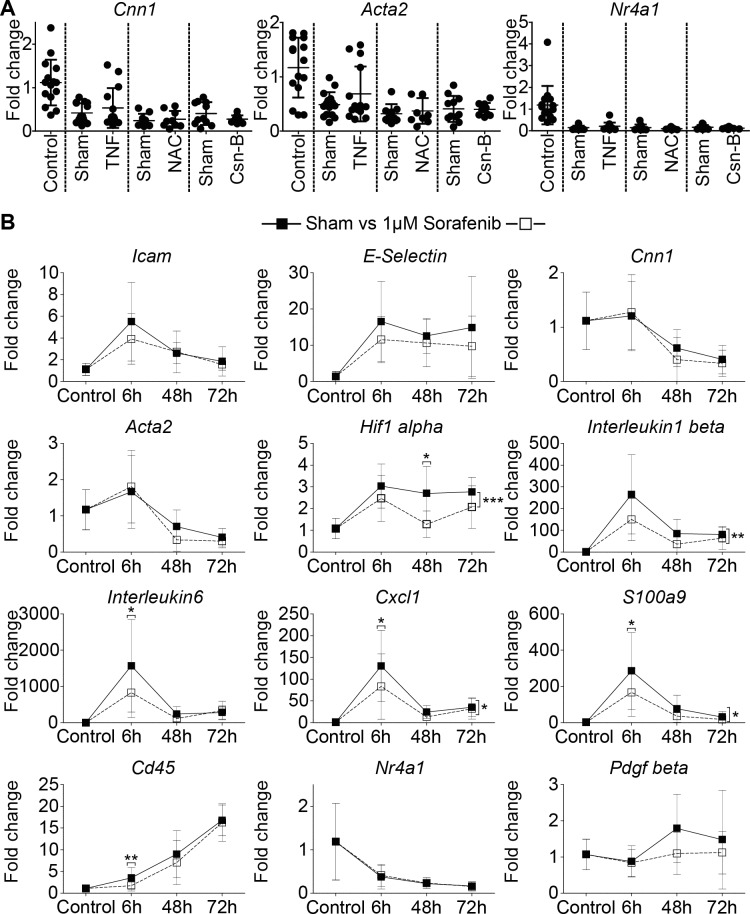
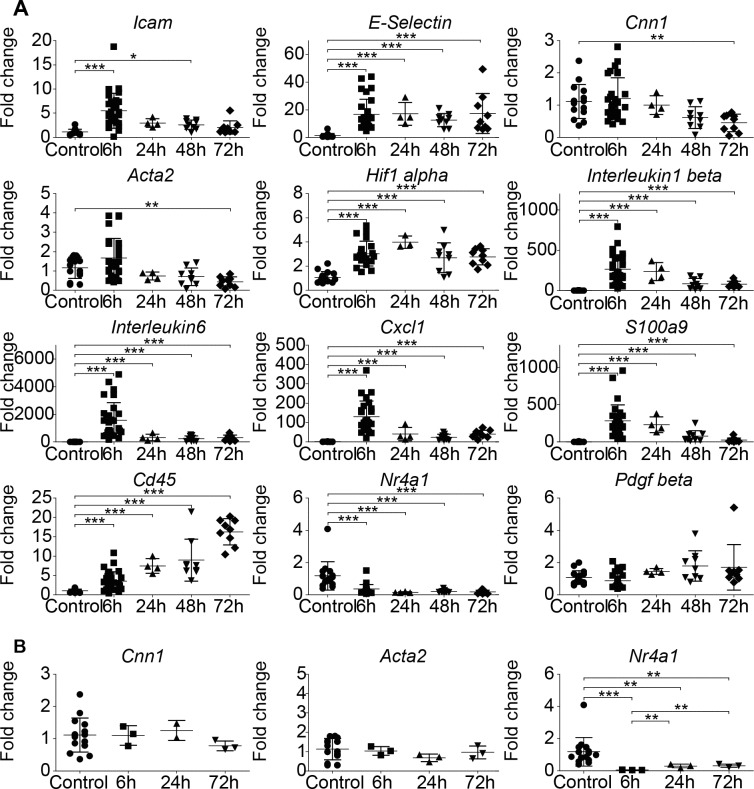
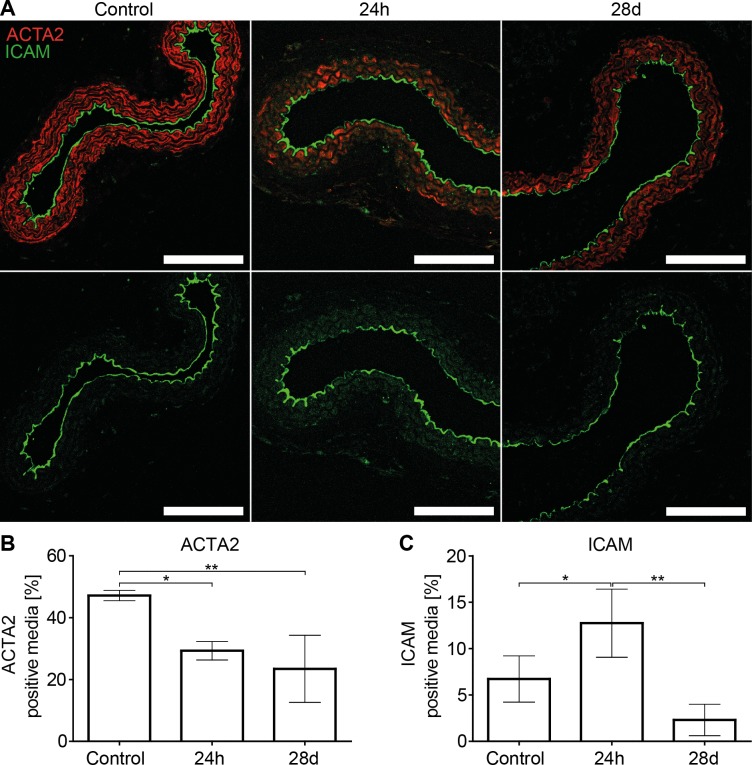
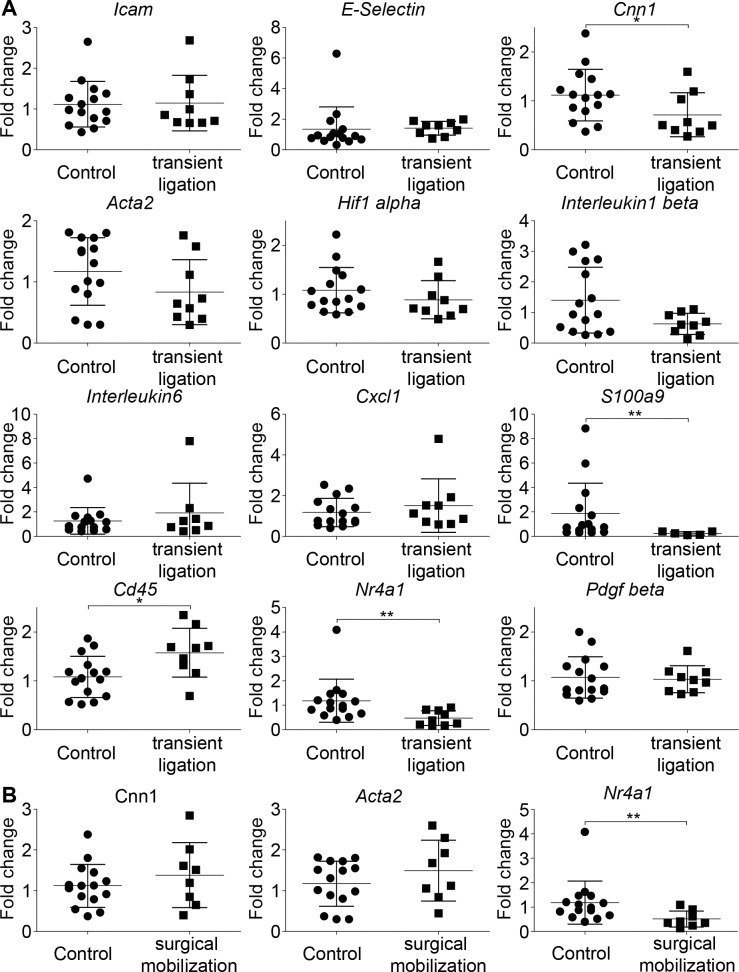
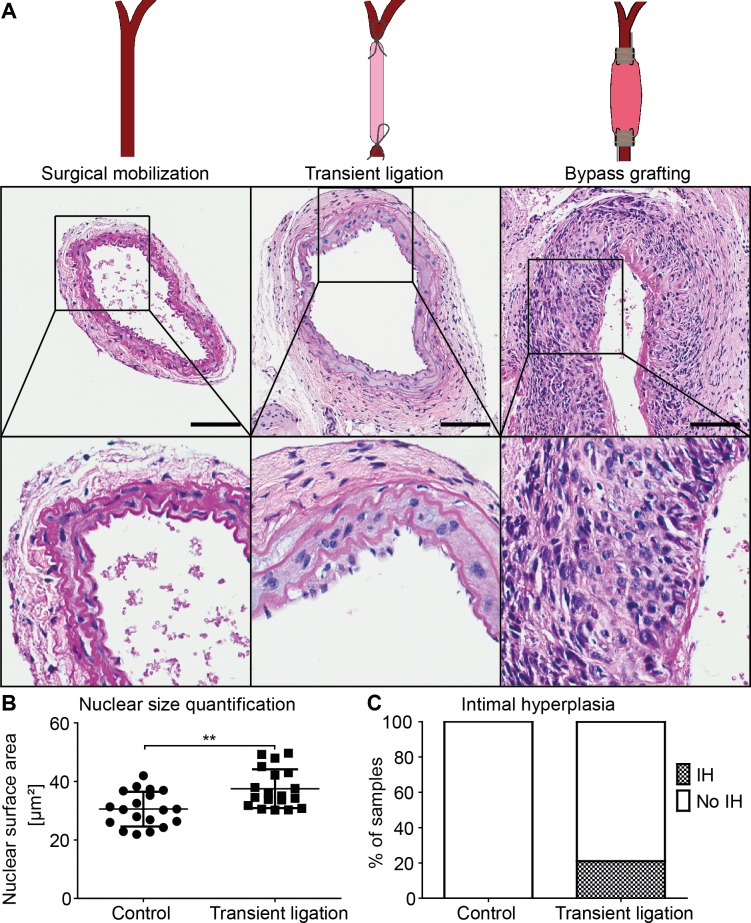
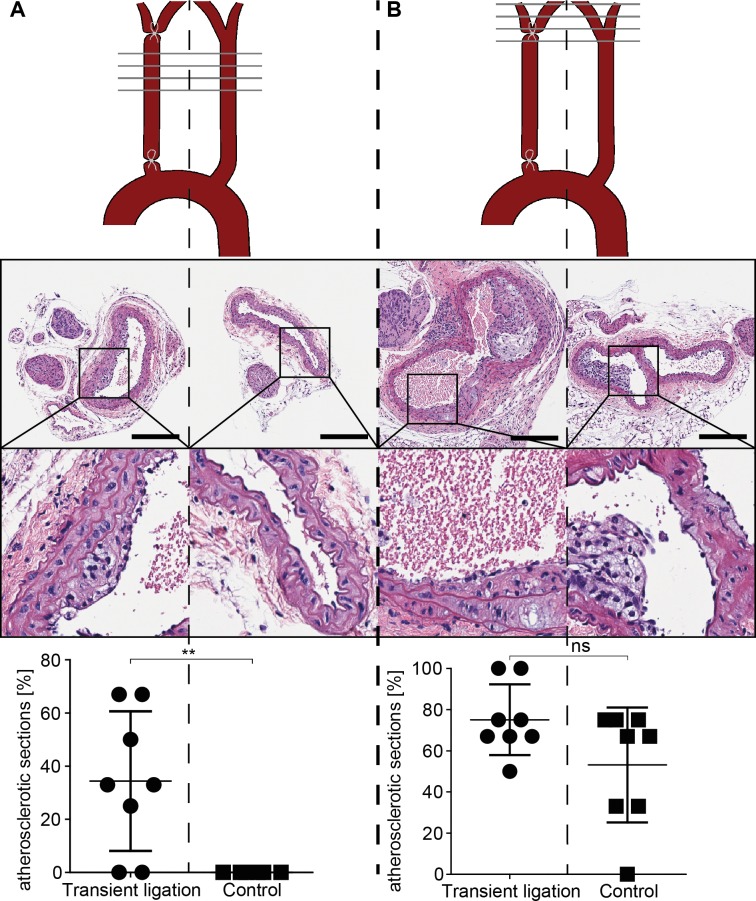
Surgical interventions on blood vessels bear a risk for intimal hyperplasia and atherosclerosis as a consequence of injury. A specific feature of intimal hyperplasia is the loss of vascular smooth muscle cell (VSMC) differentiation gene expression. We hypothesized that immediate responses following injury induce vascular remodeling. To differentiate injury due to trauma, reperfusion and pressure changes we analyzed vascular responses to carotid artery bypass grafting in mice compared to transient ligation. As a control, the carotid artery was surgically laid open only. In both, bypass or ligation models, the inflammatory responses were transient, peaking after 6h, whereas the loss of VSMC differentiation gene expression persisted. Extended time kinetics showed that transient carotid artery ligation was sufficient to induce a persistent VSMC phenotype change throughout 28 days. Transient arterial ligation in ApoE knockout mice resulted in atherosclerosis in the transiently ligated vascular segment but not on the not-ligated contralateral side. The VSMC phenotype change could not be prevented by anti-TNF antibodies, Sorafenib, Cytosporone B or N-acetylcysteine treatment. Surgical interventions involving hypoxia/reperfusion are sufficient to induce VSMC phenotype changes and vascular remodeling. In situations of a perturbed lipid metabolism this bears the risk to precipitate atherosclerosis.
血管的外科干预会因损伤而导致内膜增生和动脉粥样硬化。内膜增生的一个特点是血管平滑肌细胞(VSMC)分化基因表达的丧失。我们假设损伤后的即刻反应会诱导血管重塑。为了区分创伤、再灌注和压力变化引起的损伤,我们分析了与短暂结扎相比,小鼠颈动脉旁路移植术的血管反应。作为对照,仅对颈动脉进行手术切开。在旁路或结扎模型中,炎症反应是短暂的,在 6 小时后达到峰值,而 VSMC 分化基因表达的丧失持续存在。延长的时间动力学研究表明,短暂的颈动脉结扎足以在 28 天内诱导持续的 VSMC 表型变化。短暂的动脉结扎在 ApoE 基因敲除小鼠中导致暂时结扎血管段的动脉粥样硬化,但在未结扎的对侧血管段则没有。抗 TNF 抗体、索拉非尼、细胞松弛素 B 或 N-乙酰半胱氨酸治疗不能预防 VSMC 表型变化。涉及缺氧/再灌注的外科干预足以诱导 VSMC 表型变化和血管重塑。在脂质代谢紊乱的情况下,这有引发动脉粥样硬化的风险。