Department of Immunobiology and Yale Cancer Center, Yale University School of Medicine, New Haven, CT, USA.
Department of Immunobiology and Yale Cancer Center, Yale University School of Medicine, New Haven, CT, USA.
Cell. 2018 Oct 4;175(2):313-326. doi: 10.1016/j.cell.2018.09.035.
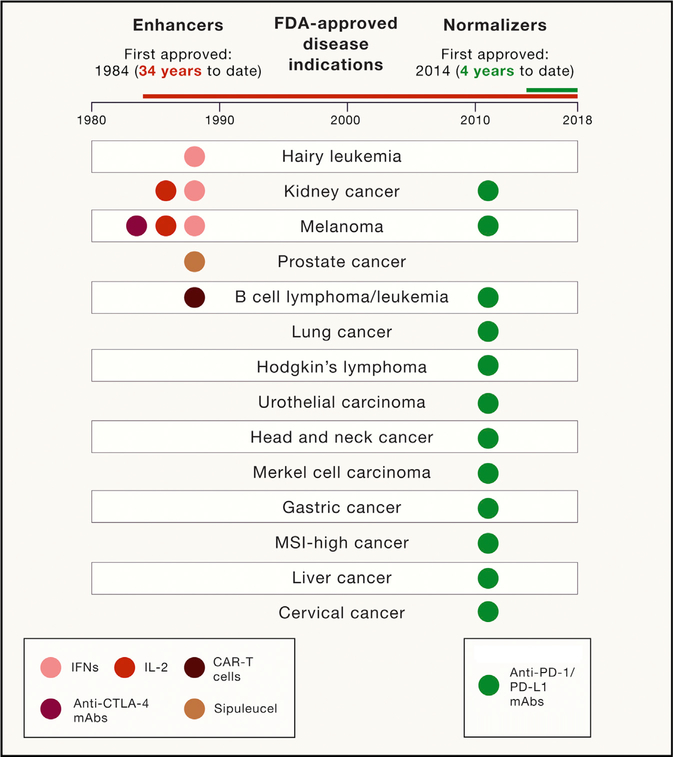
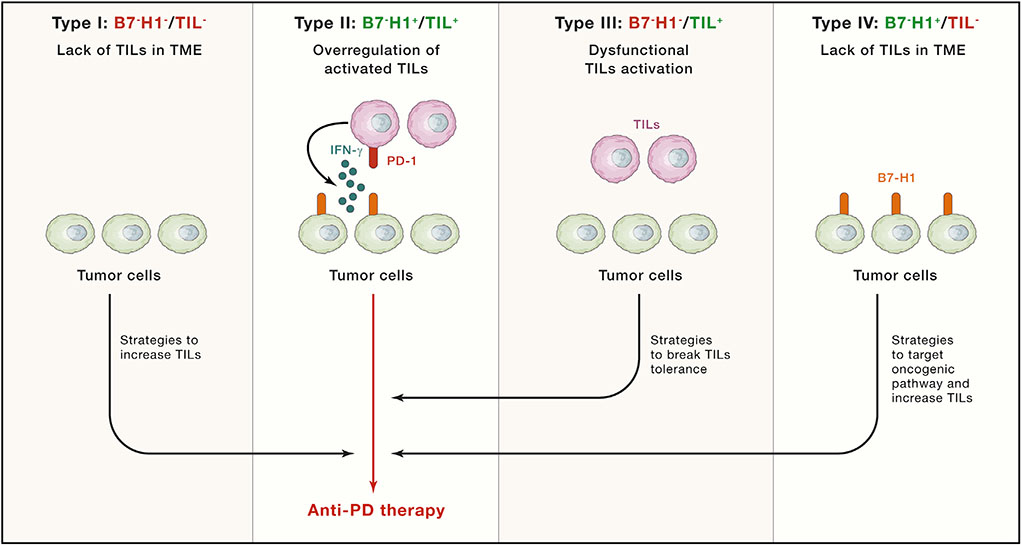
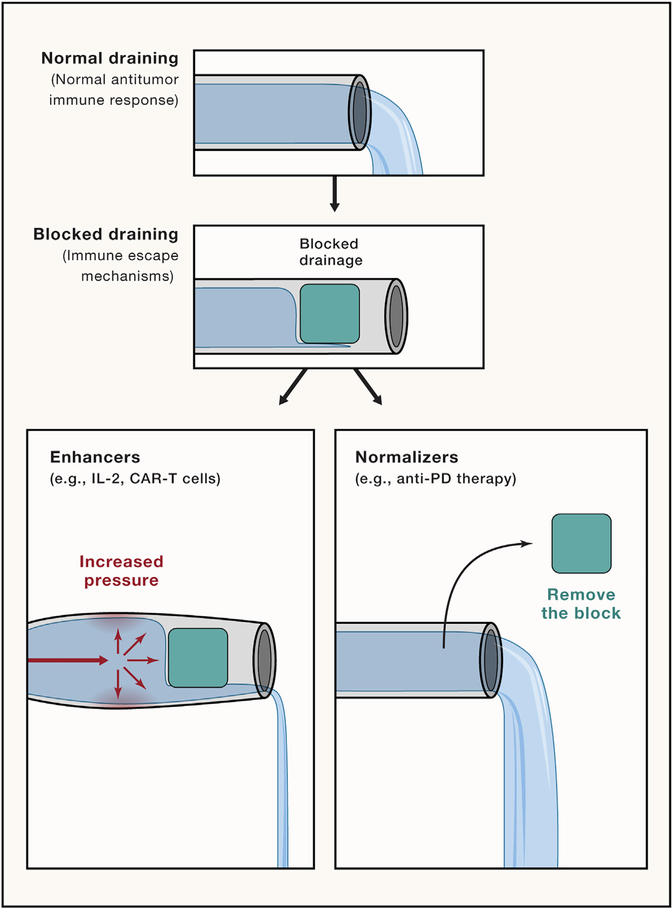
Harnessing an antitumor immune response has been a fundamental strategy in cancer immunotherapy. For over a century, efforts have primarily focused on amplifying immune activation mechanisms that are employed by humans to eliminate invaders such as viruses and bacteria. This "immune enhancement" strategy often results in rare objective responses and frequent immune-related adverse events (irAEs). However, in the last decade, cancer immunotherapies targeting the B7-H1/PD-1 pathway (anti-PD therapy), have achieved higher objective response rates in patients with much fewer irAEs. This more beneficial tumor response-to-toxicity profile stems from distinct mechanisms of action that restore tumor-induced immune deficiency selectively in the tumor microenvironment, here termed "immune normalization," which has led to its FDA approval in more than 10 cancer indications and facilitated its combination with different therapies. In this article, we wish to highlight the principles of immune normalization and learn from it, with the ultimate goal to guide better designs for future cancer immunotherapies.
利用抗肿瘤免疫反应一直是癌症免疫治疗的基本策略。一个多世纪以来,人们主要致力于放大人类用来消除病毒和细菌等入侵者的免疫激活机制。这种“免疫增强”策略通常会导致罕见的客观反应和频繁的免疫相关不良事件(irAEs)。然而,在过去十年中,针对 B7-H1/PD-1 通路的癌症免疫疗法(抗 PD 治疗)在患者中实现了更高的客观反应率,同时 irAEs 发生率更低。这种更有益的肿瘤反应-毒性特征源于作用机制的不同,这些机制选择性地在肿瘤微环境中恢复肿瘤诱导的免疫缺陷,我们称之为“免疫正常化”,这使其获得了 FDA 在超过 10 种癌症适应证中的批准,并促进了其与不同疗法的联合应用。在本文中,我们希望强调免疫正常化的原则并从中吸取经验教训,最终目的是为未来的癌症免疫疗法提供更好的设计指导。