McClellan Veterans Medical Center, Central Arkansas Veterans Healthcare Service, Little Rock, AR, 72205, USA.
Department of Geriatrics, Reynolds Institute on Aging, University of Arkansas for Medical Sciences, Little Rock, AR, 72205, USA.
Sci Rep. 2018 Oct 5;8(1):14891. doi: 10.1038/s41598-018-33143-1.
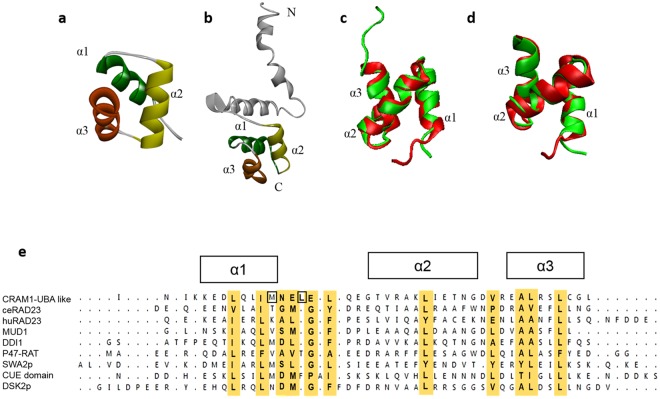
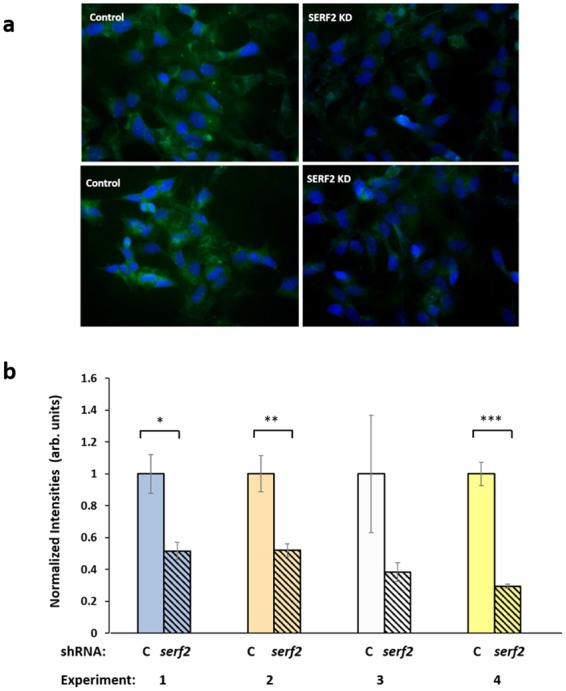
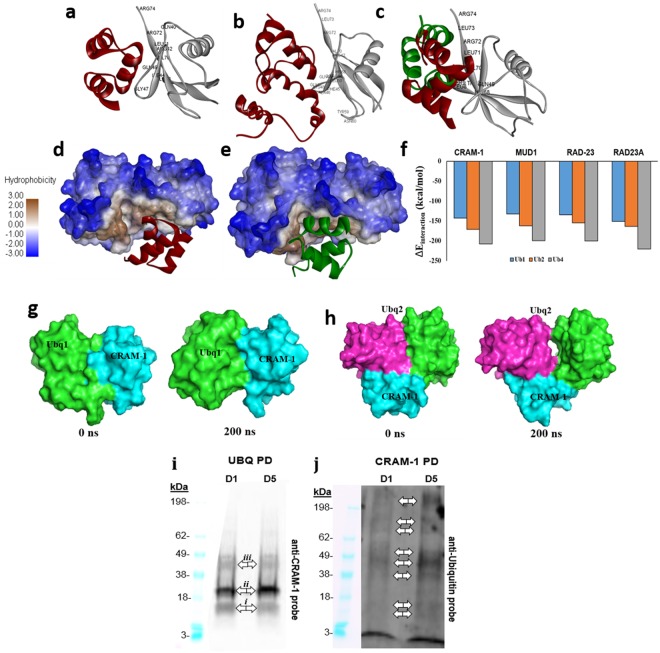
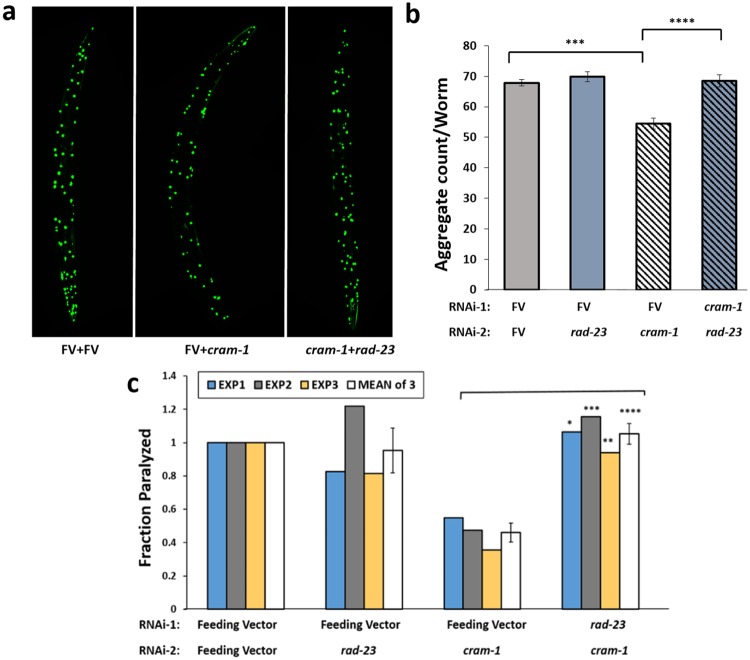
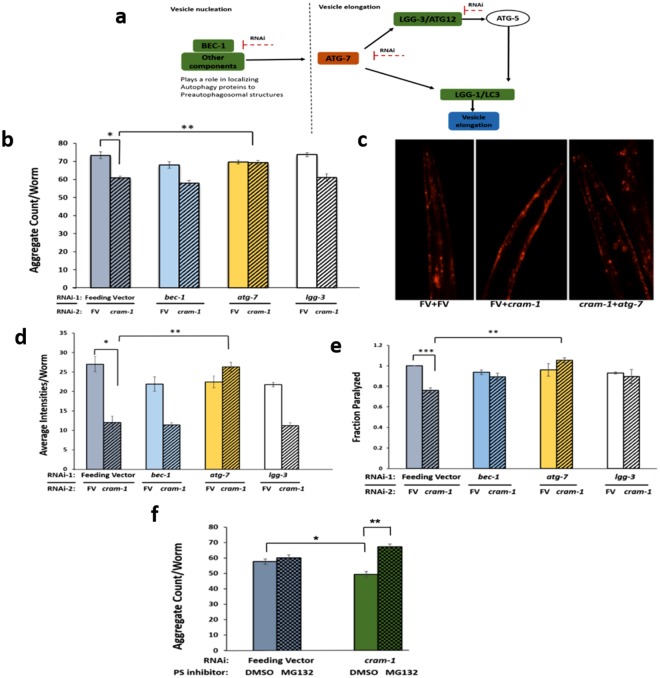
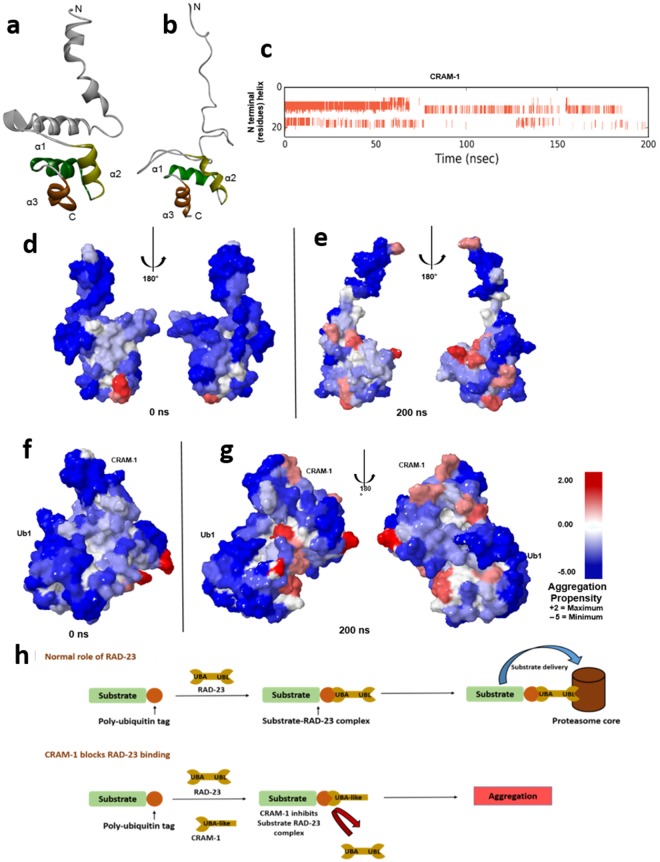
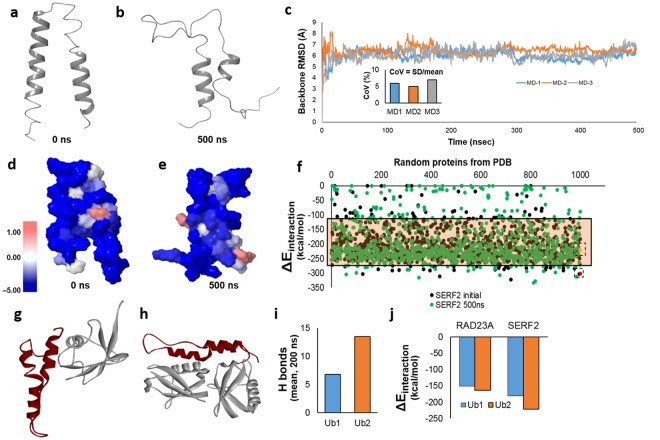
Toxic protein aggregates are key features of progressive neurodegenerative diseases. In addition to "seed" proteins diagnostic for each neuropathy (e.g., Aβ and tau in Alzheimer's disease), aggregates contain numerous other proteins, many of which are common to aggregates from diverse diseases. We reported that CRAM-1, discovered in insoluble aggregates of C. elegans expressing Q40::YFP, blocks proteasomal degradation of ubiquitinated proteins and thus promotes aggregation. We now show that CRAM-1 contains three α-helical segments forming a UBA-like domain, structurally similar to those of mammalian adaptor proteins (e.g. RAD23, SQSTM1/p62) that shuttle ubiquitinated cargos to proteasomes or autophagosomes for degradation. Molecular modeling indicates that CRAM-1, through this UBA-like domain, can form tight complexes with mono- and di-ubiquitin and may thus prevent tagged proteins from interacting with adaptor/shuttle proteins required for degradation. A human ortholog of CRAM-1, SERF2 (also largely disordered), promotes aggregation in SH-SY5Y-APP human neuroblastoma cells, since SERF2 knockdown protects these cells from amyloid formation. Atomistic molecular-dynamic simulations predict spontaneous unfolding of SERF2, and computational large-scale protein-protein interactions predict its stable binding to ubiquitins. SERF2 is also predicted to bind to most proteins screened at random, although with lower average stability than to ubiquitins, suggesting roles in aggregation initiation and/or progression.
有毒蛋白聚集体是进行性神经退行性疾病的关键特征。除了每种神经病变的“种子”蛋白(例如阿尔茨海默病中的 Aβ和 tau)外,聚集体还包含许多其他蛋白质,其中许多蛋白质与来自不同疾病的聚集体共有。我们曾报道过 CRAM-1,它是在表达 Q40::YFP 的线虫不溶性聚集体中发现的,可阻止泛素化蛋白的蛋白酶体降解,从而促进聚集体的形成。我们现在表明,CRAM-1 包含三个形成 UBA 样结构域的α螺旋片段,结构上类似于将泛素化货物穿梭到蛋白酶体或自噬体进行降解的哺乳动物衔接蛋白(例如 RAD23、SQSTM1/p62)。分子建模表明,CRAM-1 通过这个 UBA 样结构域,可以与单泛素和二泛素形成紧密复合物,从而阻止标记的蛋白质与降解所需的衔接/穿梭蛋白相互作用。CRAM-1 的人类同源物 SERF2(也主要呈无规则卷曲),在 SH-SY5Y-APP 人神经母细胞瘤细胞中促进聚集体的形成,因为 SERF2 的敲低可保护这些细胞免受淀粉样形成的影响。原子分子动力学模拟预测 SERF2 会自发展开,而计算大规模的蛋白质-蛋白质相互作用预测其与泛素的稳定结合。SERF2 还预测会与随机筛选的大多数蛋白质结合,尽管与泛素的平均稳定性较低,这表明其在聚集的起始和/或进展中发挥作用。