Laboratório de Inflamação, Instituto de Biofísica Carlos Chagas Filho, Universidade Federal do Rio de Janeiro, Rio de Janeiro, Brazil.
Departamento de Ciências da Natureza, Instituto de Aplicação Fernando Rodrigues da Silveira, Universidade do Estado do Rio de Janeiro, Rio de Janeiro, Brazil.
Front Immunol. 2018 Sep 20;9:2139. doi: 10.3389/fimmu.2018.02139. eCollection 2018.
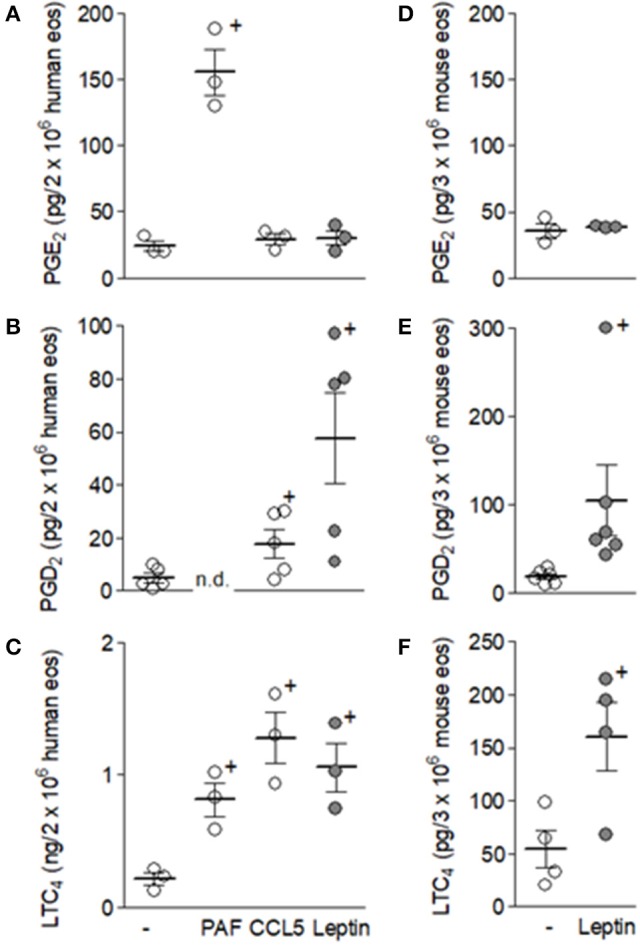
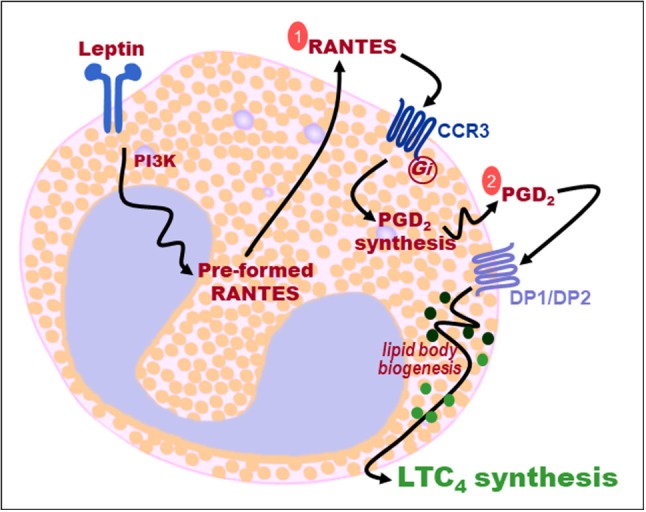
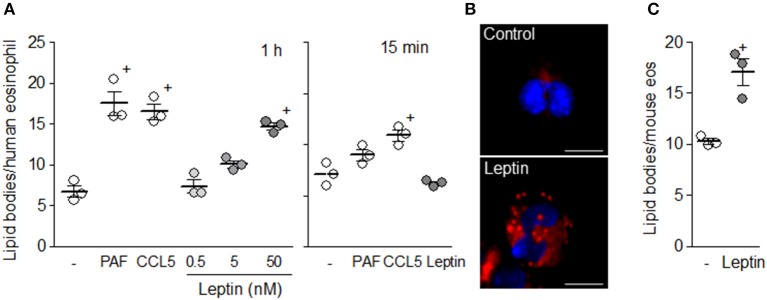
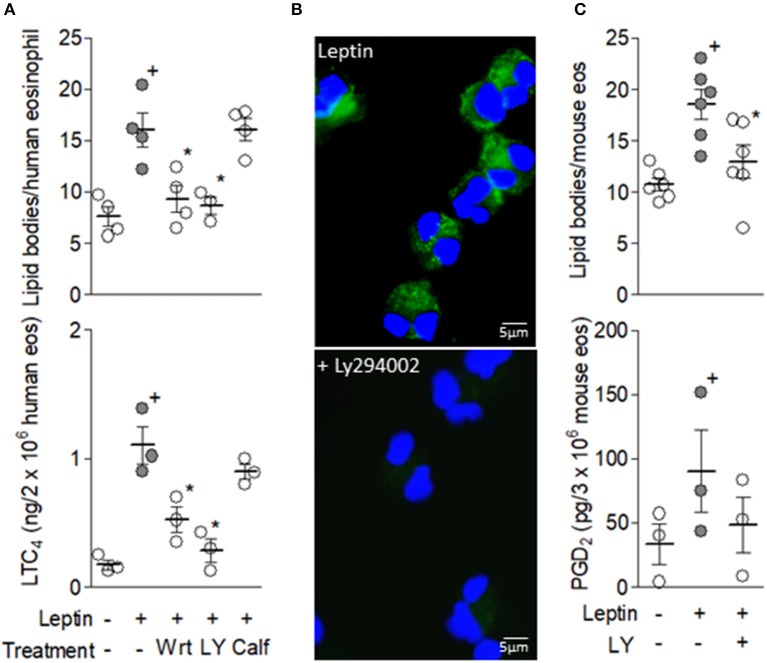
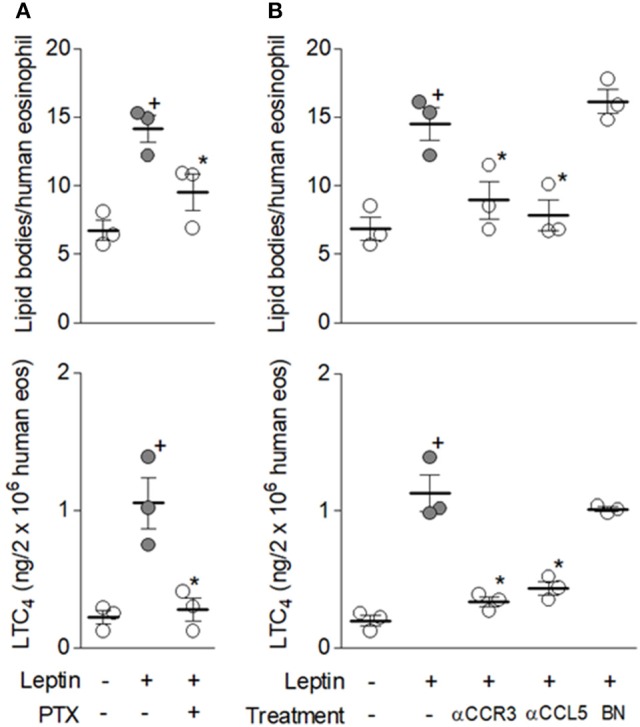
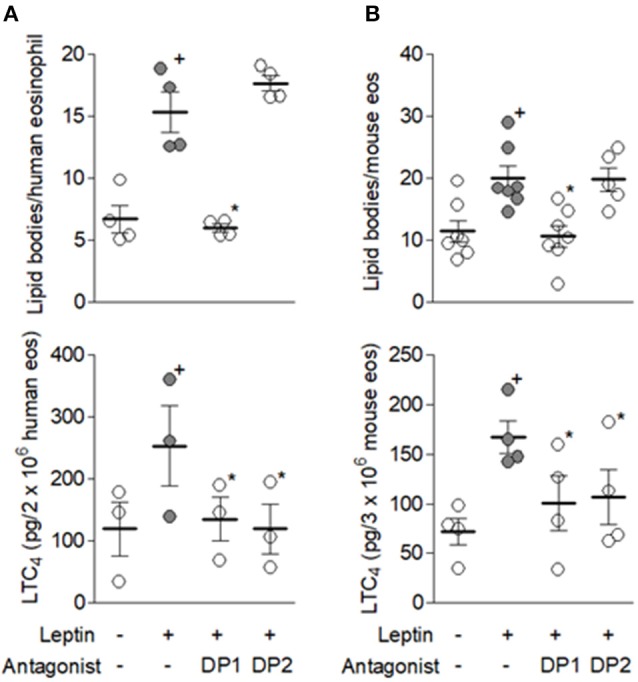
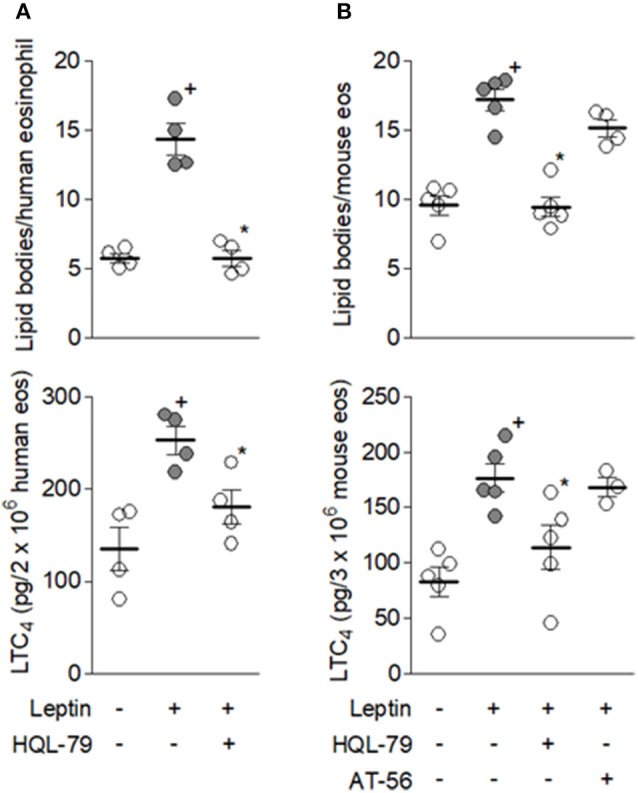
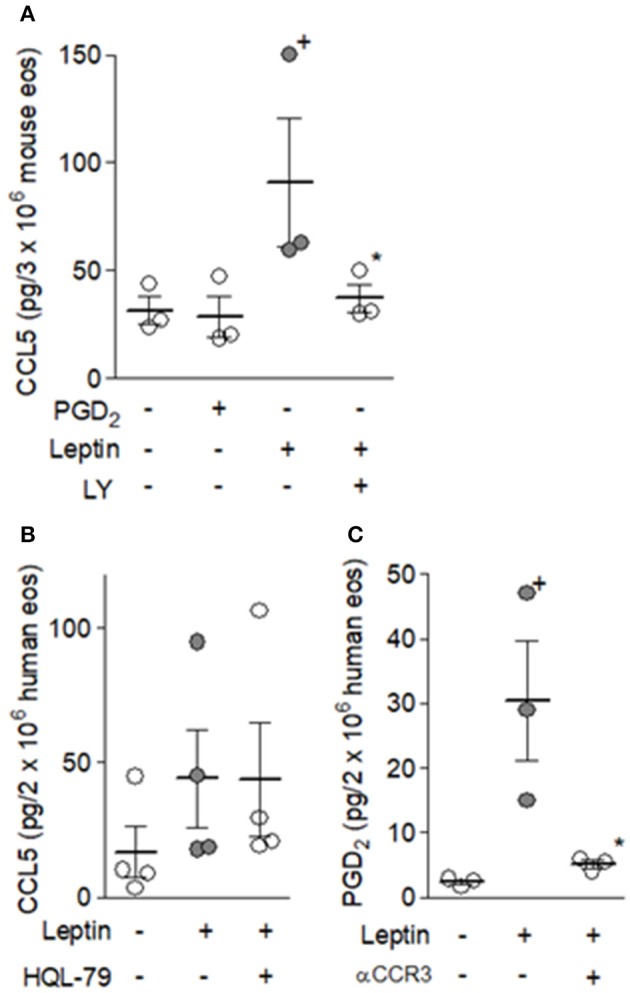
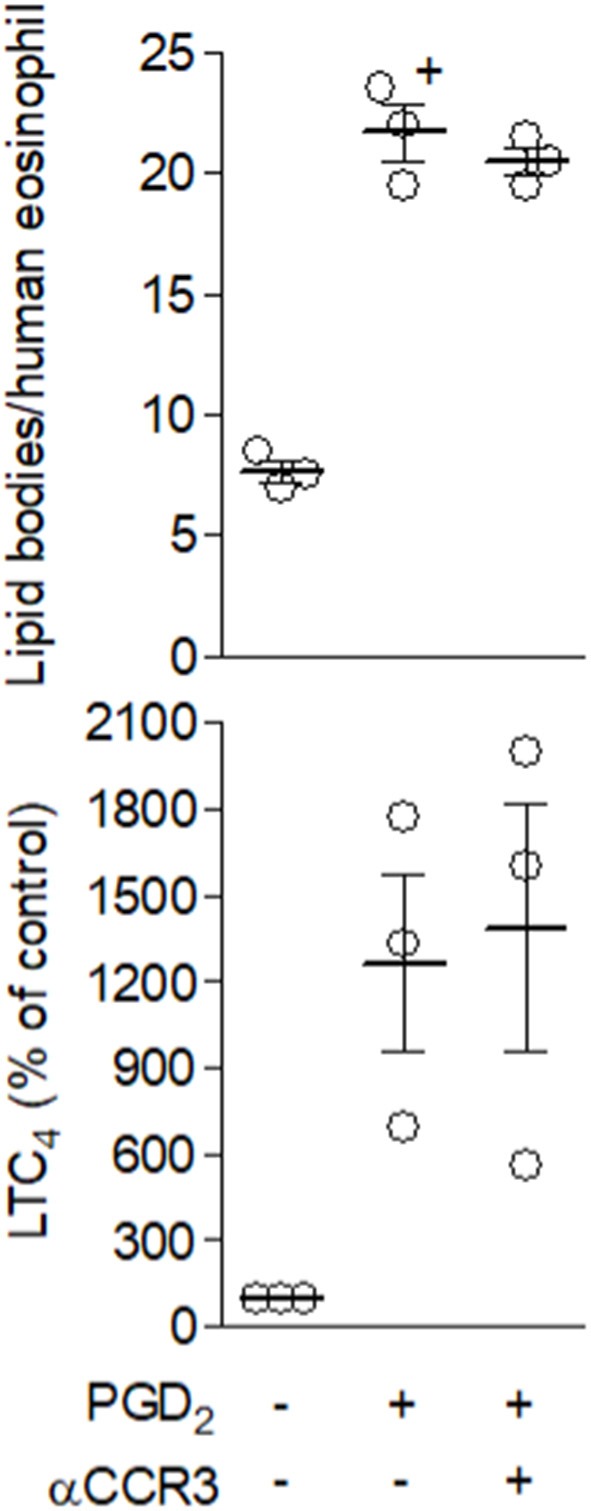
Leptin is a cytokine, produced mainly by mature adipocytes, that regulates the central nervous system, mainly to suppress appetite and stimulate energy expenditure. Leptin also regulates the immune response by controlling activation of immunomodulatory cells, including eosinophils. While emerging as immune regulatory cells with roles in adipose tissue homeostasis, eosinophils have a well-established ability to synthesize pro-inflammatory molecules such as lipid mediators, a key event in several inflammatory pathologies. Here, we investigated the impact and mechanisms involved in leptin-driven activation of eicosanoid-synthesizing machinery within eosinophils. Direct activation of human or mouse eosinophils with leptin elicited synthesis of lipoxygenase as well as cyclooxygenase products. Displaying selectivity, leptin triggered synthesis of LTC and PGD, but not PGE, in parallel to dose-dependent induction of lipid body/lipid droplets biogenesis. While dependent on PI3K activation, leptin-driven eosinophil activation was also sensitive to pertussis toxin, indicating the involvement of G-protein coupled receptors on leptin effects. Leptin-induced lipid body-driven LTC synthesis appeared to be mediated through autocrine activation of G-coupled CCR3 receptors by eosinophil-derived CCL5, inasmuch as leptin was able to trigger rapid CCL5 secretion, and neutralizing anti-RANTES or anti-CCR3 antibodies blocked lipid body assembly and LTC synthesis induced by leptin. Remarkably, autocrine activation of PGD G-coupled receptors DP1 and DP2 also contributes to leptin-elicited lipid body-driven LTC synthesis by eosinophils in a PGD-dependent fashion. Blockade of leptin-induced PGD autocrine/paracrine activity by a specific synthesis inhibitor or DP1 and DP2 receptor antagonists, inhibited both lipid body biogenesis and LTC synthesis induced by leptin stimulation within eosinophils. In addition, CCL5-driven CCR3 activation appears to precede PGD receptor activation within eosinophils, since neutralizing anti-CCL5 or anti-CCR3 antibodies inhibited leptin-induced PGD secretion, while it failed to alter PGD-induced LTC synthesis. Altogether, sequential activation of CCR3 and then PGD receptors by autocrine ligands in response to leptin stimulation of eosinophils culminates with eosinophil activation, characterized here by assembly of lipidic cytoplasmic platforms synthesis and secretion of the pleiotropic lipid mediators, PGD, and LTC.
瘦素是一种细胞因子,主要由成熟脂肪细胞产生,它调节中枢神经系统,主要是抑制食欲和刺激能量消耗。瘦素还通过控制免疫调节细胞的激活来调节免疫反应,包括嗜酸性粒细胞。虽然嗜酸性粒细胞作为在脂肪组织稳态中具有作用的免疫调节细胞而出现,但它们具有合成促炎分子(如脂质介质)的既定能力,这是几种炎症病理中的关键事件。在这里,我们研究了瘦素驱动的嗜酸性粒细胞中类二十烷酸合成机制的激活的影响和机制。瘦素直接激活人或鼠嗜酸性粒细胞可引发脂氧合酶和环氧化酶产物的合成。表现出选择性,瘦素触发 LTC 和 PGD 的合成,但不触发 PGE 的合成,同时平行诱导脂体/脂滴生物发生的剂量依赖性诱导。虽然依赖于 PI3K 的激活,但瘦素驱动的嗜酸性粒细胞激活也对百日咳毒素敏感,表明 G 蛋白偶联受体参与了瘦素的作用。瘦素诱导的脂体驱动的 LTC 合成似乎是通过嗜酸性粒细胞衍生的 CCL5 对 G 蛋白偶联 CCR3 受体的自分泌激活介导的,因为瘦素能够触发 CCL5 的快速分泌,并且中和抗 RANTES 或抗 CCR3 抗体阻断了由瘦素触发的脂体组装和 LTC 合成。值得注意的是,PGD G 蛋白偶联受体 DP1 和 DP2 的自分泌激活也以 PGD 依赖的方式有助于嗜酸性粒细胞中由瘦素引发的脂体驱动的 LTC 合成。通过特定的合成抑制剂或 DP1 和 DP2 受体拮抗剂阻断瘦素诱导的 PGD 自分泌/旁分泌活性,抑制了由瘦素刺激引起的嗜酸性粒细胞中的脂体生物发生和 LTC 合成。此外,CCL5 驱动的 CCR3 激活似乎先于 PGD 受体在嗜酸性粒细胞内的激活,因为中和抗 CCL5 或抗 CCR3 抗体抑制了瘦素诱导的 PGD 分泌,但未能改变 PGD 诱导的 LTC 合成。总之,嗜酸性粒细胞对瘦素刺激的反应中,通过自分泌配体对 CCR3 和然后 PGD 受体的顺序激活导致嗜酸性粒细胞的激活,其特征是由脂质细胞质平台的组装和多效脂质介质 PGD 和 LTC 的分泌组成。