Sharma Mayank, Bennewitz Bationa, Klösgen Ralf Bernd
Institute of Biology-Plant Physiology, Martin Luther University Halle-Wittenberg, Halle, Germany.
Front Plant Sci. 2018 Sep 19;9:1350. doi: 10.3389/fpls.2018.01350. eCollection 2018.
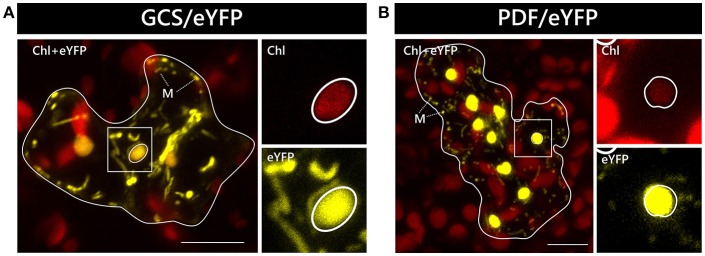
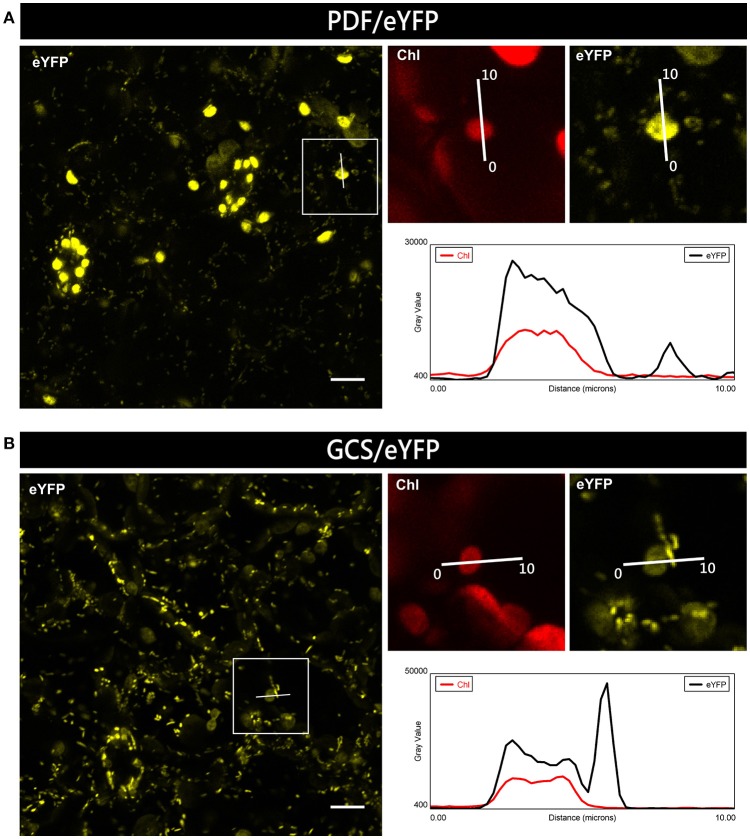
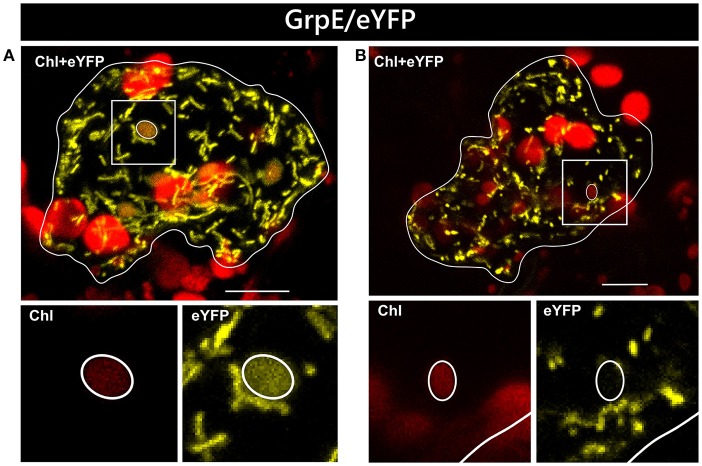
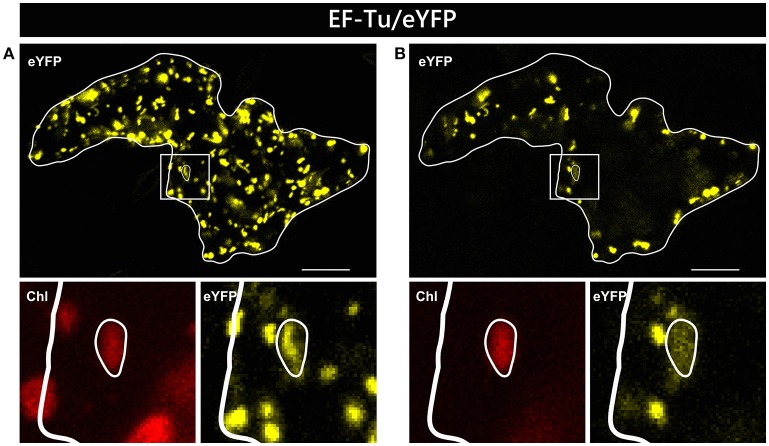
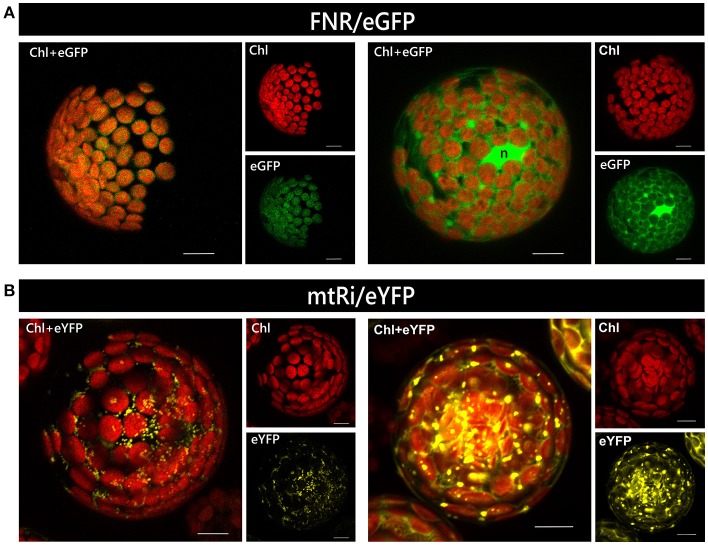
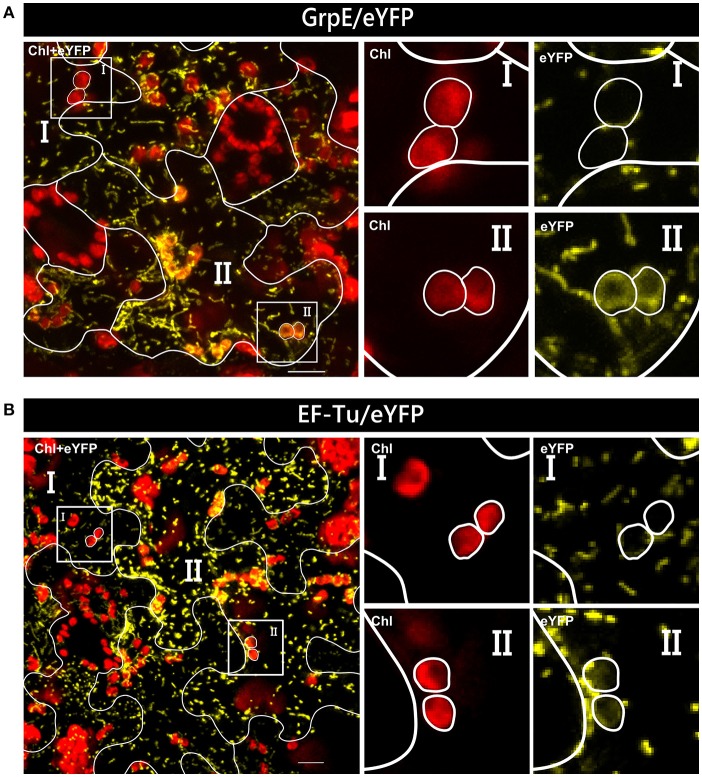
Plant cells are unique as they carry two organelles of endosymbiotic origin, namely mitochondria and chloroplasts (plastids) which have specific but partially overlapping functions, e. g., in energy and redox metabolism. Despite housing residual genomes of limited coding capacity, most of their proteins are encoded in the nucleus, synthesized by cytosolic ribosomes and need to be transported "back" into the respective target organelle. While transport is in most instances strictly monospecific, a group of proteins carries "ambiguous" transit peptides mediating transport into both, mitochondria and plastids. However, such dual targeting is often disputed due to variability in the results obtained from different experimental approaches. We have therefore compared and evaluated the most common methods established to study protein targeting into organelles within intact plant cells. All methods are based on fluorescent protein technology and live cell imaging. For our studies, we have selected four candidate proteins with proven dual targeting properties and analyzed their subcellular localization utilizing four different methods (particle bombardment, protoplast transformation, infiltration, and transgenic plants). Though using identical expression constructs in all instances, a given candidate protein does not always show the same targeting specificity in all approaches, demonstrating that the choice of method is important, and depends very much on the question to be addressed.
植物细胞很独特,因为它们含有两种内共生起源的细胞器,即线粒体和叶绿体(质体),它们具有特定但部分重叠的功能,例如在能量和氧化还原代谢方面。尽管它们含有编码能力有限的残余基因组,但它们的大多数蛋白质是在细胞核中编码的,由胞质核糖体合成,并且需要被“运回”到各自的靶细胞器中。虽然在大多数情况下运输是严格单特异性的,但有一组蛋白质携带“模糊”的转运肽,介导进入线粒体和质体两者的运输。然而,由于不同实验方法获得的结果存在差异,这种双重靶向性常常受到争议。因此,我们比较并评估了已建立的用于研究完整植物细胞内蛋白质靶向细胞器的最常用方法。所有方法都基于荧光蛋白技术和活细胞成像。在我们的研究中,我们选择了四种具有已证实的双重靶向特性的候选蛋白质,并使用四种不同方法(粒子轰击、原生质体转化、浸润和转基因植物)分析了它们的亚细胞定位。尽管在所有情况下都使用相同的表达构建体,但给定的候选蛋白质在所有方法中并不总是表现出相同的靶向特异性,这表明方法的选择很重要,并且在很大程度上取决于要解决的问题。