Mehlmann Fernanda Moreira Gomes, Ferraro Leonardo Henrique Cunha, Sousa Paulo César Castello Branco de, Cunha Graziella Prianti, Bergamaschi Esthael Cristina Querido Avelar, Takeda Alexandre
Universidade Federal de São Paulo (Unifesp), Escola Paulista de Medicina (EPM), Grupo de Anestesia Regional da Disciplina de Anestesiologia, Dor e Medicina Intensiva, São Paulo, SP, Brasil.
Universidade Federal de São Paulo (Unifesp), Escola Paulista de Medicina (EPM), Grupo de Anestesia Regional da Disciplina de Anestesiologia, Dor e Medicina Intensiva, São Paulo, SP, Brasil.
Braz J Anesthesiol. 2019 Jan-Feb;69(1):104-108. doi: 10.1016/j.bjan.2018.06.011. Epub 2018 Oct 6.
A patient's ability to move his/her fingers during hand surgery may be helpful to surgeons because it allows the effectiveness of the intervention evaluation and prediction of hand function in the postoperative period. The purpose of this case series is to demonstrate the efficacy of an ultrasound-guided peripheral nerve block technique to maintain the hand flexor and extensor muscles motor function and discuss the benefits of the technique for trigger finger surgery.
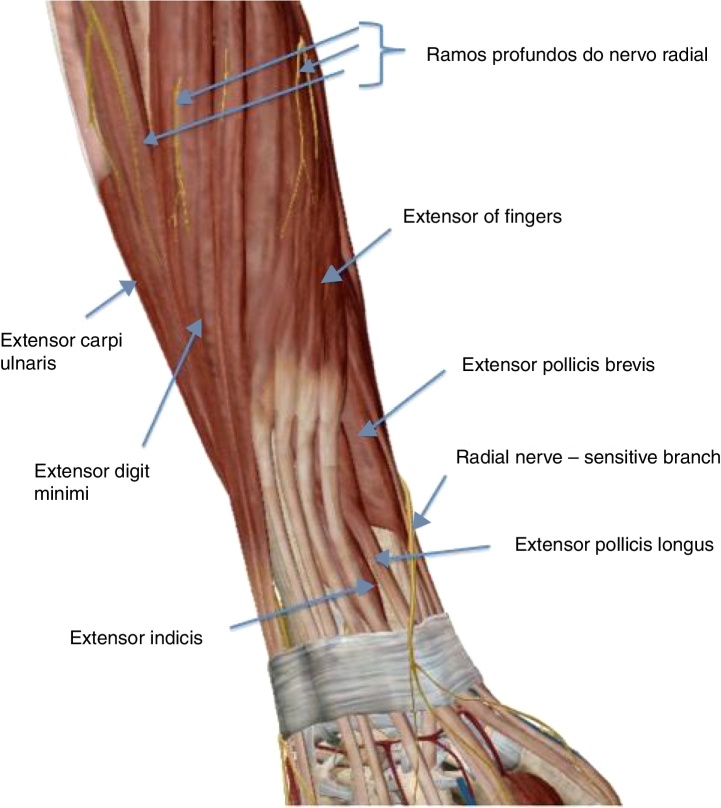
Ten patients scheduled to undergo trigger finger surgery were selected. The goal was to maintain flexion and extension of the fingers during the procedure. Thus, ultrasound-guided ulnar, radial, and medial nerve block was performed in the distal third of the forearm, at 5–7 cm proximal to the wrist. The block was performed with 5 mL of 0.375% bupivacaine on each nerve. All procedures were uneventfully performed maintaining the flexion and extension of the fingers. In two cases, it was observed that the motricity maintenance and the patients’ ability to move their fingers when requested allowed the success of the surgical procedure after the third intraoperative evaluation.
This case series shows that it is possible to maintain the motor function of the hand flexor and extensor muscles to perform finger trigger surgeries using specific ultrasound-guided distal blocks.
在手外科手术中,患者移动手指的能力可能有助于外科医生,因为这有助于评估干预效果并预测术后手部功能。本病例系列的目的是证明超声引导下的外周神经阻滞技术在维持手部屈肌和伸肌运动功能方面的有效性,并讨论该技术在扳机指手术中的益处。
选择了10例计划接受扳机指手术的患者。目标是在手术过程中维持手指的屈伸。因此,在手腕近端5-7厘米处的前臂远端三分之一处进行了超声引导下的尺神经、桡神经和正中神经阻滞。每条神经用5毫升0.375%的布比卡因进行阻滞。所有手术均顺利进行,手指的屈伸得以维持。在两例病例中,观察到在第三次术中评估后,运动功能的维持以及患者应要求移动手指的能力使得手术成功。
本病例系列表明,使用特定的超声引导下远端阻滞可以维持手部屈肌和伸肌的运动功能,以进行手指扳机手术。