Department of Medicine and Cardiovascular Institute, Stanford University School of Medicine, Stanford, CA, United States of America.
Departments of Public Health Sciences, Biochemistry and Genetics, and Biomedical Engineering, University of Virginia, Charlottesville, VA, United States of America.
PLoS Genet. 2018 Oct 11;14(10):e1007681. doi: 10.1371/journal.pgen.1007681. eCollection 2018 Oct.
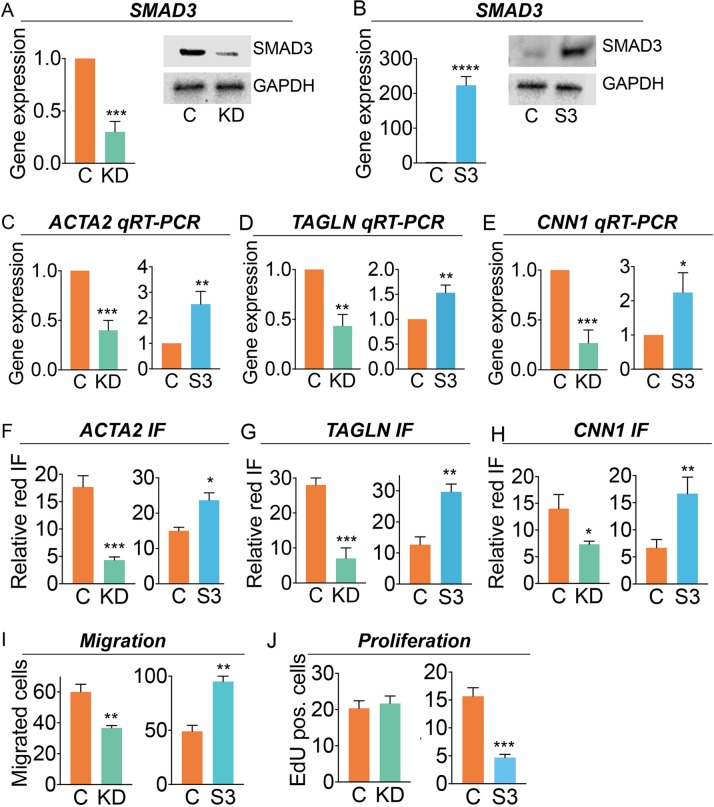
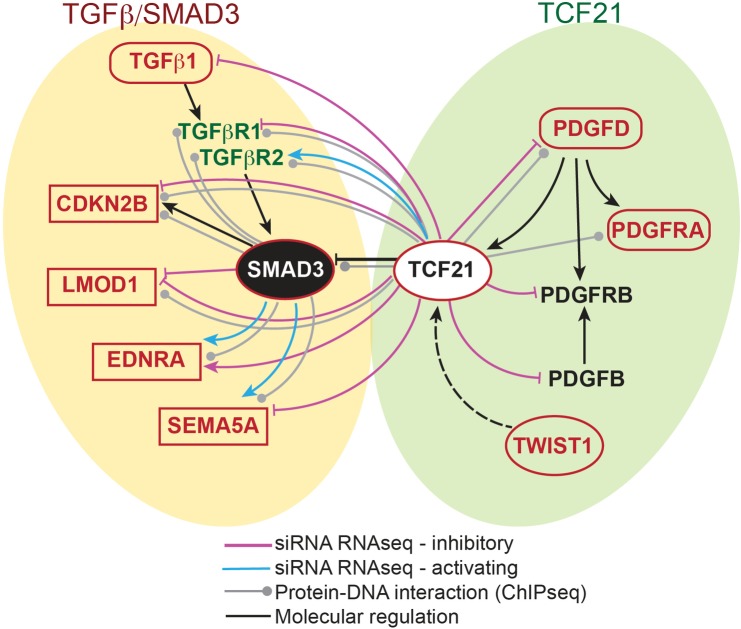
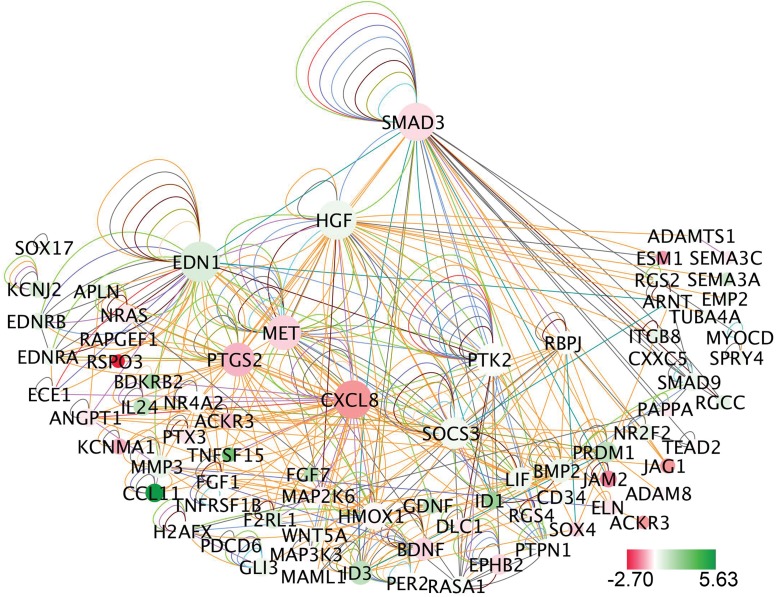
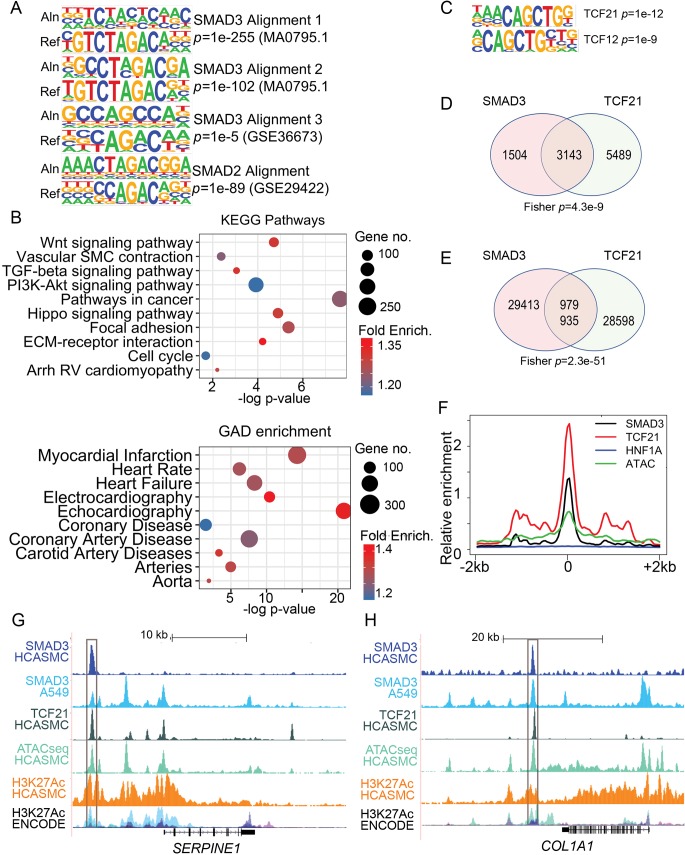
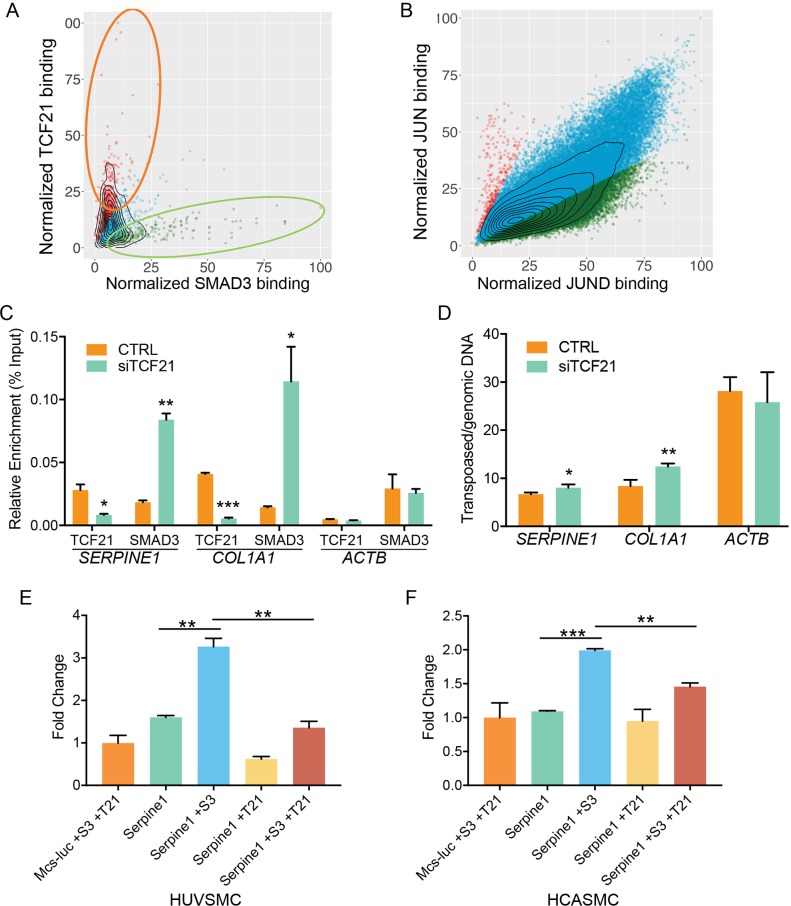
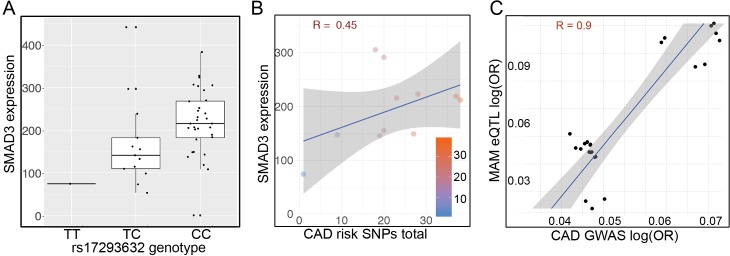
Although numerous genetic loci have been associated with coronary artery disease (CAD) with genome wide association studies, efforts are needed to identify the causal genes in these loci and link them into fundamental signaling pathways. Recent studies have investigated the disease mechanism of CAD associated gene SMAD3, a central transcription factor (TF) in the TGFβ pathway, investigating its role in smooth muscle biology. In vitro studies in human coronary artery smooth muscle cells (HCASMC) revealed that SMAD3 modulates cellular phenotype, promoting expression of differentiation marker genes while inhibiting proliferation. RNA sequencing and chromatin immunoprecipitation sequencing studies in HCASMC identified downstream genes that reside in pathways which mediate vascular development and atherosclerosis processes in this cell type. HCASMC phenotype, and gene expression patterns promoted by SMAD3 were noted to have opposing direction of effect compared to another CAD associated TF, TCF21. At sites of SMAD3 and TCF21 colocalization on DNA, SMAD3 binding was inversely correlated with TCF21 binding, due in part to TCF21 locally blocking chromatin accessibility at the SMAD3 binding site. Further, TCF21 was able to directly inhibit SMAD3 activation of gene expression in transfection reporter gene studies. In contrast to TCF21 which is protective toward CAD, SMAD3 expression in HCASMC was shown to be directly correlated with disease risk. We propose that the pro-differentiation action of SMAD3 inhibits dedifferentiation that is required for HCASMC to expand and stabilize disease plaque as they respond to vascular stresses, counteracting the protective dedifferentiating activity of TCF21 and promoting disease risk.
尽管全基因组关联研究已经确定了许多与冠状动脉疾病(CAD)相关的遗传位点,但仍需要努力确定这些位点中的因果基因,并将其与基本信号通路联系起来。最近的研究调查了 CAD 相关基因 SMAD3 的疾病机制,SMAD3 是 TGFβ 通路中的一个核心转录因子(TF),研究其在平滑肌生物学中的作用。在人冠状动脉平滑肌细胞(HCASMC)的体外研究中,发现 SMAD3 调节细胞表型,促进分化标记基因的表达,同时抑制增殖。在 HCASMC 中进行的 RNA 测序和染色质免疫沉淀测序研究确定了下游基因,这些基因位于介导该细胞类型血管发育和动脉粥样硬化过程的途径中。SMAD3 促进的 HCASMC 表型和基因表达模式与另一个 CAD 相关 TF TCF21 的作用方向相反。在 SMAD3 和 TCF21 在 DNA 上的共定位部位,SMAD3 结合与 TCF21 结合呈负相关,部分原因是 TCF21 在 SMAD3 结合部位局部阻断染色质可及性。此外,在转染报告基因研究中,TCF21 能够直接抑制 SMAD3 对基因表达的激活。与对 CAD 具有保护作用的 TCF21 相反,SMAD3 在 HCASMC 中的表达与疾病风险呈直接相关。我们提出,SMAD3 的促分化作用抑制了 HCASMC 扩张和稳定病变斑块所需的去分化,因为它们对血管应激做出反应,抵消了 TCF21 的保护去分化活性,并促进了疾病风险。