Centre for Gene Regulation and Expression, School of Life Sciences, University of Dundee, Dow Street, Dundee DD1 5EH, UK.
Centre for Gene Regulation and Expression, School of Life Sciences, University of Dundee, Dow Street, Dundee DD1 5EH, UK.
Biochim Biophys Acta Gene Regul Mech. 2019 Mar;1862(3):270-279. doi: 10.1016/j.bbagrm.2018.09.011. Epub 2018 Oct 9.
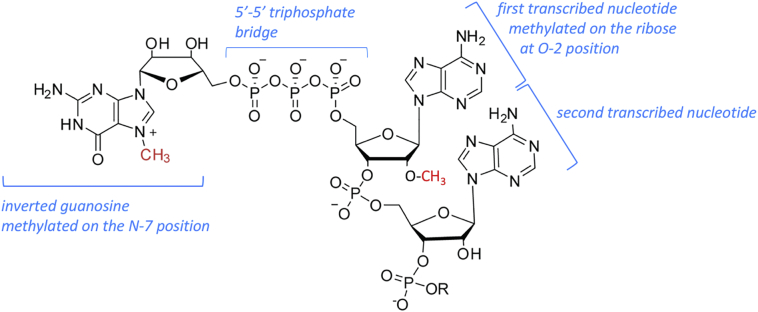
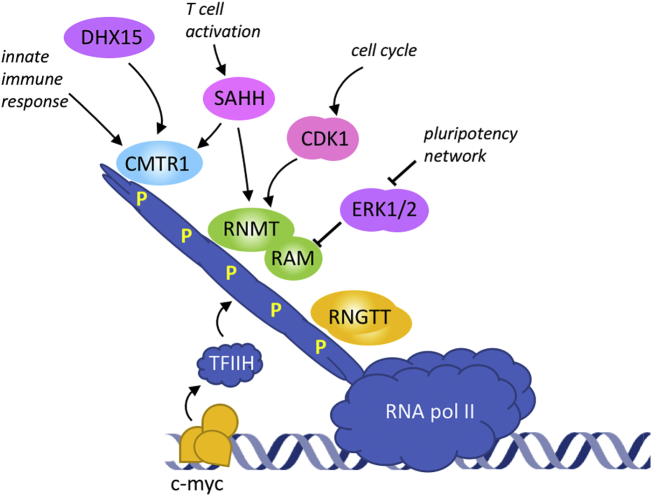
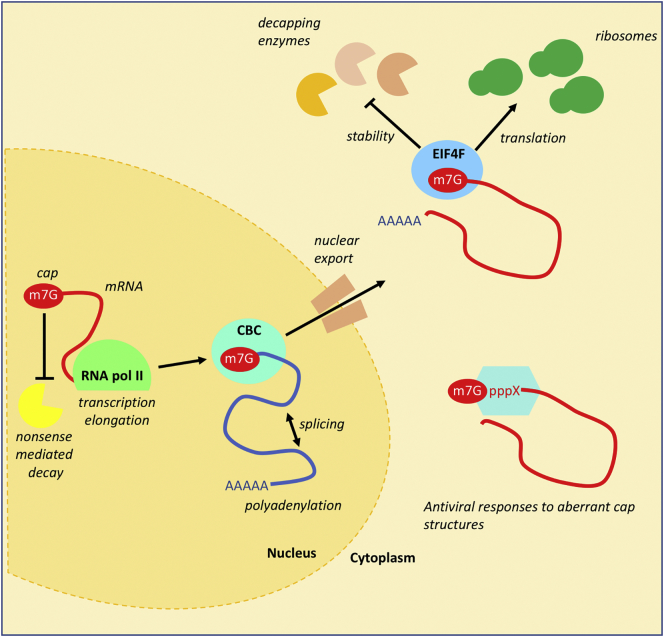
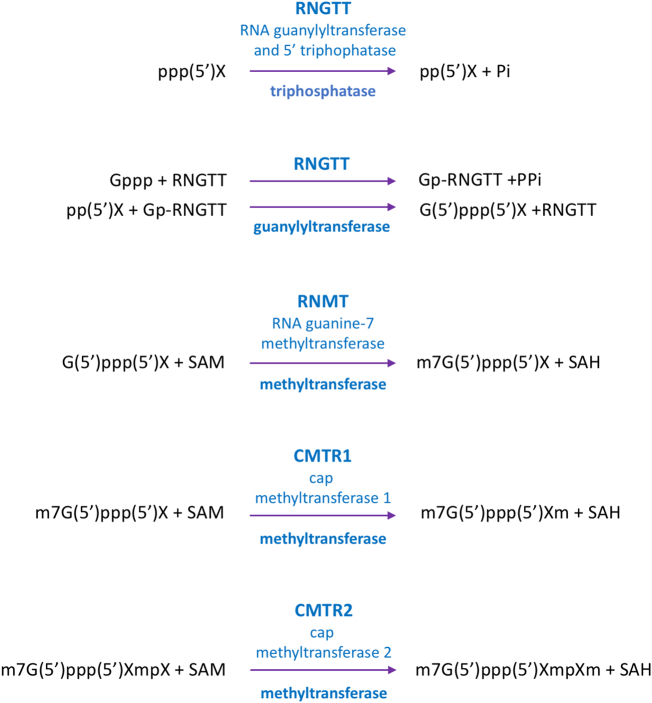
In this review we explore the regulation of mRNA cap formation and its impact on mammalian cells. The mRNA cap is a highly methylated modification of the 5' end of RNA pol II-transcribed RNA. It protects RNA from degradation, recruits complexes involved in RNA processing, export and translation initiation, and marks cellular mRNA as "self" to avoid recognition by the innate immune system. The mRNA cap can be viewed as a unique mark which selects RNA pol II transcripts for specific processing and translation. Over recent years, examples of regulation of mRNA cap formation have emerged, induced by oncogenes, developmental pathways and during the cell cycle. These signalling pathways regulate the rate and extent of mRNA cap formation, resulting in changes in gene expression, cell physiology and cell function.
在这篇综述中,我们探讨了 mRNA 帽形成的调控及其对哺乳动物细胞的影响。mRNA 帽是 RNA 聚合酶 II 转录的 RNA 5'端的高度甲基化修饰。它保护 RNA 免受降解,招募涉及 RNA 加工、输出和翻译起始的复合物,并将细胞 mRNA 标记为“自身”,以避免被先天免疫系统识别。mRNA 帽可以被视为一种独特的标记,它选择 RNA 聚合酶 II 转录物进行特定的加工和翻译。近年来,人们发现了一些由癌基因、发育途径和细胞周期诱导的 mRNA 帽形成的调控例子。这些信号通路调节 mRNA 帽形成的速度和程度,导致基因表达、细胞生理学和细胞功能的变化。