Department of Medical Biochemistry and Microbiology, Uppsala University, Uppsala, Sweden.
Sci Rep. 2018 Oct 16;8(1):15292. doi: 10.1038/s41598-018-33087-6.
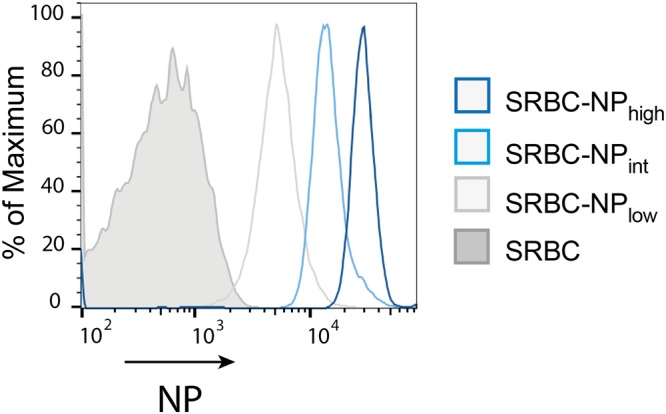
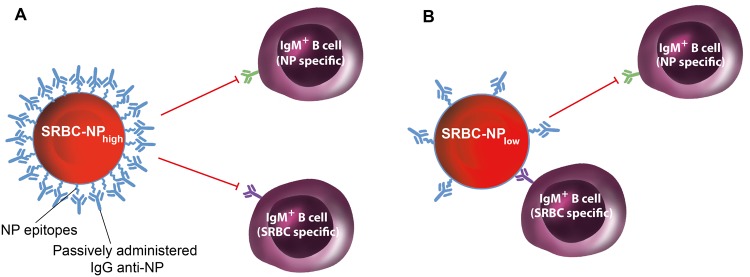
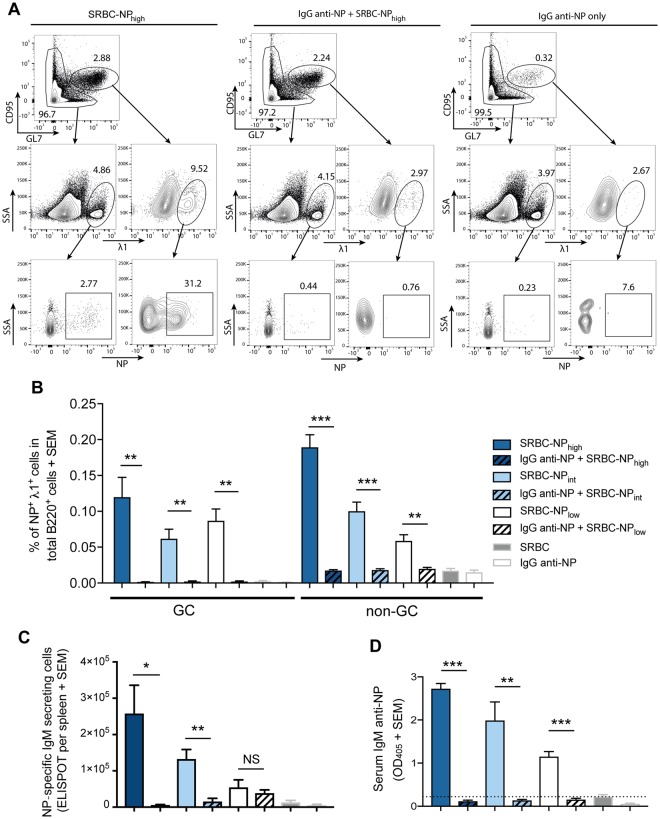
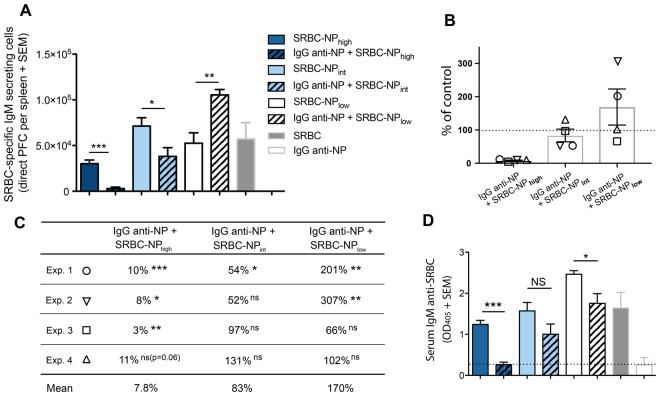
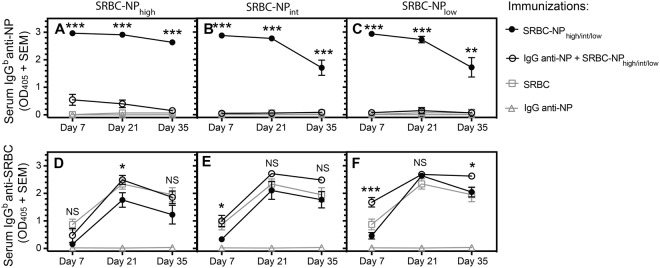
Specific IgG antibodies, passively administered together with erythrocytes, suppress antibody responses against the erythrocytes. Although used to prevent alloimmunization in Rhesus (Rh)D-negative women carrying RhD-positive fetuses, the mechanism behind is not understood. In mice, IgG suppresses efficiently in the absence of Fcγ-receptors and complement, suggesting an Fc-independent mechanism. In line with this, suppression is frequently restricted to the epitopes to which IgG binds. However, suppression of responses against epitopes not recognized by IgG has also been observed thus arguing against Fc-independence. Here, we explored the possibility that non-epitope specific suppression can be explained by steric hindrance when the suppressive IgG binds to an epitope present at high density. Mice were transfused with IgG anti-4-hydroxy-3-nitrophenylacetyl (NP) together with NP-conjugated sheep red blood cells (SRBC) with high, intermediate, or low NP-density. Antibody titers and the number of single antibody-forming cells were determined. As a rule, IgG suppressed NP- but not SRBC-specific responses (epitope specific suppression). However, there was one exception: suppression of both IgM anti-SRBC and IgM anti-NP responses occurred when high density SRBC-NP was administered (non-epitope specific suppression). These findings answer a longstanding question in antibody feedback regulation and are compatible with the hypothesis that epitope masking explains IgG-mediated immune suppression.
特异性 IgG 抗体与红细胞一起被动给药可抑制针对红细胞的抗体反应。尽管它被用于预防 RhD 阳性胎儿的 RhD 阴性妇女发生同种免疫,但背后的机制尚不清楚。在小鼠中,IgG 在没有 Fcγ 受体和补体的情况下能有效地抑制,这表明存在一种 Fc 非依赖性机制。与此一致,抑制作用通常仅限于 IgG 结合的表位。然而,也观察到针对 IgG 不识别的表位的反应抑制,这表明抑制作用不依赖于 Fc。在这里,我们探讨了这样一种可能性,即当抑制性 IgG 与高密度存在的表位结合时,非表位特异性抑制可能是由空间位阻引起的。将 IgG 抗 4-羟基-3-硝基苯乙酰基(NP)与 NP 结合的绵羊红细胞(SRBC)以高、中、低 NP 密度输注给小鼠。测定抗体滴度和单个抗体形成细胞的数量。通常,IgG 抑制 NP 但不抑制 SRBC 特异性反应(表位特异性抑制)。然而,有一个例外:当给予高浓度的 SRBC-NP 时,会发生 IgM 抗 SRBC 和 IgM 抗 NP 反应的抑制(非表位特异性抑制)。这些发现回答了抗体反馈调节中的一个长期存在的问题,与表位掩蔽解释 IgG 介导的免疫抑制的假说一致。