Keine Dorothy, Walker John Q, Kennedy Brian K, Sabbagh Marwan N
uMETHOD Health, Raleigh, North Carolina, United States.
AFFIRMATIVhealth, PLLC, Sonoma, California, United States.
Curr Aging Sci. 2018;11(3):173-181. doi: 10.2174/1874609811666181019101430.
Alzheimer's Disease (AD) is a progressive neurodegenerative condition in which individuals exhibit memory loss, dementia, and impaired metabolism. Nearly all previous single-treatment studies to treat AD have failed, likely because it is a complex disease with multiple underlying drivers contributing to risk, onset, and progression. Here, we explored the efficacy of a multi-therapy approach based on the disease risk factor status specific to individuals with AD diagnosis or concern.
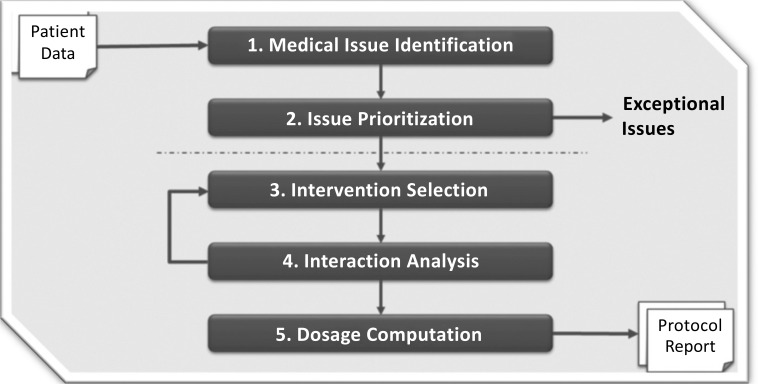
Novel software from uMETHOD Health was designed to execute a precision-medicinebased approach to develop personalized treatment recommendations with the goal of slowing or reversing biologic drivers of AD. AD-associated inputs encompassed genomic data, bio-specimen measurements, imaging data (such as MRIs or PET scans), medical histories, medications, allergies, co-morbidities, relevant lifestyle factors, and results of neuropsychological testing. Algorithms were then employed to prioritize physiologic and lifestyle states with the highest probability of contributing to disease status, and these priorities were incorporated into a personalized care plan, which was delivered to physicians and supported by health coaches to increase adherence. The sample included 40 subjects with Subjective Cognitive Decline patients (SCD), and Mild Cognitive Impairment Patients (MCI).
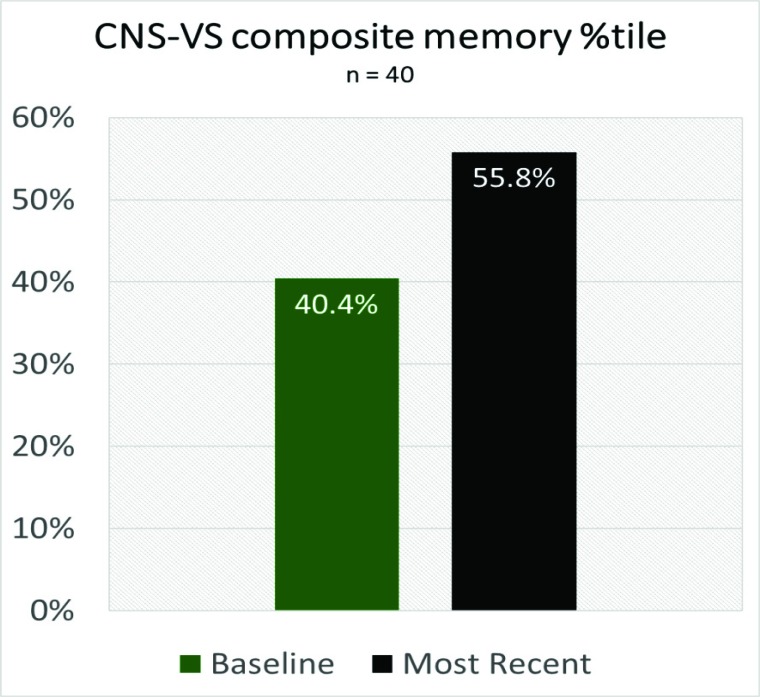
Software analysis was completed for 40 individuals. They remained on their treatment plan for an average of 8.4 months, equal to 2.8 iterations of care plans. 80% of individuals overall showed improved memory function scores or held steady, as measured by standardized cognitive evaluations. Cognitive assessments showed significant improvement in the SCD group (Composite P value .002, Executive P value .01), and the CNS-VS Executive domain showed significant results in the combined group as well (P value .01). There was also biomarker improvement over time observed from the blood panels. 8 out of 12 selected biomarkers showed slight, though statistically non-significant, improvement overall for symptomatic individuals, and 6 out of 12 for the overall population. Only one biomarker, homocysteine, showed significant improvement, though (P values .03, .04, .002).
Our analysis of these individuals lead to several interesting observations together suggesting that AD risk factors comprise a network of interlocking feedback loops that may be modifiable. Our findings indicate previously unidentified connectivity between AD risk factors, suggesting that treatment regimens should be tailored to the individual and multi-modal to simultaneously return several risk factors to a normative state. If successfully performed, the possibility to slow progression of AD and possibly reverse aspects of cognitive decline may become achievable.
阿尔茨海默病(AD)是一种进行性神经退行性疾病,患者会出现记忆丧失、痴呆和代谢受损。几乎所有先前治疗AD的单一疗法研究都失败了,这可能是因为它是一种复杂的疾病,有多种潜在因素导致风险、发病和进展。在此,我们基于AD诊断或疑似患者的疾病风险因素状况,探索了一种多疗法的疗效。
uMETHOD Health公司开发的新型软件旨在执行基于精准医学的方法,以制定个性化治疗建议,目标是减缓或逆转AD的生物学驱动因素。与AD相关的输入信息包括基因组数据、生物样本测量、成像数据(如MRI或PET扫描)、病史、药物、过敏、合并症、相关生活方式因素以及神经心理学测试结果。然后运用算法对最有可能影响疾病状况的生理和生活方式状态进行排序,并将这些优先级纳入个性化护理计划,该计划会提供给医生,并由健康教练提供支持以提高依从性。样本包括40名主观认知衰退患者(SCD)和轻度认知障碍患者(MCI)。
对40名个体完成了软件分析。他们平均遵循治疗计划8.4个月,相当于2.8个护理计划周期。通过标准化认知评估测量,总体上80%的个体记忆功能评分有所改善或保持稳定。认知评估显示SCD组有显著改善(综合P值为0.002,执行功能P值为0.01),并且在合并组中CNS-VS执行功能领域也有显著结果(P值为0.01)。随着时间推移,血液检测指标也有生物标志物改善。在有症状个体中,12种选定生物标志物中有8种总体上有轻微改善,尽管在统计学上不显著,在总体人群中12种中有6种有改善。不过,只有一种生物标志物同型半胱氨酸有显著改善(P值分别为0.03、0.04、0.002)。
我们对这些个体的分析得出了几个有趣的观察结果,共同表明AD风险因素构成了一个相互关联的反馈回路网络,可能是可调节的。我们的研究结果表明了AD风险因素之间以前未被识别的联系,这表明治疗方案应因人而异且采用多模式,以便同时使多个风险因素恢复到正常状态。如果成功实施,减缓AD进展并可能逆转认知衰退方面的可能性或许能够实现。