Cardiovascular Renal and Metabolic Diseases, IMED Biotech Unit, AstraZeneca, Gothenburg, Sweden.
Discovery Sciences, IMED Biotech Unit, AstraZeneca, Gothenburg, Sweden.
Sci Adv. 2018 Oct 17;4(10):eaat3386. doi: 10.1126/sciadv.aat3386. eCollection 2018 Oct.
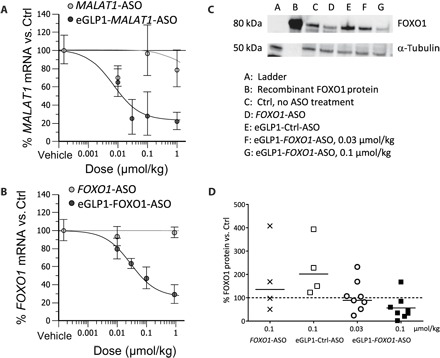
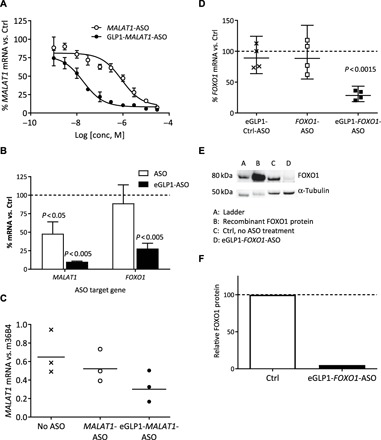
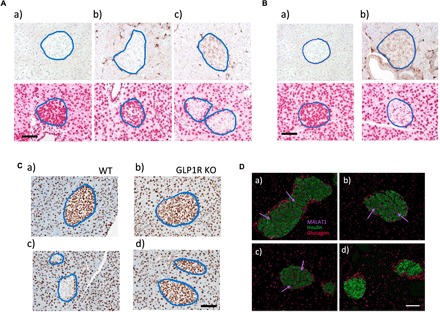
Antisense oligonucleotide (ASO) silencing of the expression of disease-associated genes is an attractive novel therapeutic approach, but treatments are limited by the ability to deliver ASOs to cells and tissues. Following systemic administration, ASOs preferentially accumulate in liver and kidney. Among the cell types refractory to ASO uptake is the pancreatic insulin-secreting β-cell. Here, we show that conjugation of ASOs to a ligand of the glucagon-like peptide-1 receptor (GLP1R) can productively deliver ASO cargo to pancreatic β-cells both in vitro and in vivo. Ligand-conjugated ASOs silenced target genes in pancreatic islets at doses that did not affect target gene expression in liver or other tissues, indicating enhanced tissue and cell type specificity. This finding has potential to broaden the use of ASO technology, opening up novel therapeutic opportunities, and presents an innovative approach for targeted delivery of ASOs to additional cell types.
反义寡核苷酸 (ASO) 沉默与疾病相关基因的表达是一种有吸引力的新型治疗方法,但治疗受到将 ASO 递送到细胞和组织的能力的限制。在系统给药后,ASO 优先在肝脏和肾脏中积累。在对 ASO 摄取具有抗性的细胞类型中,有一种是胰腺胰岛素分泌β细胞。在这里,我们表明,将 ASO 与胰高血糖素样肽-1 受体 (GLP1R) 的配体缀合,可以在体外和体内有效地将 ASO 有效负载递送到胰腺β细胞。配体缀合的 ASO 在胰岛中沉默靶基因的剂量不会影响肝脏或其他组织中靶基因的表达,表明增强了组织和细胞类型特异性。这一发现有可能扩大 ASO 技术的应用范围,开辟新的治疗机会,并为将 ASO 递送到其他细胞类型提供了一种创新的靶向方法。