Bayreuth Engine Research Center (BERC), University of Bayreuth, Department of Functional Materials, 95440 Bayreuth, Germany.
Sensors (Basel). 2018 Oct 19;18(10):3531. doi: 10.3390/s18103531.
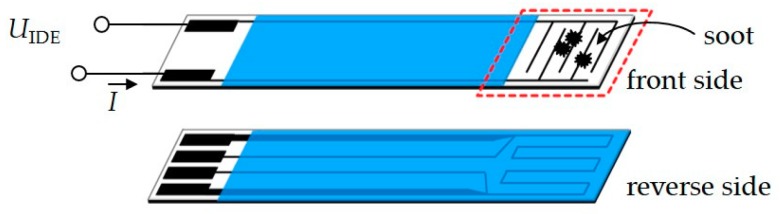
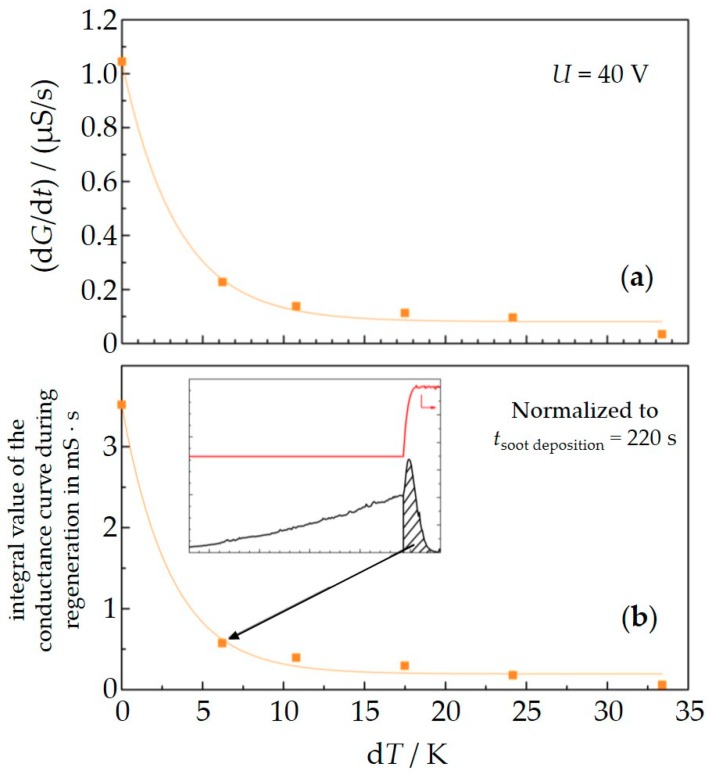
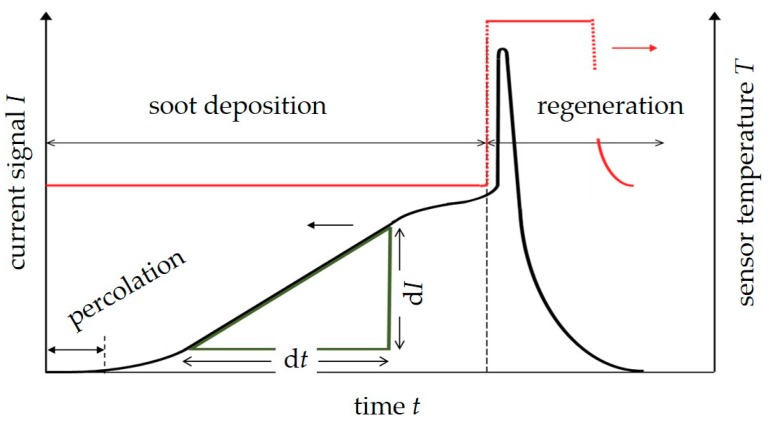
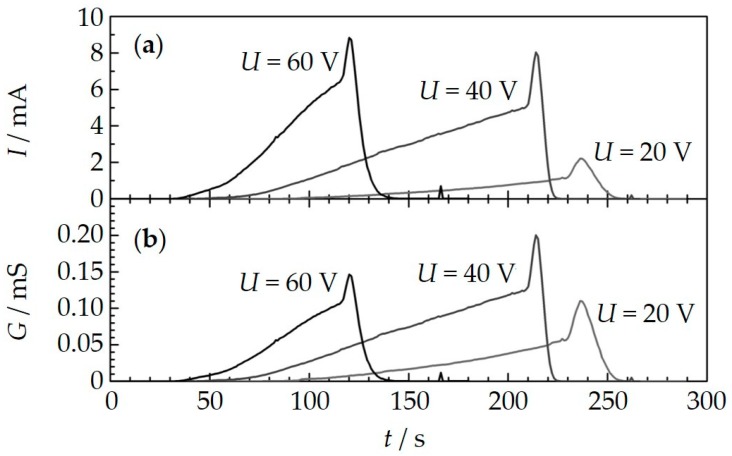
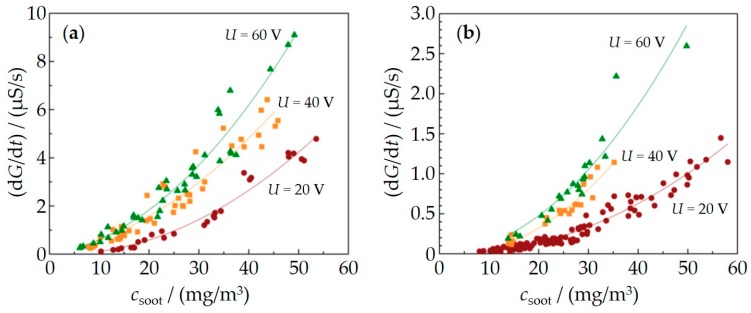
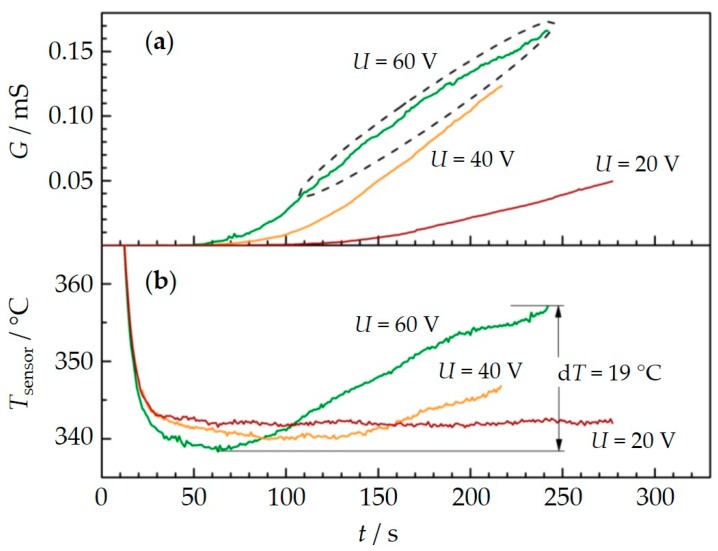
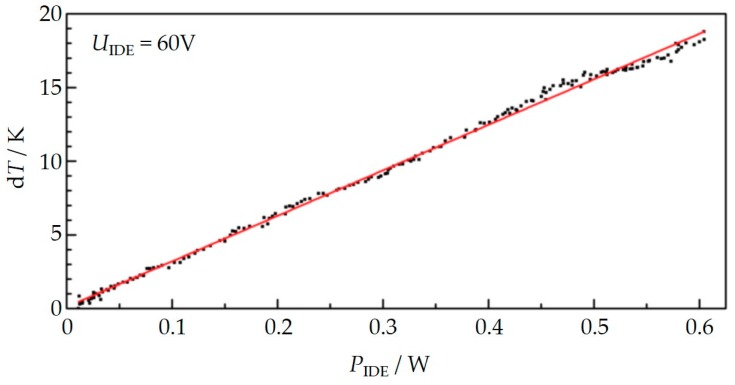
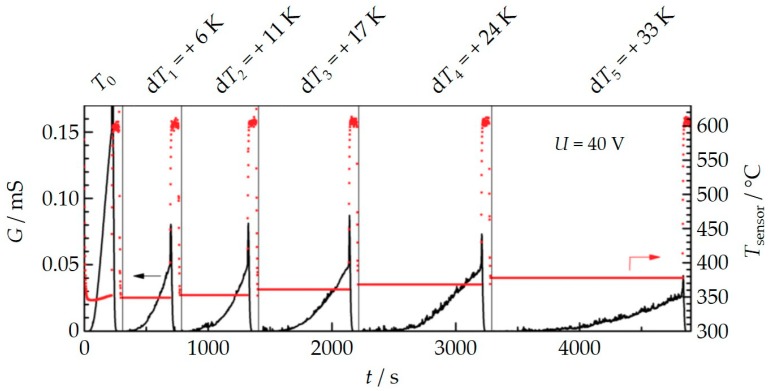
Particulate matter sensors are of interest for application in the exhaust of any combustion processes, especially for automotive aftertreatment systems. Conductometric soot sensors have been serialized recently. They comprise planar interdigital electrodes (IDE) on an insulating substrate. Between the IDEs, a voltage is applied. Soot deposition is accelerated by the resulting electric field due to electrophoresis. With increasing soot deposition, the conductance between the IDE increases. The timely derivative of the conductance can serve as a sensor signal, being a function of the deposition rate. An increasing voltage between the IDE would be useful for detecting low particle exhausts. In the present study, the influence of the applied voltage and the sensor temperature on the soot deposition is investigated. It turned out that the maximum voltage is limited, since the soot film is heated by the resulting current. An internally caused thermophoresis that reduces the rate of soot deposition on the substrate follows. It reduces both the linearity of the response and the sensitivity. These findings may be helpful for the further development of conductometric soot sensors for automotive exhausts, probably also to determine real driving emissions of particulate matter.
颗粒物传感器在任何燃烧过程的尾气中都有应用的兴趣,特别是在汽车后处理系统中。电导式 soot 传感器最近已经序列化。它们由绝缘基底上的平面叉指电极 (IDE) 组成。在 IDE 之间施加电压。由于电泳,导致电场加速 soot 沉积。随着 soot 沉积的增加,IDE 之间的电导增加。电导的及时导数可以作为传感器信号,是沉积速率的函数。IDE 之间增加的电压对于检测低颗粒排放物将是有用的。在本研究中,研究了施加电压和传感器温度对 soot 沉积的影响。事实证明,最大电压是有限的,因为由产生的电流加热 soot 膜。随之而来的是一种内部引起的热泳,它降低了 soot 在基底上的沉积速率。这降低了响应的线性度和灵敏度。这些发现可能有助于进一步开发用于汽车尾气的电导式 soot 传感器,也可能有助于确定颗粒物的实际行驶排放。