Lin Meng-Juan, Yu Bao-Ping
Department of Gastroenterology, Renmin Hospital of Wuhan University, Wuhan, Hubei, China.
Key Laboratory of Hubei Province for Digestive System Diseases, Wuhan, Hubei, China.
J Neurogastroenterol Motil. 2018 Oct 1;24(4):643-655. doi: 10.5056/jnm18040.
BACKGROUND/AIMS: Irritable bowel syndrome (IBS) is a common disease characterized by intestinal dysmotility, the mechanism of which remains elusive. We aim to determine whether the high-affinity choline transporter 1 (CHT1), a determinant of cholinergic signaling capacity, modulates intestinal motility associated with stress-induced IBS.
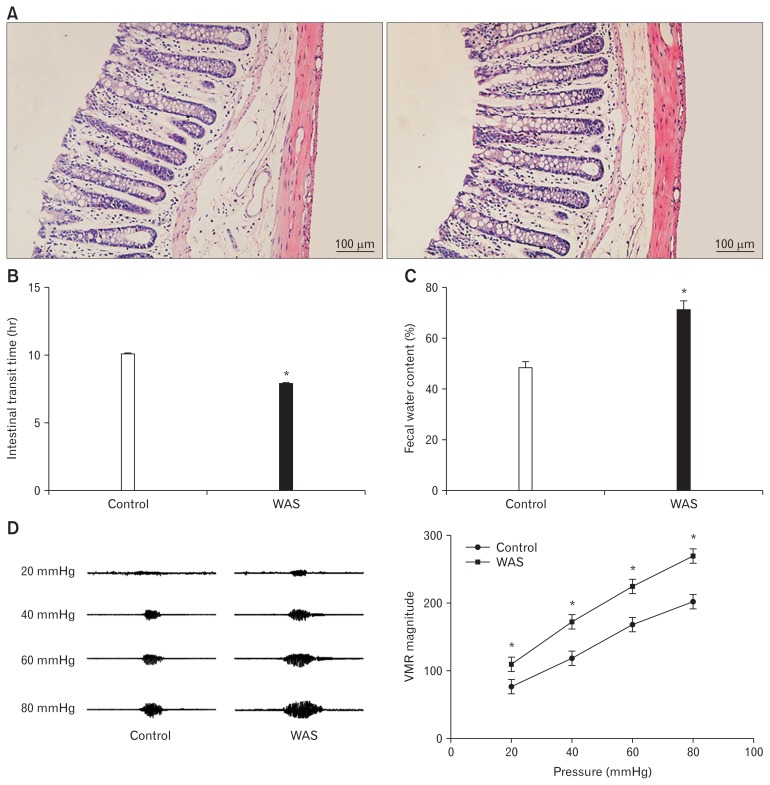
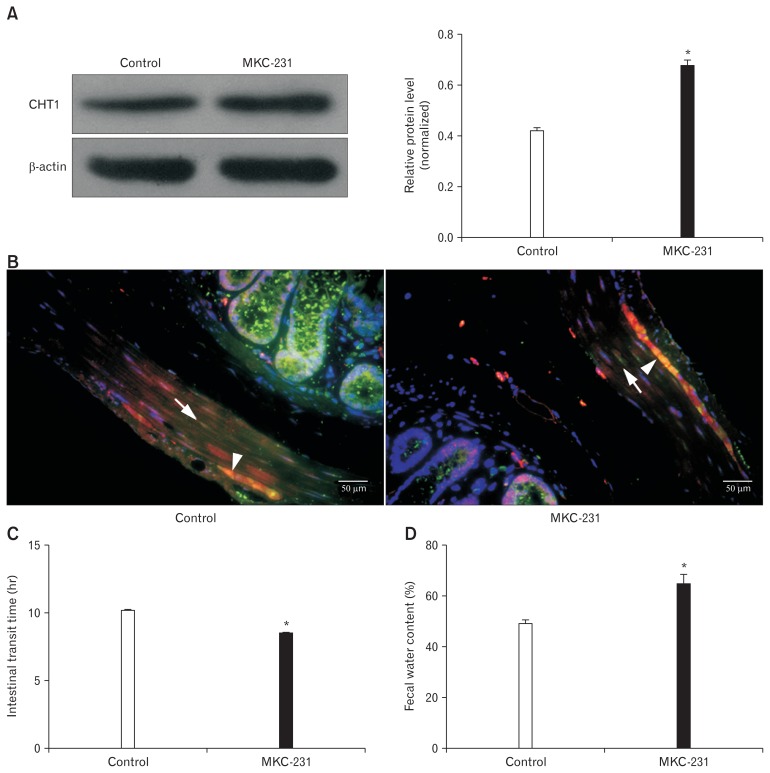
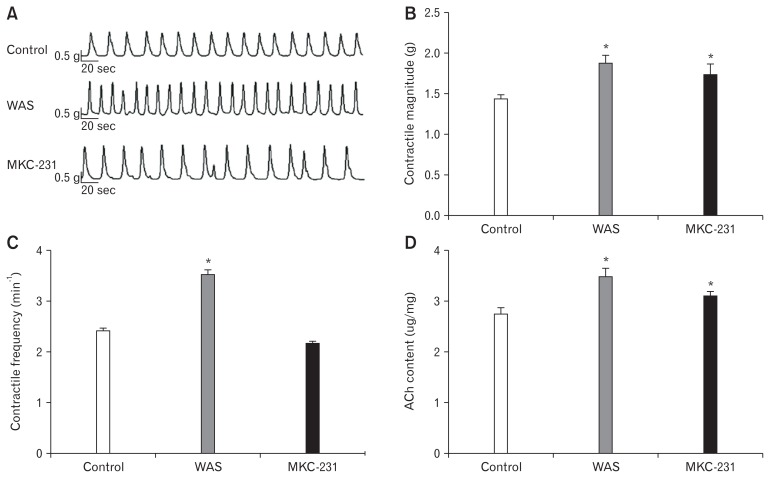
A rat IBS model was established using chronic water avoidance stress (WAS). Colonic pathological alterations were evaluated histologically and intestinal motility was assessed by intestinal transit time and fecal water content (FWC). Visceral sensitivity was determined by visceromotor response to colorectal distension. RT-PCR, western blotting, and immunostaining were performed to identify colonic CHT1 expression. Contractility of colonic muscle strips was measured using isometric transducers. enzyme-linked immunosorbent assay was used to measure acetylcholine (ACh). We examined the effects of MKC-231, a choline uptake enhancer, on colonic motility.
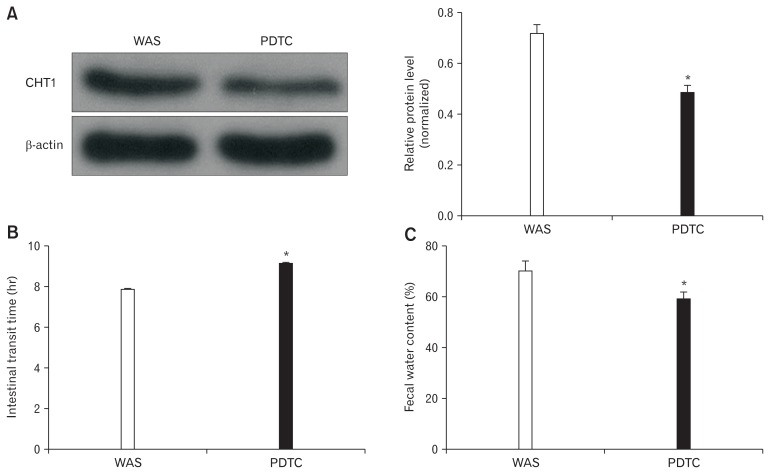
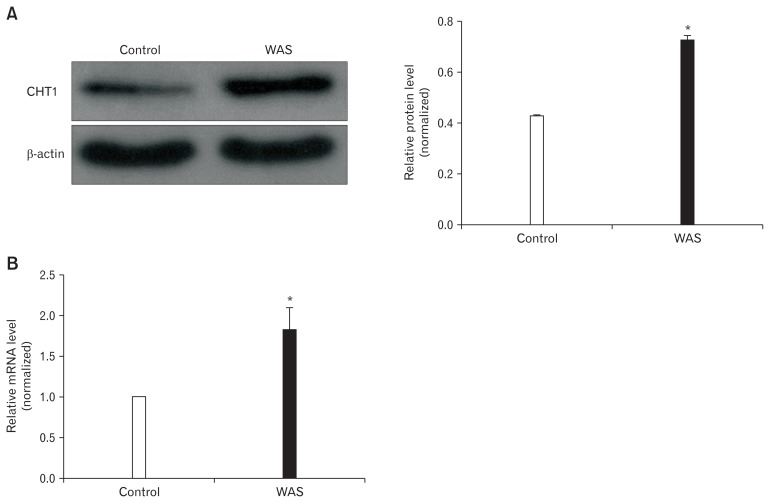
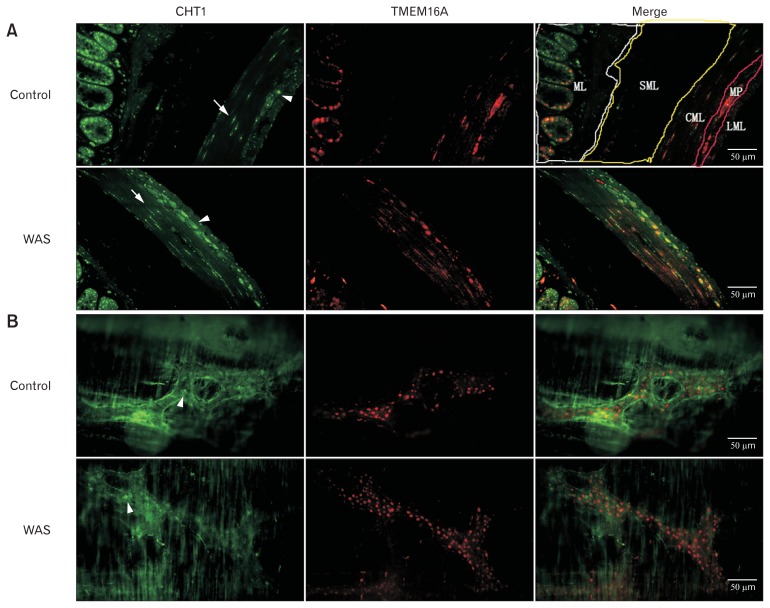
After 10 days of WAS, intestinal transit time was decreased and fecal water content increased. Visceromotor response magnitude in WAS rats in response to colorectal distension was significantly enhanced. Protein and mRNA CHT1 levels in the colon were markedly elevated after WAS. The density of CHT1-positive intramuscular interstitial cells of Cajal and myenteric plexus neurons in WAS rats was higher than in controls. Ammonium pyrrolidine dithiocarbamate partly reversed CHT1 upregulation and alleviated colonic hypermotility in WAS rats. Pharmacological enhancement of CHT1 activity by MKC-231 enhanced colonic motility in control rats via upregulation of CHT1 and elevation of ACh production.
Upregulation of CHT1 in intramuscular interstitial cells of Cajal and myenteric plexus neurons is implicated in chronic stress-induced colonic hypermotility by modulation of ACh synthesis via nuclear factor-kappa B signaling.
背景/目的:肠易激综合征(IBS)是一种以肠道运动功能紊乱为特征的常见疾病,其发病机制尚不清楚。我们旨在确定高亲和力胆碱转运体1(CHT1),一种胆碱能信号传导能力的决定因素,是否调节与应激诱导的肠易激综合征相关的肠道运动。
使用慢性水回避应激(WAS)建立大鼠肠易激综合征模型。通过组织学评估结肠病理改变,并通过肠道转运时间和粪便含水量(FWC)评估肠道运动。通过对结肠扩张的内脏运动反应来确定内脏敏感性。进行逆转录聚合酶链反应(RT-PCR)、蛋白质印迹法和免疫染色以鉴定结肠CHT1表达。使用等长换能器测量结肠肌条的收缩性。采用酶联免疫吸附测定法测量乙酰胆碱(ACh)。我们研究了胆碱摄取增强剂MKC-231对结肠运动的影响。
WAS处理10天后,肠道转运时间缩短,粪便含水量增加。WAS大鼠对结肠扩张的内脏运动反应幅度显著增强。WAS后结肠中CHT1的蛋白质和mRNA水平明显升高。WAS大鼠中Cajal肌内间质细胞和肌间神经丛神经元中CHT1阳性的密度高于对照组。吡咯烷二硫代氨基甲酸铵部分逆转了WAS大鼠中CHT1的上调并减轻了结肠运动亢进。MKC-231对CHT1活性的药理学增强通过上调CHT1和提高ACh产生来增强对照大鼠的结肠运动。
Cajal肌内间质细胞和肌间神经丛神经元中CHT1的上调通过核因子-κB信号传导调节ACh合成,与慢性应激诱导的结肠运动亢进有关。