Kovács Richard, Gerevich Zoltan, Friedman Alon, Otáhal Jakub, Prager Ofer, Gabriel Siegrun, Berndt Nikolaus
Charité - Universitätsmedizin Berlin, Corporate Member of Freie Universität Berlin, Humboldt-Universität zu Berlin, and Berlin Institute of Health, Institut für Neurophysiologie, Berlin, Germany.
Departments of Physiology and Cell Biology, Cognitive and Brain Sciences, The Zlotowski Center for Neuroscience, Ben-Gurion University of the Negev, Beersheba, Israel.
Front Cell Neurosci. 2018 Oct 8;12:335. doi: 10.3389/fncel.2018.00335. eCollection 2018.
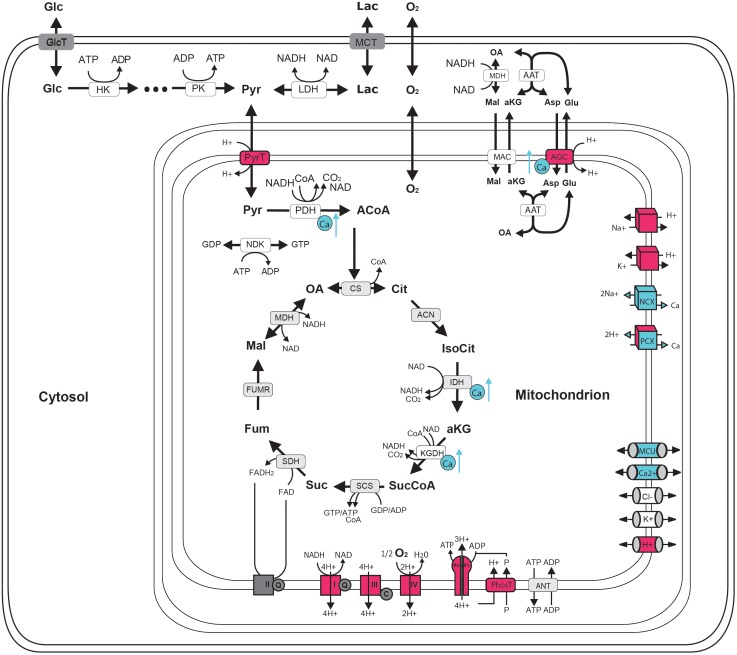
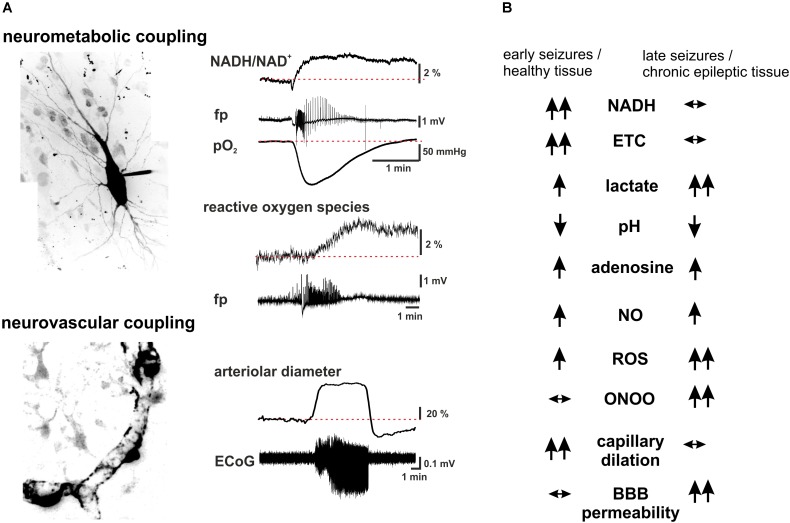
Epilepsy is characterized by the regular occurrence of seizures, which follow a stereotypical sequence of alterations in the electroencephalogram. Seizures are typically a self limiting phenomenon, concluding finally in the cessation of hypersynchronous activity and followed by a state of decreased neuronal excitability which might underlie the cognitive and psychological symptoms the patients experience in the wake of seizures. Many efforts have been devoted to understand how seizures spontaneously stop in hope to exploit this knowledge in anticonvulsant or neuroprotective therapies. Besides the alterations in ion-channels, transmitters and neuromodulators, the successive build up of disturbances in energy metabolism have been suggested as a mechanism for seizure termination. Energy metabolism and substrate supply of the brain are tightly regulated by different mechanisms called neurometabolic and neurovascular coupling. Here we summarize the current knowledge whether these mechanisms are sufficient to cover the energy demand of hypersynchronous activity and whether a mismatch between energy need and supply could contribute to seizure control.
癫痫的特征是癫痫发作有规律地出现,其遵循脑电图中刻板的变化序列。癫痫发作通常是一种自限性现象,最终以超同步活动的停止而告终,随后是神经元兴奋性降低的状态,这可能是患者在癫痫发作后出现认知和心理症状的基础。人们已付出诸多努力来了解癫痫发作如何自发停止,以期将这一知识应用于抗惊厥或神经保护治疗。除了离子通道、递质和神经调质的改变外,能量代谢紊乱的相继积累被认为是癫痫发作终止的一种机制。大脑的能量代谢和底物供应受到称为神经代谢和神经血管耦合的不同机制的严格调控。在此,我们总结当前的知识,即这些机制是否足以满足超同步活动的能量需求,以及能量需求与供应之间的不匹配是否有助于癫痫控制。