Department of Pathology, University of California, San Francisco, California 94143, USA; email:
Department of Neurology, University of California, San Francisco, California 94148, USA.
Annu Rev Pathol. 2019 Jan 24;14:469-495. doi: 10.1146/annurev-pathmechdis-012418-012955. Epub 2018 Oct 24.
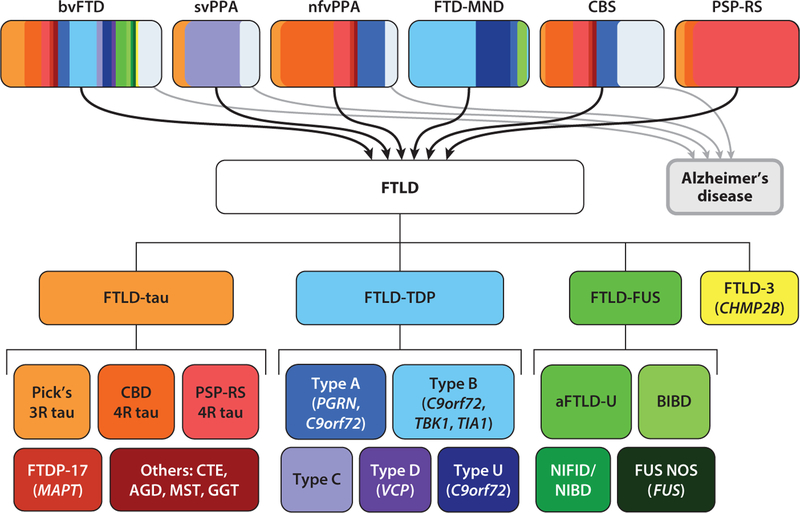
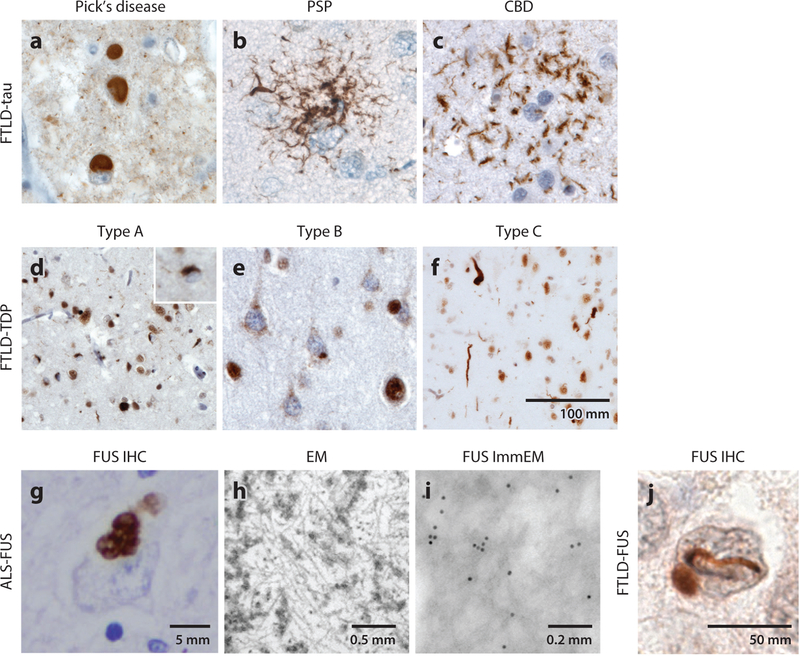
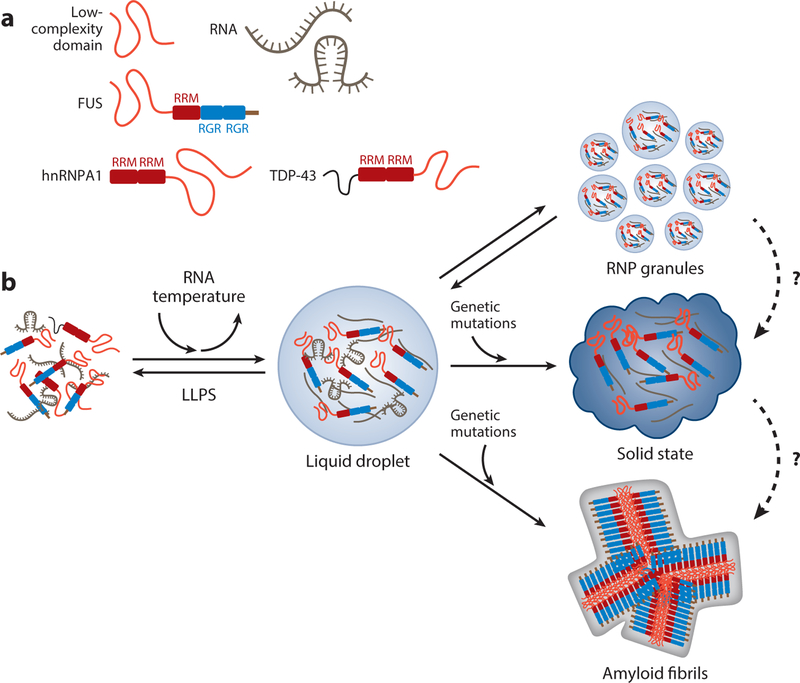
Frontotemporal dementia is a group of early onset dementia syndromes linked to underlying frontotemporal lobar degeneration (FTLD) pathology that can be classified based on the formation of abnormal protein aggregates involving tau and two RNA binding proteins, TDP-43 and FUS. Although elucidation of the mechanisms leading to FTLD pathology is in progress, recent advances in genetics and neuropathology indicate that a majority of FTLD cases with proteinopathy involving RNA binding proteins show highly congruent genotype-phenotype correlations. Specifically, recent studies have uncovered the unique properties of the low-complexity domains in RNA binding proteins that can facilitate liquid-liquid phase separation in the formation of membraneless organelles. Furthermore, there is compelling evidence that mutations in FTLD genes lead to dysfunction in diverse cellular pathways that converge on the endolysosomal pathway, autophagy, and neuroinflammation. Together, these results provide key mechanistic insights into the pathogenesis and potential therapeutic targets of FTLD.
额颞叶痴呆是一组与额颞叶脑区退行性变(FTLD)相关的早发型痴呆综合征,可基于形成异常蛋白聚集体的分类,这些蛋白聚集体涉及 tau 和两种 RNA 结合蛋白 TDP-43 和 FUS。尽管导致 FTLD 病理学的机制正在阐明,但遗传学和神经病理学的最新进展表明,大多数涉及 RNA 结合蛋白的蛋白病 FTLD 病例具有高度一致的基因型-表型相关性。具体来说,最近的研究揭示了 RNA 结合蛋白中低复杂度结构域的独特性质,这些结构域可以促进无膜细胞器形成中的液-液相分离。此外,有强有力的证据表明,FTLD 基因的突变导致多种细胞途径的功能障碍,这些途径集中在内溶酶体途径、自噬和神经炎症上。这些结果为 FTLD 的发病机制和潜在治疗靶点提供了关键的机制见解。