Department of Neurology, Institutes of Brain Science, State Key Laboratory of Medical Neurobiology, Zhongshan Hospital, Fudan University, 131 Dongan Road, Shanghai, 200032, China.
Department of Ophthalmology at Eye & ENT Hospital, Institutes of Brain Science, State Key Laboratory of Medical Neurobiology, Fudan University, Shanghai, 200031, China.
Acta Neuropathol Commun. 2018 Oct 24;6(1):111. doi: 10.1186/s40478-018-0618-x.
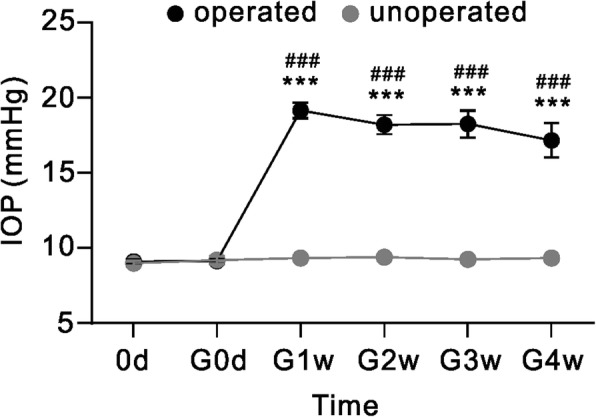
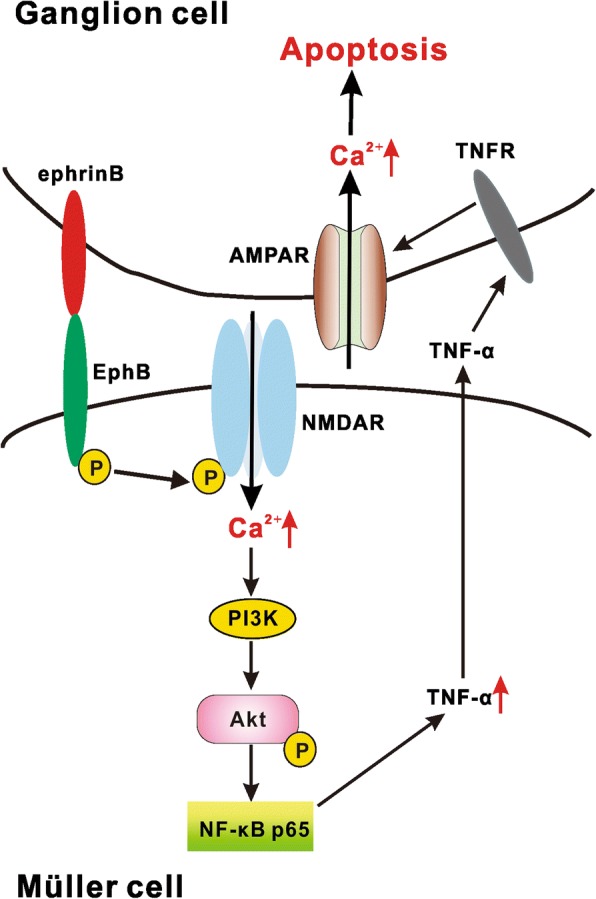
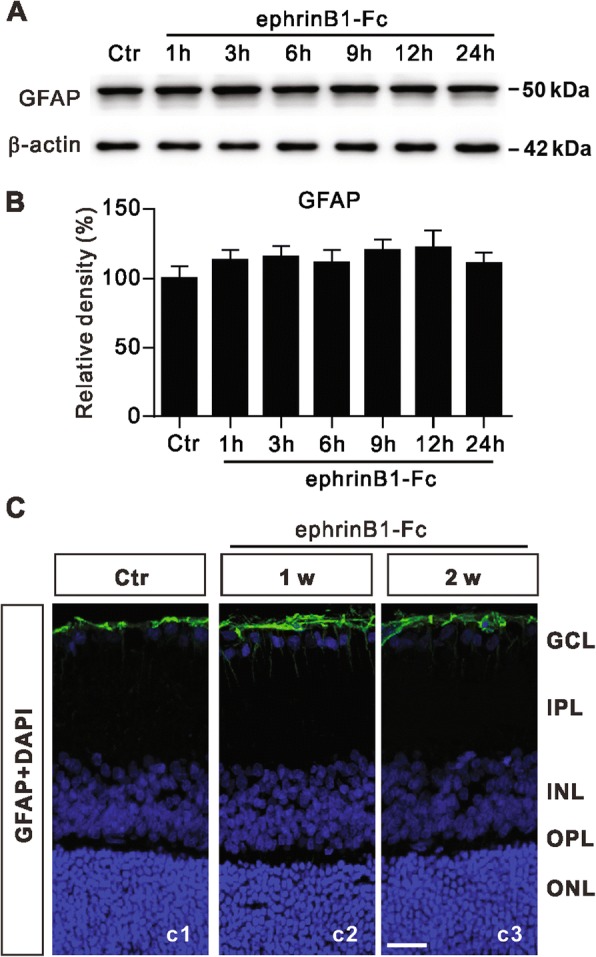
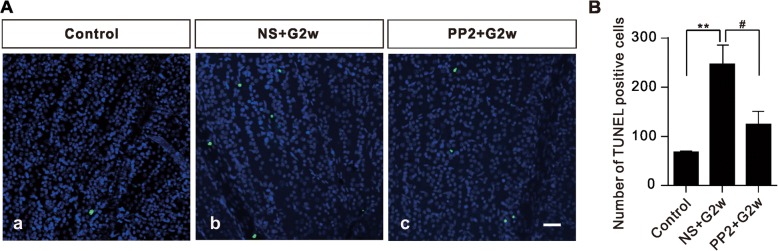
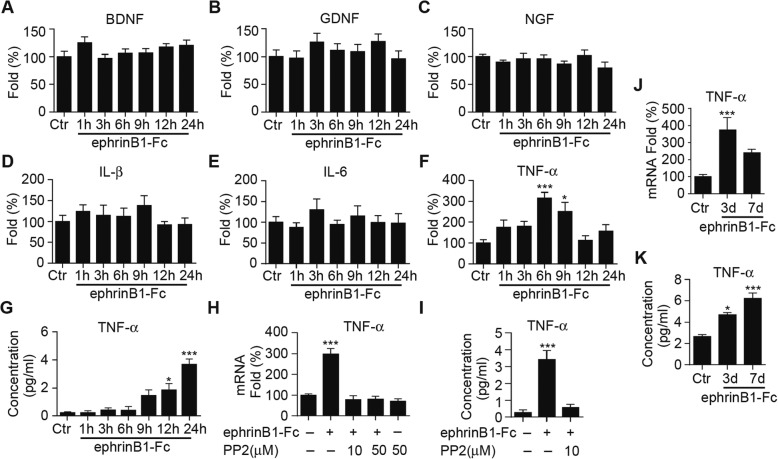
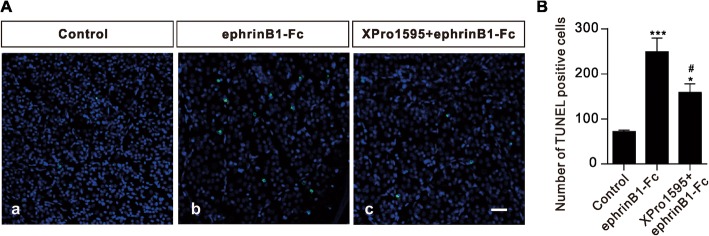
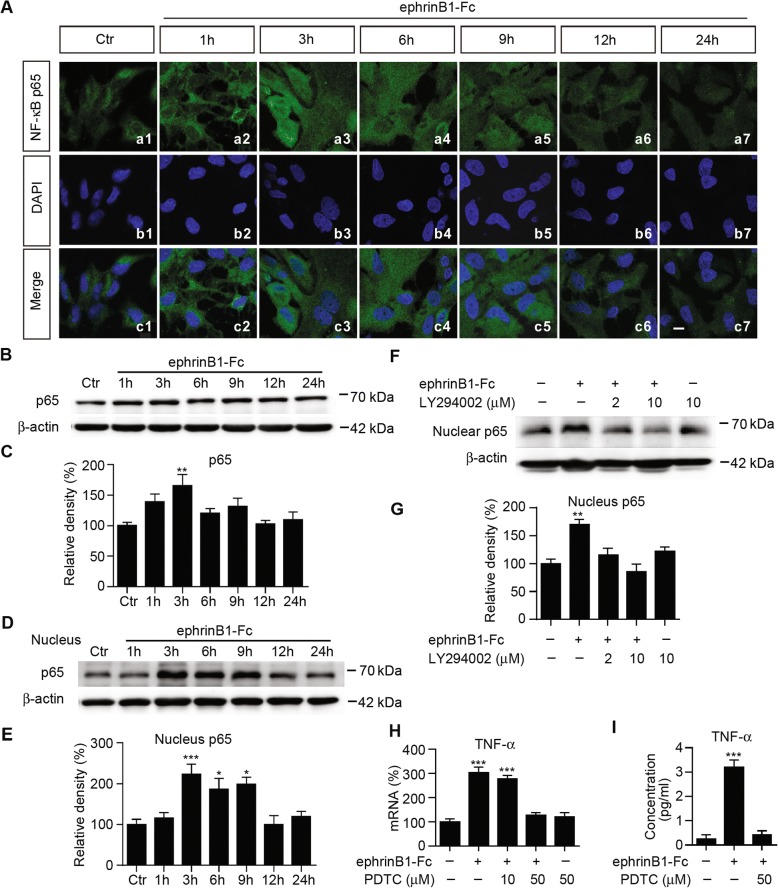
It was previously shown that EphB/ephrinB reverse signaling in retinal ganglion cells (RGCs) is activated and involved in RGC apoptosis in a rat chronic ocular hypertension (COH) model. In the present work, we first show that ephrinB/EphB forward signaling was activated in COH retinas, and RGC apoptosis in COH retinas was reduced by PP2, an inhibitor of ephrinB/EphB forward signaling. We further demonstrate that treatment of cultured Müller cells with ephrinB1-Fc, an EphB1 activator, or intravitreal injection of ephrinB1-Fc in normal rats induced an increase in phosphorylated EphB levels in these cells, indicating the activation of ephrinB/EphB forward signaling, similar to those in COH retinas. The ephrinB1-Fc treatment did not induce Müller cell gliosis, as evidenced by unchanged GFAP expression, but significantly up-regulated mRNA and protein levels of tumor necrosis factor-α (TNF-α) in Müller cells, thereby promoting RGC apoptosis. Production of TNF-α induced by the activation of ephrinB/EphB forward signaling was mediated by the NR2B subunit of NMDA receptors, which was followed by a distinct PI3K/Akt/NF-κB signaling pathway, as pharmacological interference of each step of this pathway caused a reduction of TNF-α production, thus attenuating RGC apoptosis. Functional analysis of forward and reverse signaling in such a unique system, in which ephrin and Eph exist respectively in a glial element and a neuronal element, is of theoretical importance. Moreover, our results also raise a possibility that suppression of ephrinB/EphB forward signaling may be a new strategy for ameliorating RGC apoptosis in glaucoma.
先前的研究表明,在大鼠慢性眼压升高(COH)模型中,视网膜神经节细胞(RGC)中的 EphB/ephrinB 反向信号转导被激活并参与了 RGC 的凋亡。在本研究中,我们首先发现 COH 视网膜中存在 EphrinB/EphB 正向信号转导的激活,并且 EphrinB/EphB 正向信号转导的抑制剂 PP2 可以减少 COH 视网膜中的 RGC 凋亡。我们进一步证明,用 EphB1 激活剂 EphrinB1-Fc 处理培养的 Müller 细胞,或在正常大鼠眼内注射 EphrinB1-Fc,均可导致这些细胞中磷酸化 EphB 水平的增加,表明 EphrinB/EphB 正向信号转导被激活,这与 COH 视网膜中的情况相似。EphrinB1-Fc 处理不会引起 Müller 细胞胶质增生,因为 GFAP 表达没有改变,但会显著上调 Müller 细胞中肿瘤坏死因子-α(TNF-α)的 mRNA 和蛋白水平,从而促进 RGC 凋亡。EphrinB/EphB 正向信号转导的激活诱导 TNF-α的产生是通过 NMDA 受体的 NR2B 亚基介导的,随后是一个明显的 PI3K/Akt/NF-κB 信号通路,因为该通路的每个步骤的药理学干扰都会导致 TNF-α产生减少,从而减轻 RGC 凋亡。在 Ephrin 和 Eph 分别存在于神经胶质细胞和神经元细胞的这种独特系统中,对正向和反向信号转导的功能分析具有理论意义。此外,我们的结果还提出了一种可能性,即抑制 EphrinB/EphB 正向信号转导可能是改善青光眼 RGC 凋亡的一种新策略。