Mason Briana, Rollins L G, Asumadu Evans, Cange Christina, Walton Najah, Donaldson S Tiffany
Developmental and Brain Sciences, Department of Psychology, University of Massachusetts Boston, Boston, MA, United States.
Clinical Psychology Program, Department of Psychology, University of Massachusetts Boston, Boston, MA, United States.
Front Behav Neurosci. 2018 Oct 2;12:221. doi: 10.3389/fnbeh.2018.00221. eCollection 2018.
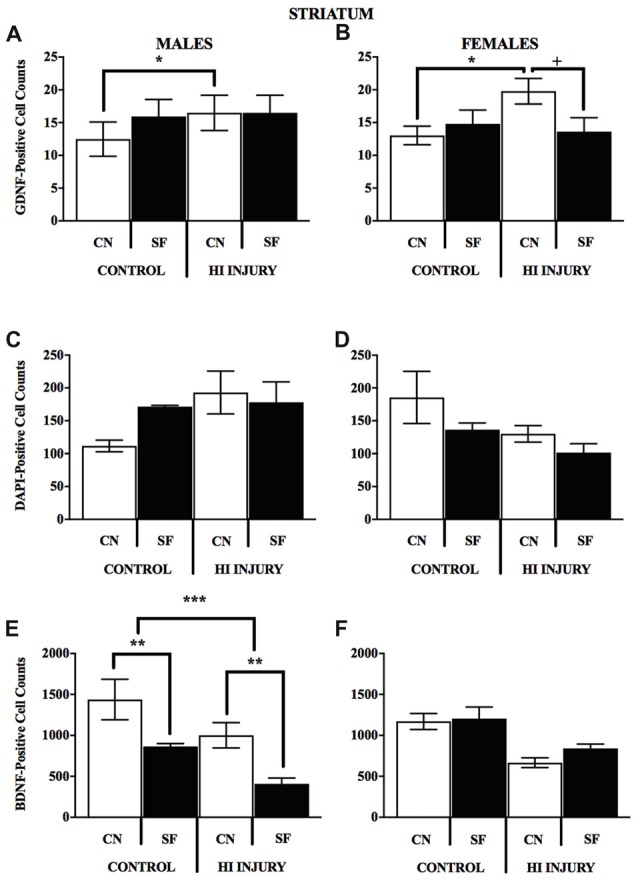
Hypoxic-ischemic (HI) encephalopathy is a devastating injury that occurs when the fetal brain is deprived of oxygen and blood to a degree that may lead to neurological damage, seizing and cerebral palsy. In rodents, early environmental enrichment that promotes maternal care-taking behavior (mCTB) can improve neurobehavioral outcomes and protect against neurological decline. We hypothesized that an enhanced nesting environment would improve mCTB as measured by pup weight gain, and support greater HI recovery in developing rats. Pregnant dams (E15-16) were introduced to either control Standard Facility (SF) housing or closed nestbox (CN) conditions and maintained in larger cages through pup weaning. On postnatal day (PND) 7, male and female Long-Evans rat pups ( = 73) were randomly sorted into one of two surgical conditions: control and HI. HI pups received isoflurane anesthesia and right carotid artery ligation, a 2-h rest followed by 90 min exposure to a moist hypoxic (92% N, 8% O2) chamber. Pups (PND 8) were weighed daily, and tested on the Morris Water Maze (MWM) task (PND 35-50). Results demonstrate significant differences afforded to male and female pups based on weight measure, where CN-rearing modifies pre-weaning adolescent weights in females and increases post-weaning weights in males and females by an average of 10 g. Following successful MWM training and acquisition (PND 35-37), both male and female CN-raised animals demonstrated faster latency to find the hidden platform (HP) during HP trials (PND 38-42) and appeared to freely explore the MWM pool during an additional probe trial (PND 43). Moreover, after sacrifice (PND 60), CN rearing created sex-specific alterations in brain-derived neurotrophic factor (BDNF), glial-derived neurotrophic factor (GDNF) immunopositive cell staining of the dorsomedial striatum and CA1 of the hippocampus. CN-rearing afforded HI males higher BDNF levels in the striatum and produced greater GDNF levels in the hippocampus of HI-injured females. These results suggest that early life environmental enrichment positively modifies nesting environment, increases weight gain, as well as spatial learning and memory in a sex-specific directionality. Our findings also implicate correlative changes in corticolimbic neurotrophin protein levels in the CN-reared animals that may contribute to these benefits.
缺氧缺血性(HI)脑病是一种严重的损伤,当胎儿大脑缺氧和缺血达到可能导致神经损伤、癫痫发作和脑瘫的程度时就会发生。在啮齿动物中,早期促进母性照顾行为(mCTB)的环境丰富化可以改善神经行为结果并预防神经功能衰退。我们假设,通过幼崽体重增加来衡量,强化的筑巢环境会改善mCTB,并支持发育中的大鼠更好地从HI中恢复。将怀孕的母鼠(胚胎期15 - 16天)置于对照标准设施(SF)饲养环境或封闭巢箱(CN)环境中,并在幼崽断奶前一直饲养在较大的笼子里。在出生后第7天(PND 7),将雄性和雌性Long-Evans大鼠幼崽(n = 73)随机分为两种手术条件之一:对照和HI。HI组幼崽接受异氟烷麻醉和右颈动脉结扎,休息2小时,然后在潮湿的缺氧(92% N,8% O2)舱中暴露90分钟。每天对幼崽(PND 8)称重,并在莫里斯水迷宫(MWM)任务中进行测试(PND 35 - 50)。结果表明,基于体重测量,雄性和雌性幼崽存在显著差异,其中CN饲养改变了雌性断奶前青少年的体重,并使雄性和雌性断奶后的体重平均增加了10克。在成功完成MWM训练和学习(PND 35 - 37)后,CN饲养的雄性和雌性动物在寻找隐藏平台(HP)试验(PND 38 - 42)中找到HP的潜伏期都更快,并且在额外的探索试验(PND 43)中似乎能自由探索MWM水池。此外,在处死后(PND 60),CN饲养在背内侧纹状体和海马体CA1区的脑源性神经营养因子(BDNF)、胶质细胞源性神经营养因子(GDNF)免疫阳性细胞染色方面产生了性别特异性改变。CN饲养使HI雄性大鼠纹状体中的BDNF水平更高,并使HI损伤雌性大鼠海马体中的GDNF水平更高。这些结果表明,早期生活环境丰富化能积极改变筑巢环境,增加体重增加,以及在性别特异性方向上改善空间学习和记忆。我们的研究结果还表明,CN饲养动物中皮质边缘神经营养蛋白水平的相关变化可能有助于这些益处。