1 US Biotest, Inc. , San Luis Obispo, California.
2 CritiTech , Lawrence, Kansas.
J Aerosol Med Pulm Drug Deliv. 2019 Apr;32(2):99-109. doi: 10.1089/jamp.2018.1467. Epub 2018 Oct 25.
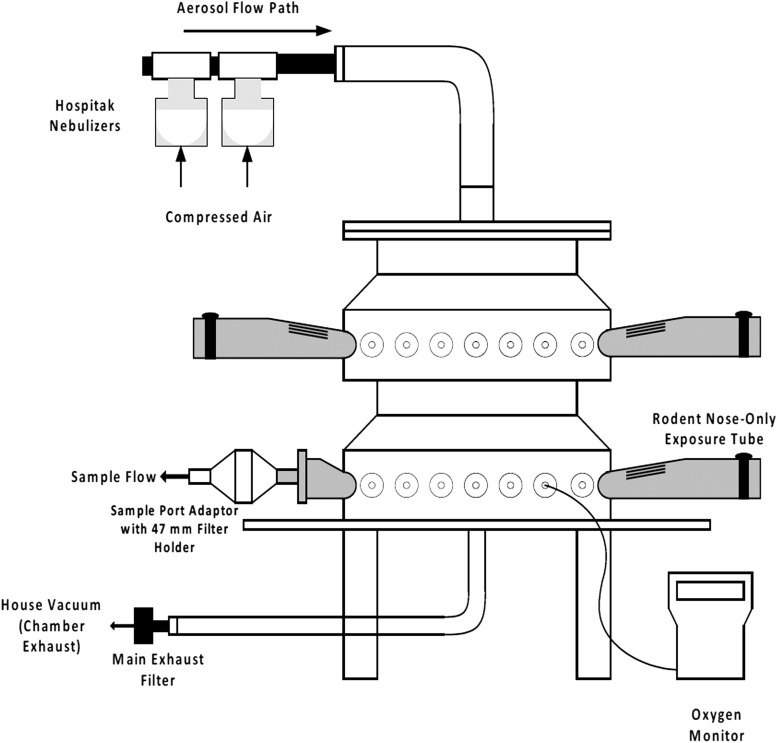
Inhaled chemotherapeutics may enhance pulmonary drug exposure to malignant lesions in the lung without substantially contributing to systemic toxicities. The pharmacokinetic profile of inhaled submicron particle paclitaxel (NanoPac) in healthy rodent plasma and lung tissue is evaluated here to determine administration proof-of-principle.
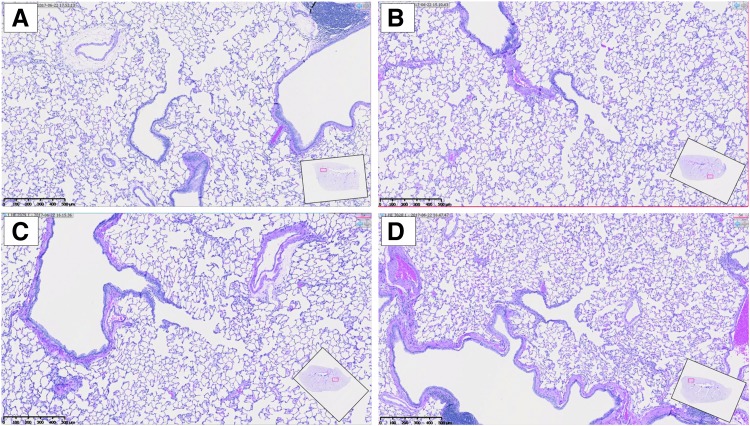
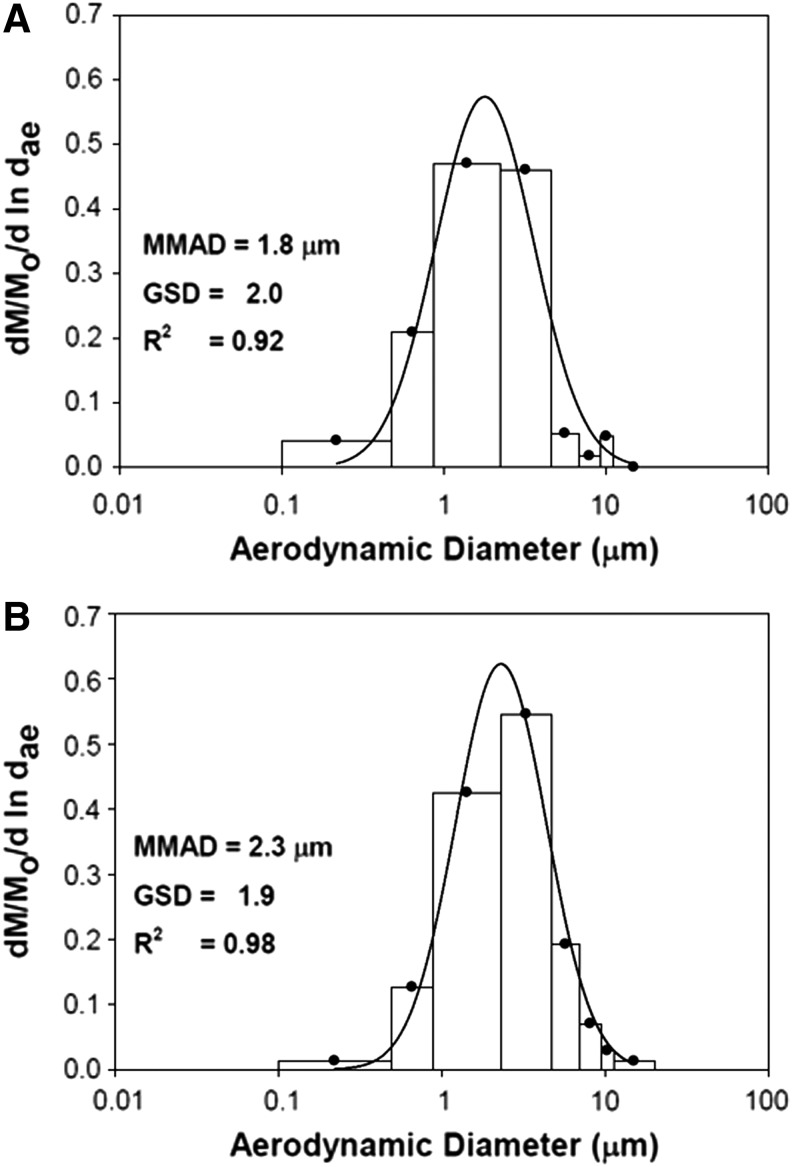
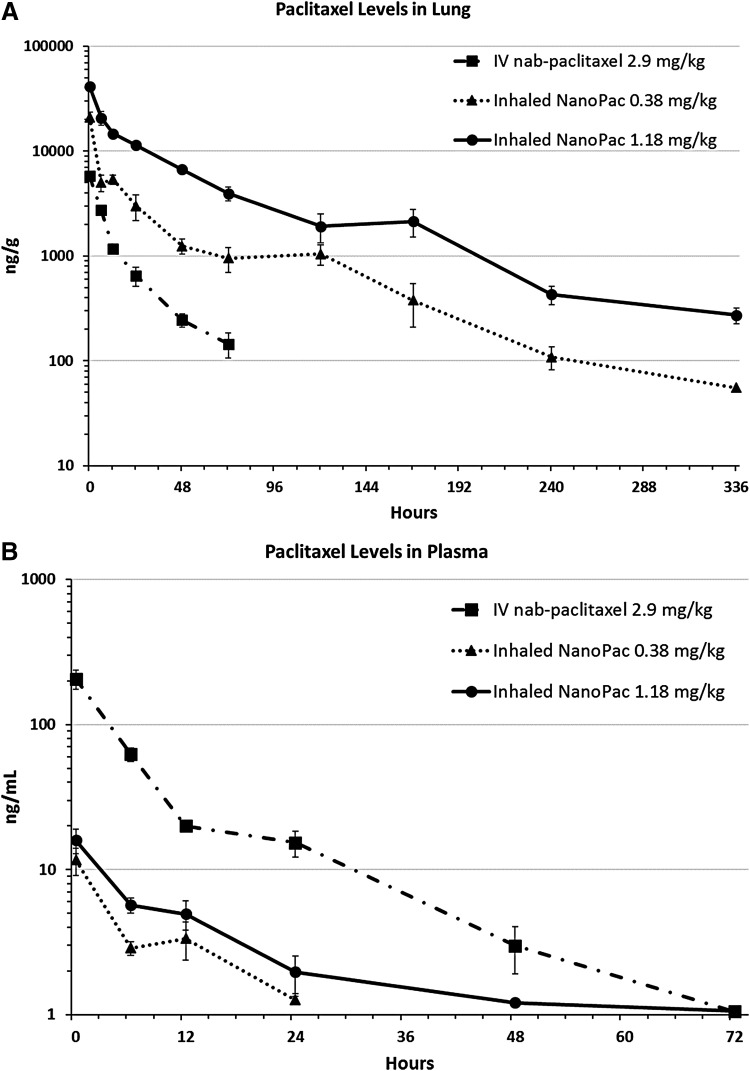
Healthy male Sprague Dawley rats received paclitaxel in one of three arms: intravenous nab-paclitaxel at 2.9 mg/kg (IVnP), inhaled NanoPac low dose (IHNP-LD) at 0.38 mg/kg, or inhaled NanoPac high dose (IHNP-HD) at 1.18 mg/kg. Plasma and lung tissue paclitaxel concentrations were determined using ultraperformance liquid chromatography tandem mass spectrometry from animals sacrificed at 10 time points ranging up to 2 weeks after administration. Peak concentration (C), apparent residence half-life (T), exposure (AUC), and dose-normalized exposure (AUC) were determined. Pulmonary histopathology was performed on rats sacrificed at the 336-hour time point.
Paclitaxel was detectable and quantifiable in the rat lung for both inhaled NanoPac arms sampled at the final necropsy, 336 hours postadministration. Substantial paclitaxel deposition and retention resulted in an order of magnitude increase in dose-normalized pulmonary exposure over IVnP. Inhaled NanoPac arms had an order of magnitude lower plasma C than IVnP, but followed a similar plasma T clearance (quantifiable only to 72 hours postadministration). Pulmonary histopathology found all treated animals indistinguishable from treatment-naive rats.
In the rodent model, inhaled NanoPac demonstrated substantial deposition and retention of paclitaxel in sampled lung tissue. Further research to determine NanoPac's toxicity profile and potential efficacy as lung cancer therapy is underway.
吸入化疗药物可能会增加肺部恶性病变的药物暴露,而不会显著增加全身毒性。本文评估了健康啮齿动物血浆和肺组织中吸入亚微米紫杉醇(NanoPac)的药代动力学特征,以确定给药原理验证。
健康雄性 Sprague Dawley 大鼠接受三种方式中的一种紫杉醇治疗:静脉注射纳布紫杉醇 2.9mg/kg(IVnP)、低剂量吸入 NanoPac(IHNP-LD)0.38mg/kg 或高剂量吸入 NanoPac(IHNP-HD)1.18mg/kg。通过超高效液相色谱串联质谱法从给药后 10 个时间点(最长可达 2 周)处死的动物的血浆和肺组织中测定紫杉醇浓度。测定峰浓度(C)、表观半衰期(T)、暴露量(AUC)和剂量归一化暴露量(AUC)。在给药 336 小时处死的大鼠进行肺组织病理学检查。
在最后一次解剖时,两种吸入 NanoPac 组的大鼠肺组织中均检测到并可定量检测到紫杉醇,时间为给药后 336 小时。大量紫杉醇沉积和保留导致剂量归一化肺暴露量比 IVnP 增加了一个数量级。吸入 NanoPac 组的血浆 C 比 IVnP 低一个数量级,但血浆 T 清除率相似(仅可量化至给药后 72 小时)。肺组织病理学发现所有接受治疗的动物与未经治疗的大鼠没有区别。
在啮齿动物模型中,吸入 NanoPac 显示出紫杉醇在采样肺组织中的大量沉积和保留。正在进行进一步的研究,以确定 NanoPac 的毒性特征和作为肺癌治疗的潜在疗效。