Department of Nutrition and Food Safety, College of Public Health, Xi'an Jiaotong University, Xi'an 710061, China.
Cardiovascular Research Center, Xi'an Jiaotong University, Xi'an 710061, China.
Molecules. 2018 Oct 22;23(10):2723. doi: 10.3390/molecules23102723.
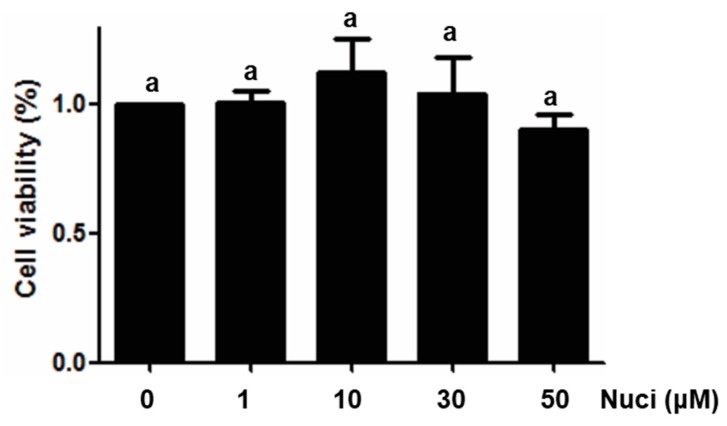
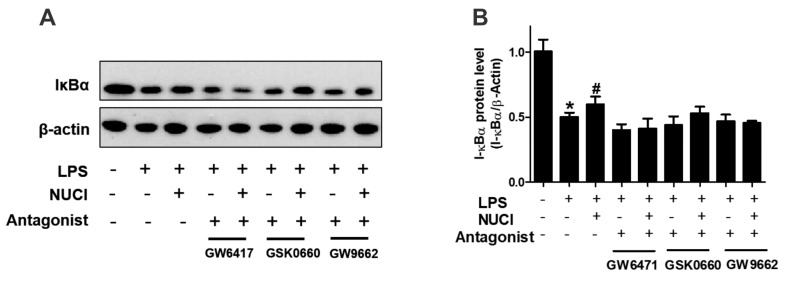
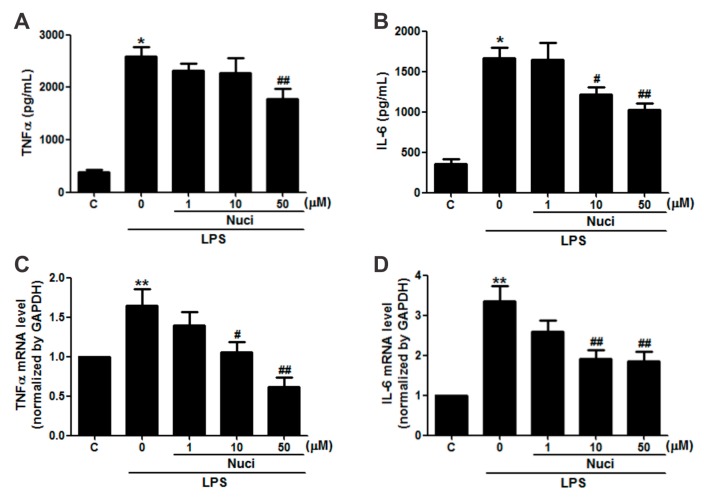
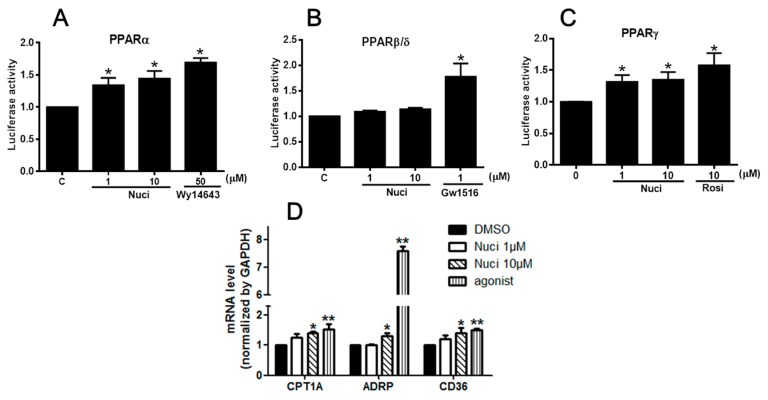
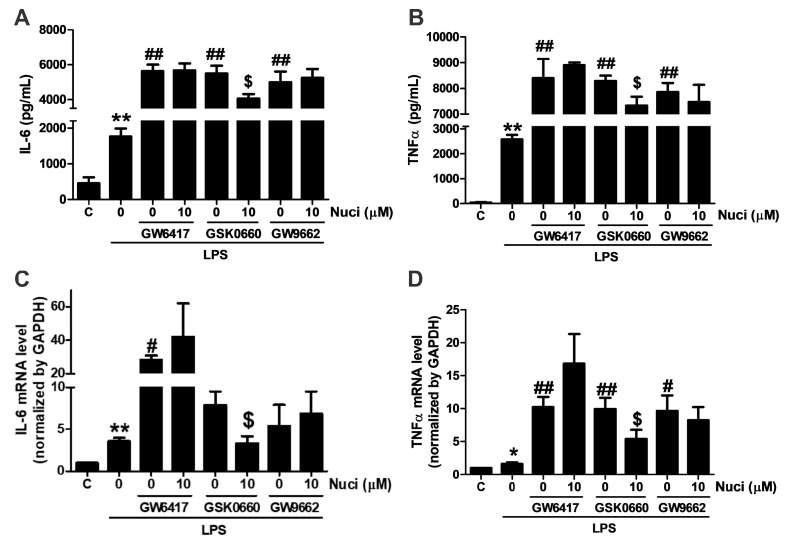
Inflammation is important and has been found to be an underlying cause in many acute and chronic human diseases. Nuciferine, a natural alkaloid containing an aromatic ring, is found in the leaves. It has been shown to have potential anti-inflammatory activities, but the molecular mechanism has remained unclear. In this study, we found that nuciferine (10 μM) significantly inhibited the lipopolysaccharide (LPS)-induced inflammatory cytokine IL-6 and TNF-α production in RAW 264.7 cells. In addition, the luciferase reporter assay results of different subtypes of the peroxisome proliferator-activated receptor (PPAR) showed that nuciferine dose-dependently activated all the PPAR activities. Specific inhibitors of PPARα and PPARγ significantly abolished the production of inflammatory cytokines as well as IκBα degradation. However, PPARδ inhibitor did not show this effect. Our results suggested a potential molecular mechanism of the anti-inflammatory effects of nuciferine in LPS-induced inflammation, at least in part, by activating PPARα and PPARγ in RAW 264.7 cells.
炎症是重要的,并且已被发现是许多急性和慢性人类疾病的潜在原因。荷叶碱是一种含有芳香环的天然生物碱,存在于荷叶中。已经证明它具有潜在的抗炎活性,但分子机制尚不清楚。在这项研究中,我们发现荷叶碱(10 μM)可显著抑制脂多糖(LPS)诱导的 RAW 264.7 细胞中炎性细胞因子 IL-6 和 TNF-α的产生。此外,不同亚型过氧化物酶体增殖物激活受体(PPAR)的荧光素酶报告基因检测结果表明,荷叶碱呈剂量依赖性激活所有 PPAR 活性。PPARα 和 PPARγ 的特异性抑制剂可显著抑制炎性细胞因子的产生和 IκBα 的降解。然而,PPARδ 抑制剂没有表现出这种效果。我们的结果表明,荷叶碱在 LPS 诱导的炎症中的抗炎作用的潜在分子机制至少部分是通过激活 RAW 264.7 细胞中的 PPARα 和 PPARγ 来实现的。