State Key Laboratory of Medicinal Chemical Biology and College of Pharmacy, Nankai University, Tianjin 300000, China; Tianjin Key Laboratory of Molecular Drug Research, Tianjin International Joint Academy of Biomedicine, Tianjin 300000, China.
Tianjin Key Laboratory of Molecular Drug Research, Tianjin International Joint Academy of Biomedicine, Tianjin 300000, China.
EBioMedicine. 2018 Nov;37:246-258. doi: 10.1016/j.ebiom.2018.10.041. Epub 2018 Oct 23.
Salvia miltiorrhiza is used extensively to treat cardiovascular diseases. SAA is a major bioactive component in Salvia miltiorrhiza and mediates myocardial ischemia (MI). However, the industrial production of SAA is limited due to low yields. In addition, the direct targets of SAA are unknown. Here we explore cardioprotective mechanisms and targets of SAA in the cardiovascular system.
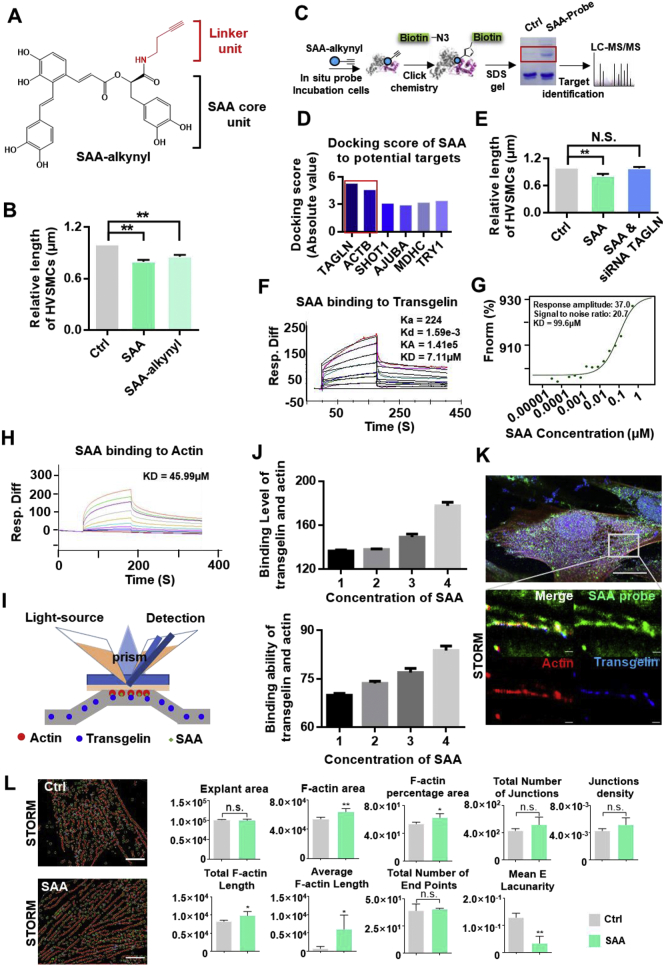
Transgelin and actin were identified as targets of SAA using a chemical biology method and were validated by Biacore analysis, microscale thermophoresis and single-molecule imaging. Studies of transgelin (-/-) knockout mice further verify the target. Cardioprotective mechanisms and targets of SAA were studied in cultured vascular smooth muscle cells and transgenic mice.
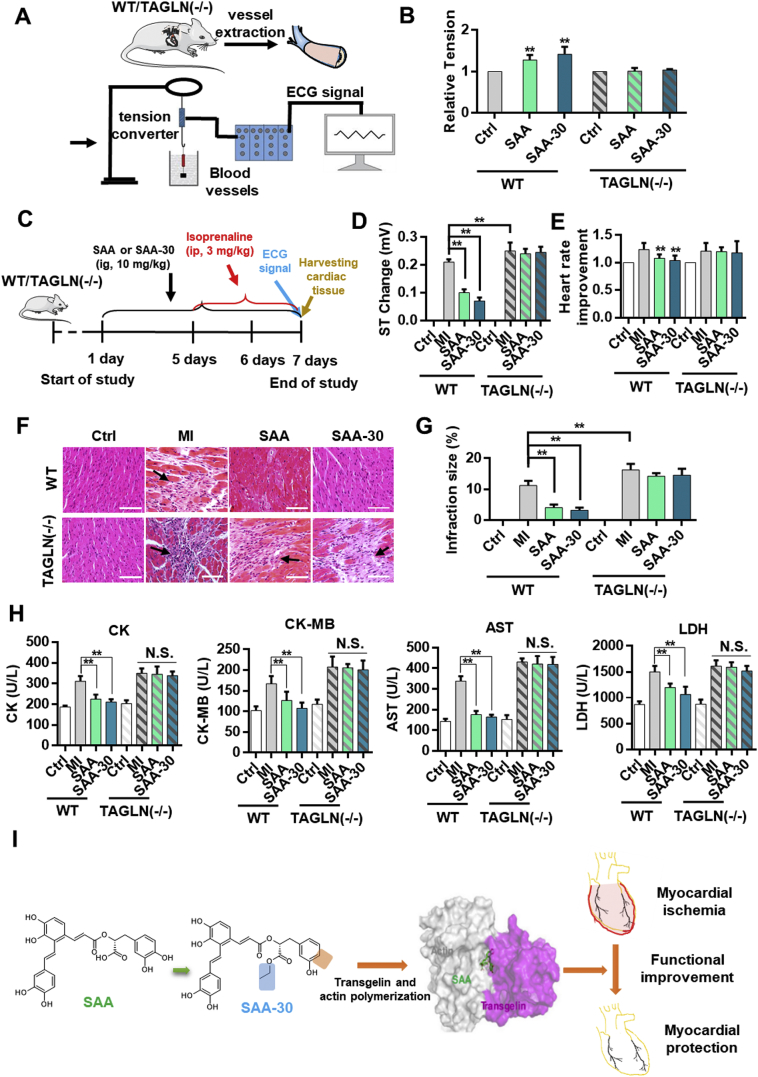
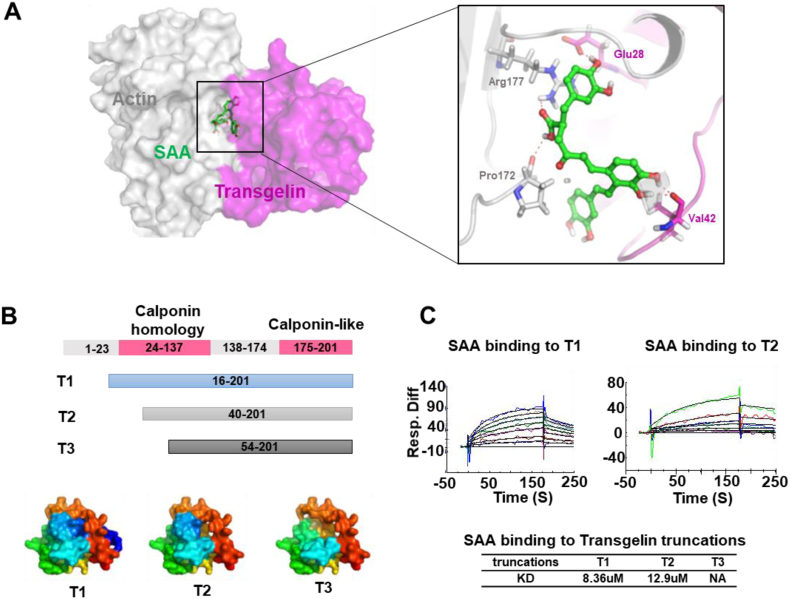
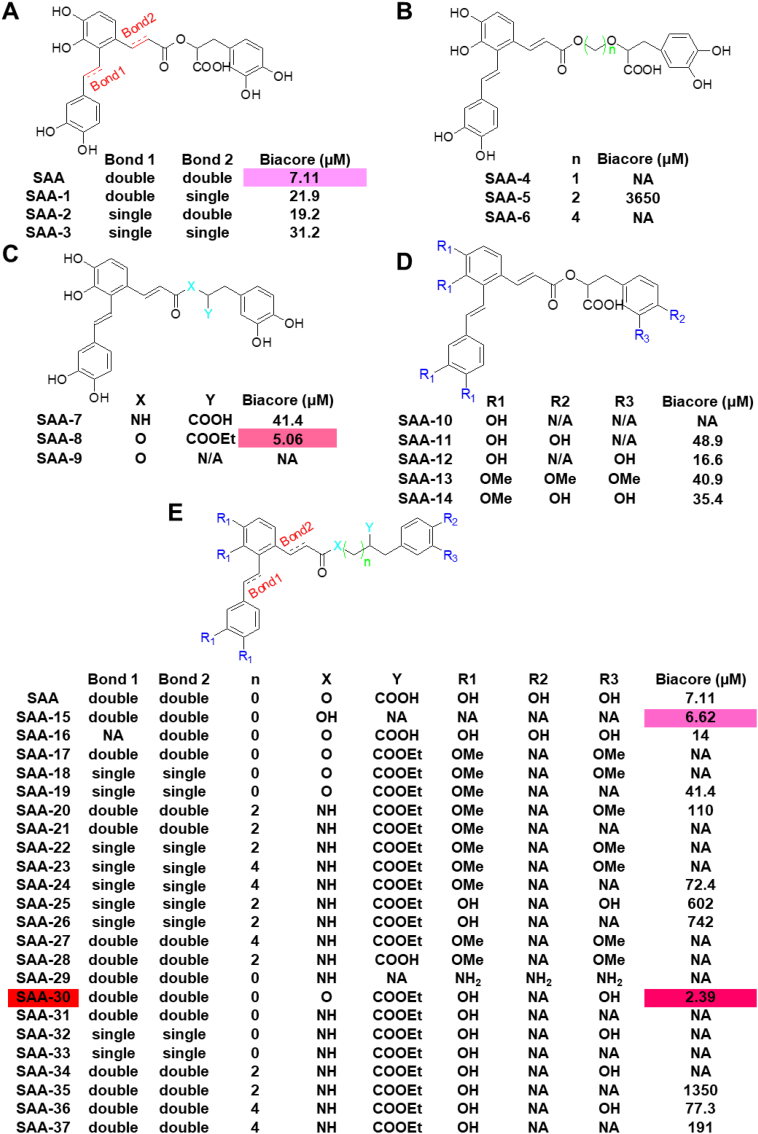
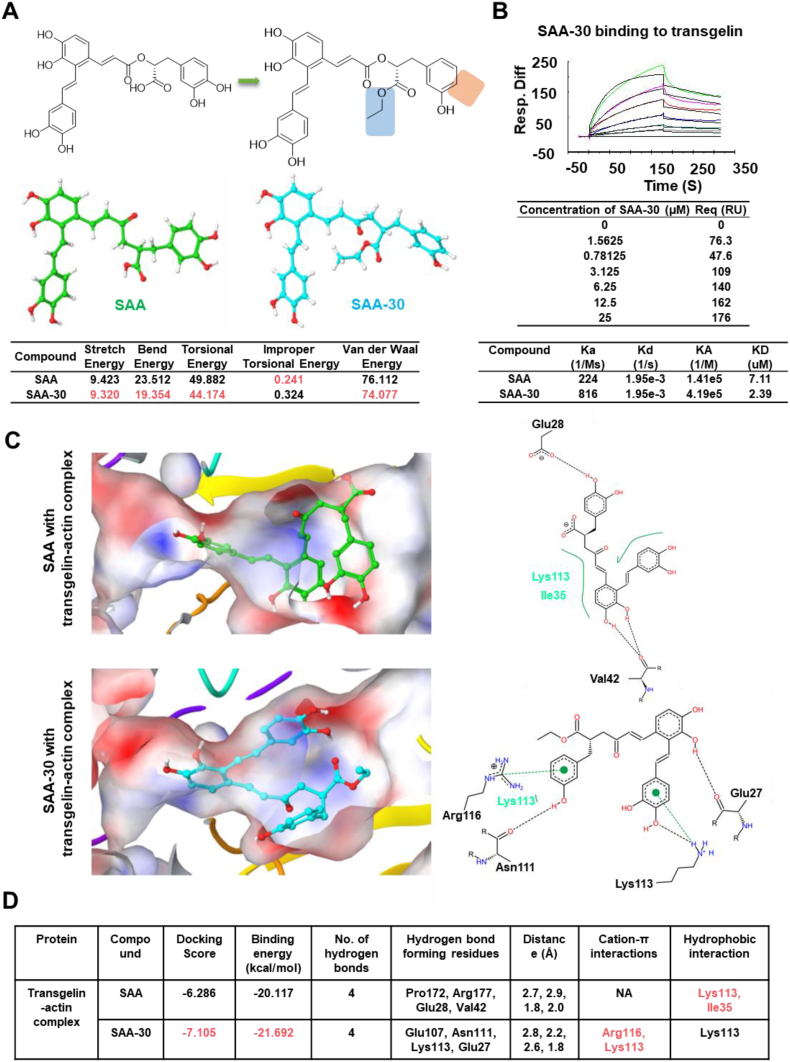
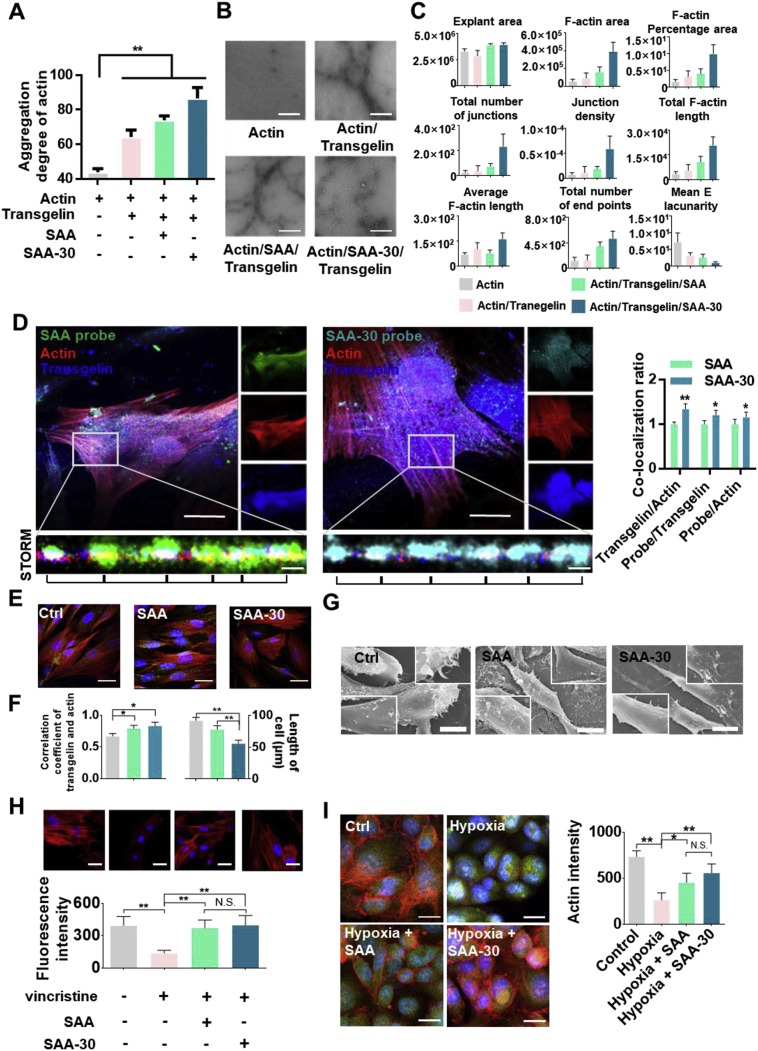
In WT mice, SAA targeted transgelin and had a protective effect on myocardium but did not have the same protective effect on transgelin (-/-) mice. SAA stabilizes the transgelin-actin complex, modulates the reorganization of the actin cytoskeleton, facilitates F-actin bundling, further enhances the contractility and blood flows of coronary arteries, and improves outcomes of myocardial ischemia. Based on the target, a more active SAA derivative offering myocardial protection, SAA-30, was obtained.
We report on the direct targets of SAA and mechanisms of myocardial ischemia treatment. We also find that transgelin may act as a novel therapeutic target of myocardial ischemia. Furthermore, a more effective derivative of SAA provides the basis for further clinical translational research.
丹参广泛用于治疗心血管疾病。丹参甲素(SAA)是丹参中的主要生物活性成分,可介导心肌缺血(MI)。然而,由于产量低,SAA 的工业生产受到限制。此外,SAA 的直接靶点尚不清楚。在这里,我们探索 SAA 在心血管系统中的心脏保护机制和靶点。
使用化学生物学方法鉴定转凝胶蛋白和肌动蛋白为 SAA 的靶标,并通过 Biacore 分析、微尺度热泳和单分子成像进行验证。转凝胶蛋白(-/-)敲除小鼠的研究进一步验证了该靶点。在培养的血管平滑肌细胞和转基因小鼠中研究 SAA 的心脏保护机制和靶点。
在 WT 小鼠中,SAA 靶向转凝胶蛋白对心肌有保护作用,但对转凝胶蛋白(-/-)小鼠没有相同的保护作用。SAA 稳定转凝胶蛋白-肌动蛋白复合物,调节肌动蛋白细胞骨架的重排,促进 F-肌动蛋白的束集,进一步增强冠状动脉的收缩性和血流量,并改善心肌缺血的预后。基于该靶点,获得了一种提供心肌保护作用的更活跃的 SAA 衍生物 SAA-30。
我们报告了 SAA 的直接靶点和心肌缺血治疗机制。我们还发现转凝胶蛋白可能作为心肌缺血的新治疗靶点。此外,SAA 的一种更有效的衍生物为进一步的临床转化研究提供了基础。