Wang Yubao, Li Ben B, Li Jing, Roberts Thomas M, Zhao Jean J
Department of Cancer Biology, Dana-Farber Cancer Institute, Boston, MA 02215, USA; Department of Biological Chemistry and Molecular Pharmacology, Harvard Medical School, Boston, MA 02115, USA.
Department of Cancer Biology, Dana-Farber Cancer Institute, Boston, MA 02215, USA; Department of Biological Chemistry and Molecular Pharmacology, Harvard Medical School, Boston, MA 02115, USA; Broad Institute of MIT and Harvard, Cambridge, MA 02142, USA.
iScience. 2018 Nov 30;9:149-160. doi: 10.1016/j.isci.2018.10.015. Epub 2018 Oct 18.
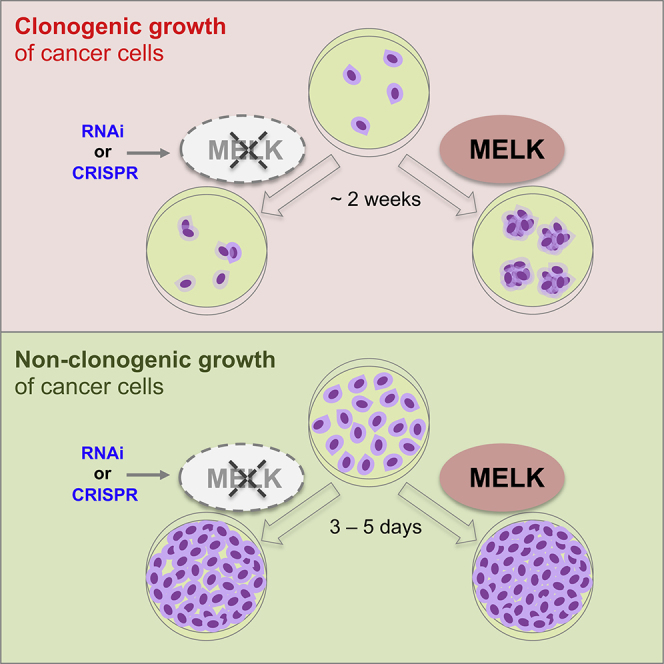
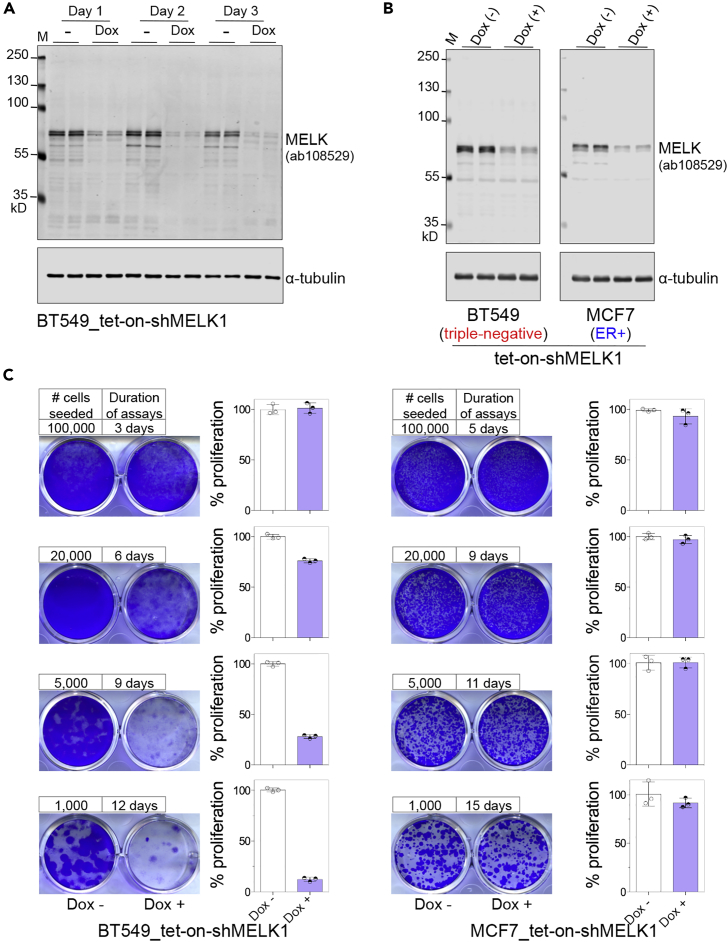
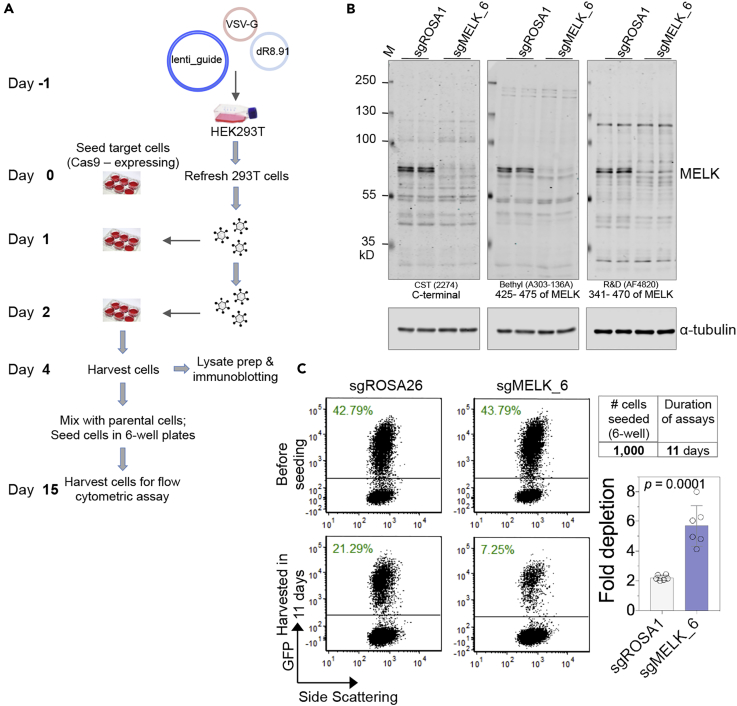
The role of maternal and embryonic leucine zipper kinase (MELK) in cancer cell proliferation has been contentious, with recent studies arriving at disparate conclusions. We investigated the in vitro dependency of cancer cells on MELK under a range of assay conditions. Abrogation of MELK expression has little effect under common culture conditions, in which cells are seeded at high densities and reach confluence in 3-5 days. However, MELK dependency becomes clearly apparent in clonogenic growth assays using either RNAi or CRISPR technologies to modulate MELK expression. This dependency is in sharp contrast to that of essential genes, such as those encoding classic mitotic kinases, but is similar to that of other oncogenes including MYC and KRAS. Our study provides an example demonstrating some of the challenges encountered in cancer target validation, and reveals how subtle, but important, technical variations can ultimately lead to divergent outcomes and conclusions.
母源和胚胎亮氨酸拉链激酶(MELK)在癌细胞增殖中的作用一直存在争议,最近的研究得出了不同的结论。我们在一系列检测条件下研究了癌细胞对MELK的体外依赖性。在常见的培养条件下,即细胞以高密度接种并在3至5天内达到汇合状态时,MELK表达的缺失影响很小。然而,在使用RNAi或CRISPR技术调节MELK表达的克隆形成生长试验中,MELK依赖性变得明显。这种依赖性与必需基因(如编码经典有丝分裂激酶的基因)的依赖性形成鲜明对比,但与包括MYC和KRAS在内的其他癌基因的依赖性相似。我们的研究提供了一个例子,展示了在癌症靶点验证中遇到的一些挑战,并揭示了微妙但重要的技术差异最终如何导致不同的结果和结论。