Burke Sarah E, Babu Henry Samuel Immanuel, Zhao Qing, Cagle Jackson, Cohen Ronald A, Kluger Benzi, Ding Mingzhou
Department of Neuroscience, College of Medicine, University of Florida, Gainesville, FL, United States.
J. Crayton Pruitt Family Department of Biomedical Engineering, Herbert Wertheim College of Engineering, University of Florida, Gainesville, FL, United States.
Front Aging Neurosci. 2018 Oct 19;10:327. doi: 10.3389/fnagi.2018.00327. eCollection 2018.
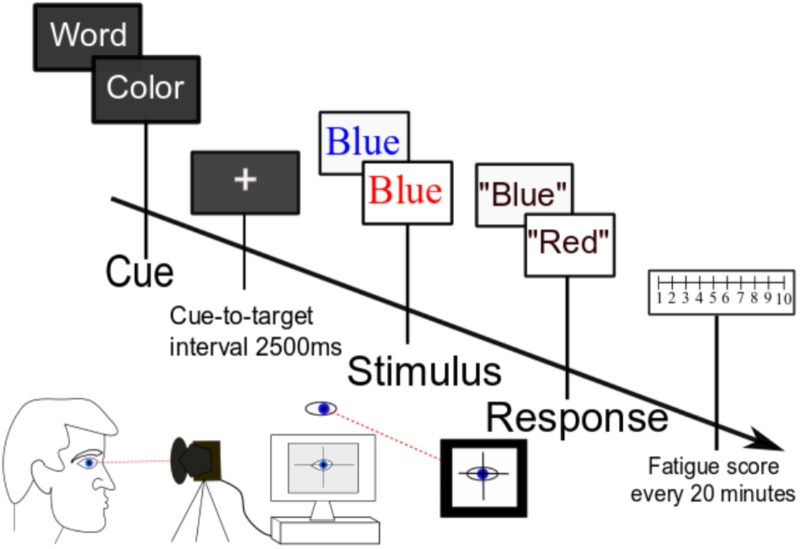
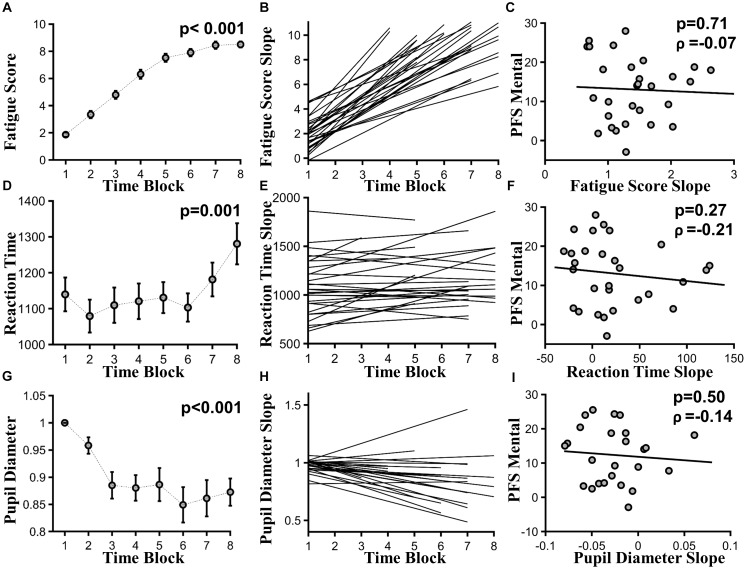
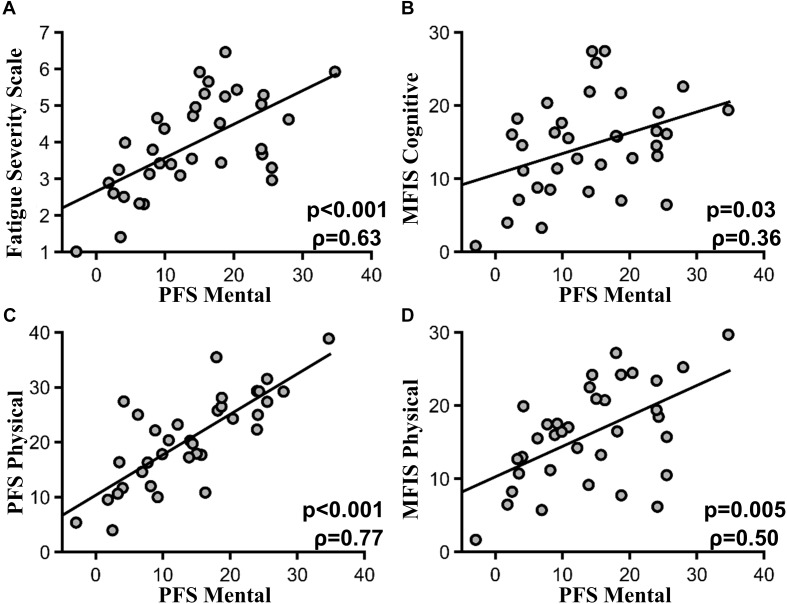
Cognitive fatigue and cognitive fatigability are distinct constructs. Cognitive fatigue reflects perception of cognitive fatigue outside of the context of activity level and duration and can be reliably assessed via established instruments such as the Fatigue Severity Scale (FSS) and the Modified Fatigue Impact Scale (MFIS). In contrast, cognitive fatigability reflects change in fatigue levels quantified within the context of the level and duration of cognitive activity, and currently there are no reliable measures of cognitive fatigability. A recently published scale, the Pittsburgh Fatigability Scale (PFS), attempts to remedy this problem with a focus on the aged population. While the physical fatigability subscore of PFS has been validated using physical activity derived measures, the mental fatigability subscore of PFS remains to be tested against equivalent measures derived from cognitive activities. To this end, we recruited 35 older, healthy adult participants (mean age 73.77 ± 5.9) to complete the PFS as well as a prolonged continuous performance of a Stroop task (>2 h). Task-based assessments included time-on-task changes in self-reported fatigue scores (every 20 min), reaction time, and pupil diameter. Defining subjective fatigability, behavioral fatigability, and physiologic/autonomic fatigability to be the slope of change over time-on-task in the above three assessed variables, we found that the PFS mental subscore was not correlated with any of the three task-based fatigability measures. Instead, the PFS mental subscore was correlated with trait level fatigue measures FSS (ρ = 0.63, < 0.001), and MFIS cognitive subsection (ρ = 0.36, = 0.03). This finding suggested that the PFS mental fatigability subscore may not be an adequate measure of how fatigued one becomes after a given amount of mental work. Further development efforts are needed to create a self-report scale that reliably captures cognitive fatigability in older adults.
认知疲劳和认知易疲劳性是不同的概念。认知疲劳反映的是在活动水平和持续时间背景之外对认知疲劳的感知,并且可以通过诸如疲劳严重程度量表(FSS)和改良疲劳影响量表(MFIS)等既定工具进行可靠评估。相比之下,认知易疲劳性反映的是在认知活动的水平和持续时间背景下量化的疲劳水平变化,目前尚无可靠的认知易疲劳性测量方法。最近发表的匹兹堡易疲劳性量表(PFS)试图针对老年人群解决这一问题。虽然PFS的身体易疲劳性子评分已通过基于身体活动得出的测量方法进行了验证,但PFS的精神易疲劳性子评分仍有待与从认知活动中得出的等效测量方法进行对比测试。为此,我们招募了35名年龄较大的健康成年参与者(平均年龄73.77±5.9岁),让他们完成PFS以及一项延长的Stroop任务连续执行(>2小时)。基于任务的评估包括自我报告疲劳评分(每20分钟一次)、反应时间和瞳孔直径随任务时间的变化。将主观易疲劳性、行为易疲劳性和生理/自主易疲劳性定义为上述三个评估变量中随任务时间变化的斜率,我们发现PFS精神子评分与任何一种基于任务的易疲劳性测量方法均无相关性。相反,PFS精神子评分与特质水平疲劳测量方法FSS(ρ = 0.63,<0.001)和MFIS认知子部分(ρ = 0.36,= 0.03)相关。这一发现表明,PFS精神易疲劳性子评分可能无法充分衡量一个人在进行一定量脑力工作后有多疲劳。需要进一步开展工作来创建一个能够可靠反映老年人认知易疲劳性的自我报告量表。