Sawada Takayuki, Itoh Mizuho, Nakamura Yasunori
Faculty of Bioresource Sciences, Akita Prefectural University, Akita, Japan.
Akita Natural Science Laboratory, Akita, Japan.
Front Plant Sci. 2018 Oct 23;9:1536. doi: 10.3389/fpls.2018.01536. eCollection 2018.
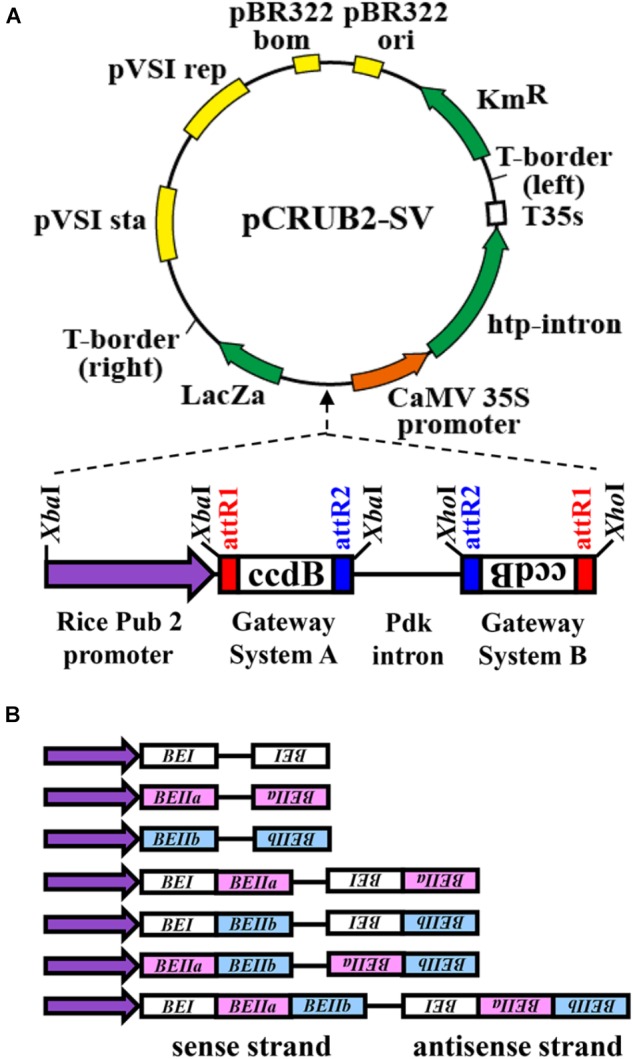
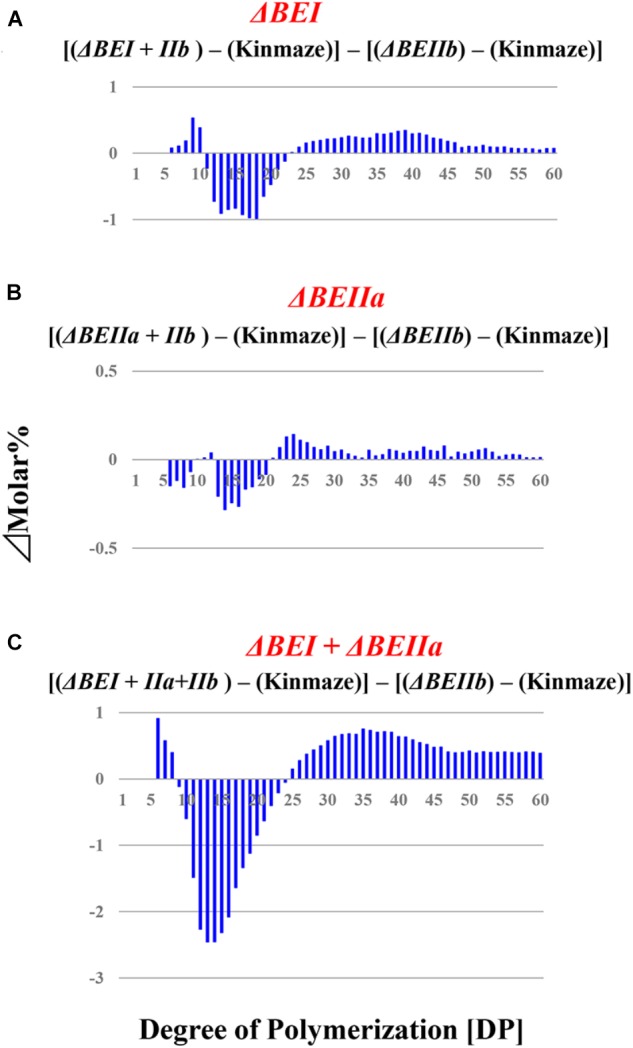
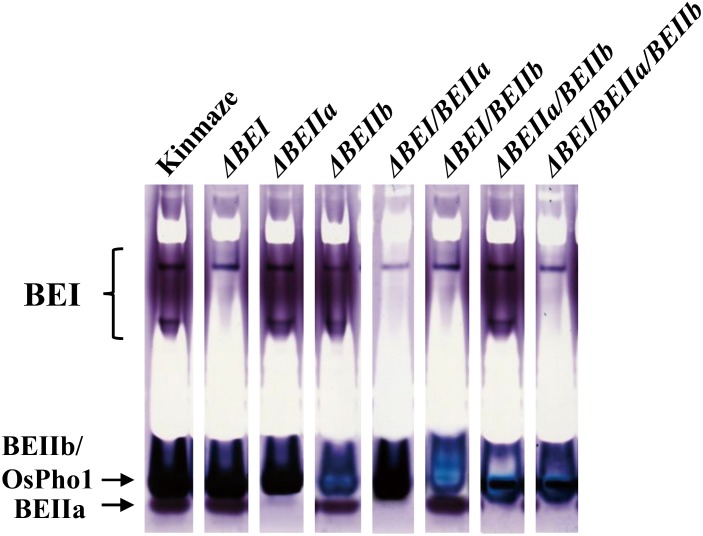
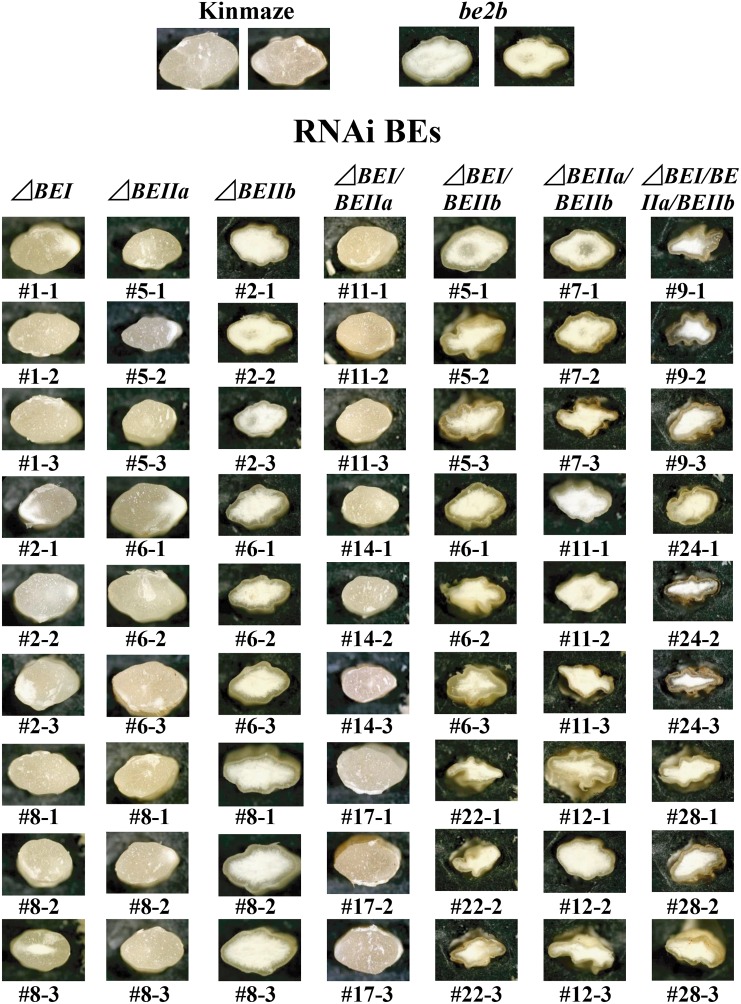
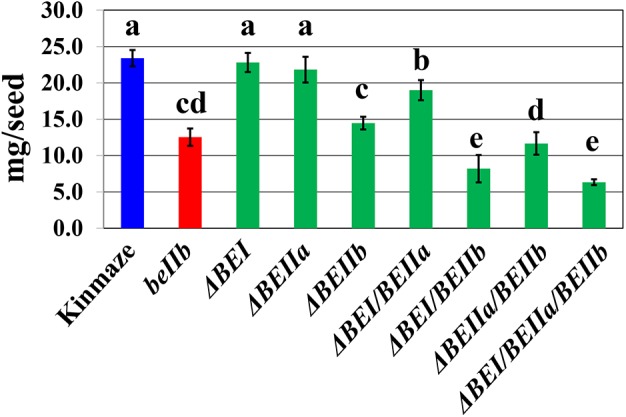
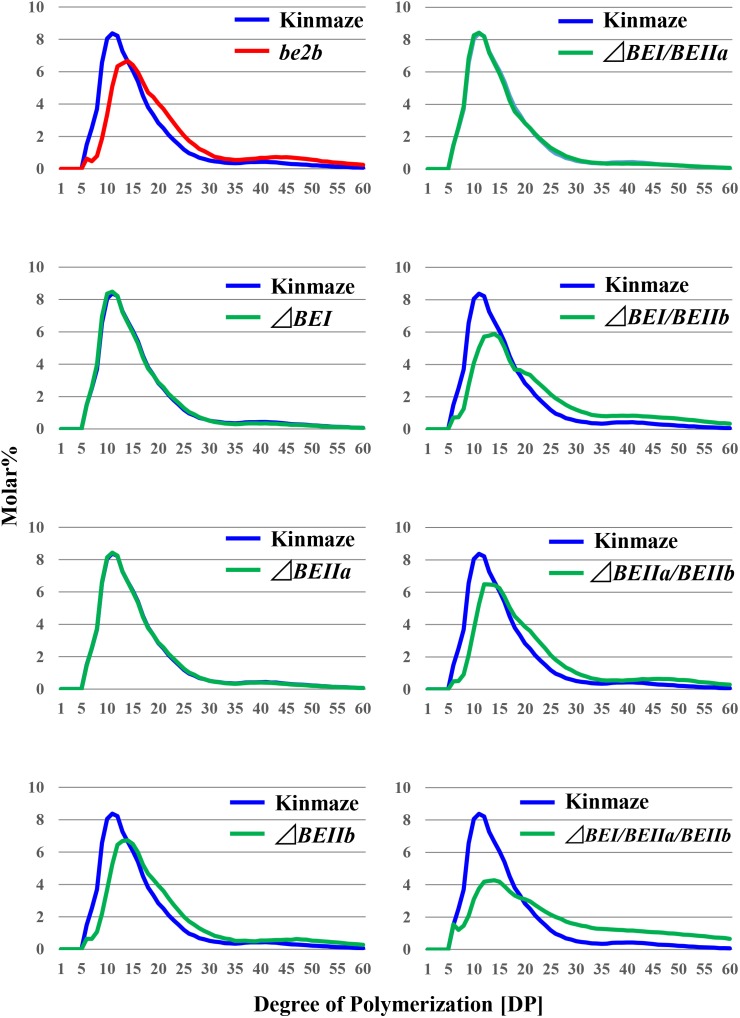
Three starch branching enzyme (BE) isozymes, BEI, BEIIa, and BEIIb, are involved in starch biosynthesis in rice endosperm. Past and studies have suggested that each BE isozyme plays a distinct role in forming the fine structure of amylopectin. To elucidate more details of their roles, we prepared DNA constructs in which all the possible combinations of the expressions of these three isozymes were suppressed in developing rice endosperm. Analysis of the chain-length distributions of amylopectin produced under these various conditions confirmed the contributions of the individual BE isozymes to the fine structure of amylopectin in rice endosperm. Among these isozymes, the impact of loss of BEIIb activity on amylopectin fine structure was most remarkable and indicated that it plays a specific role in the synthesis of short chains with a 6-13 degree of polymerization (DP). The contribution of BEI to the amylopectin synthesis was unclear when only BEI activity was reduced. It was clear, however, when both BEI and BEIIb activities were substantially inhibited. The DP11-22 intermediate chains were markedly reduced in the Δ line compared with the Δ line, indicating that BEI plays a distinct role in the synthesis of these intermediate chains. Although no substantial change in amylopectin chain profile was detected in the Δ line, the role of BEIIa could be deciphered by analyzing amylopectin fine structure from the Δ line in comparison to that from Δ line. This strongly suggests that BEIIa compensates for the role of BEI, rather than that of BEIIb, by forming intermediate chains of DP11-22. In addition, the new possibility that BEIIa is involved in the formation of starch granules in rice endosperm was suggested because the onset temperature for gelatinization of starch granules in the Δ line was significantly higher than that in the Δ line. In summary, the present study highlights the distinct roles of BEI, BEIIa, and BEIIb in the synthesis of amylopectin in developing rice endosperm.
三种淀粉分支酶(BE)同工酶,即BEI、BEIIa和BEIIb,参与水稻胚乳中的淀粉生物合成。过去的研究表明,每种BE同工酶在形成支链淀粉的精细结构中发挥着独特的作用。为了阐明它们作用的更多细节,我们构建了DNA载体,在发育中的水稻胚乳中抑制这三种同工酶所有可能组合的表达。对在这些不同条件下产生的支链淀粉的链长分布进行分析,证实了各个BE同工酶对水稻胚乳中支链淀粉精细结构的贡献。在这些同工酶中,BEIIb活性丧失对支链淀粉精细结构的影响最为显著,表明它在聚合度(DP)为6 - 13的短链合成中起特定作用。当仅降低BEI活性时,BEI对支链淀粉合成的贡献尚不清楚。然而,当BEI和BEIIb的活性都被大幅抑制时就很清楚了。与Δ系相比,Δ系中DP11 - 22中间链明显减少,表明BEI在这些中间链的合成中发挥着独特作用。尽管在Δ系中未检测到支链淀粉链谱有实质性变化,但通过比较Δ系和Δ系的支链淀粉精细结构,可以解读BEIIa的作用。这有力地表明,BEIIa通过形成DP11 - 22的中间链来补偿BEI的作用,而不是BEIIb的作用。此外,由于Δ系中淀粉颗粒糊化的起始温度明显高于Δ系,因此提出了BEIIa参与水稻胚乳中淀粉颗粒形成的新可能性。总之,本研究突出了BEI、BEIIa和BEIIb在发育中的水稻胚乳支链淀粉合成中的独特作用。