Department of Statistical Genetics, Osaka University Graduate School of Medicine, Suita 565-0871, Japan.
Laboratory for Statistical Analysis, RIKEN Center for Integrative Medical Sciences, Yokohama 230-0045, Japan.
Nucleic Acids Res. 2018 Dec 14;46(22):11898-11909. doi: 10.1093/nar/gky1066.
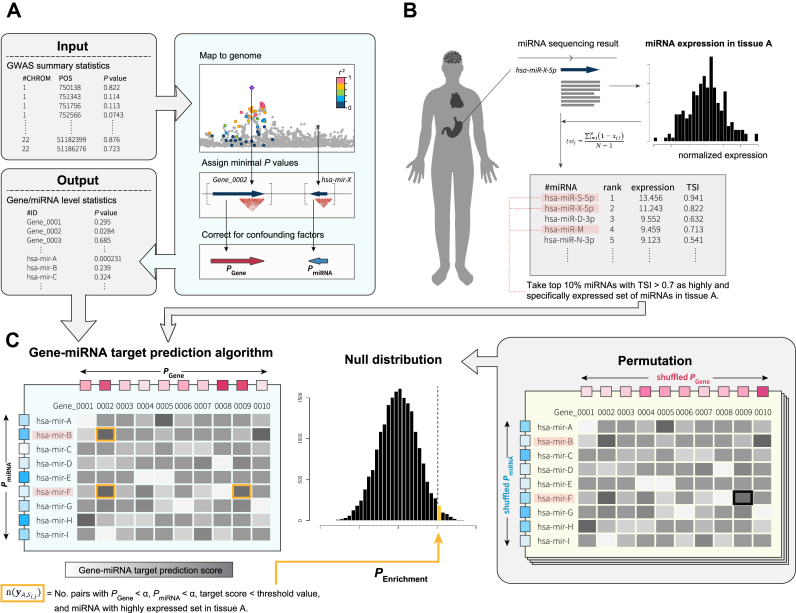
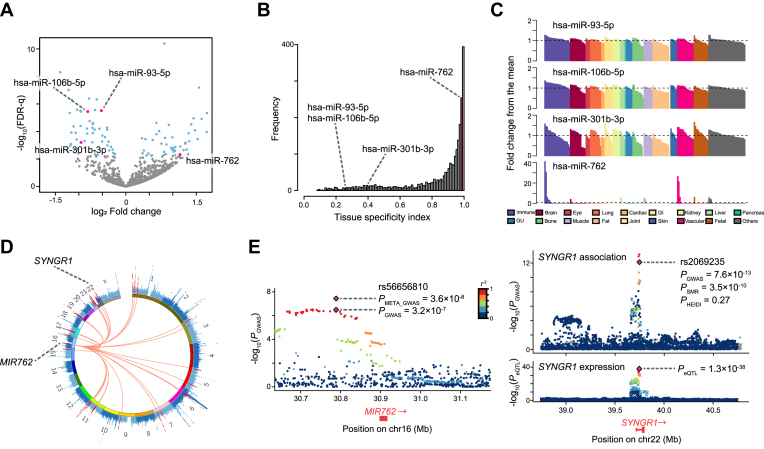
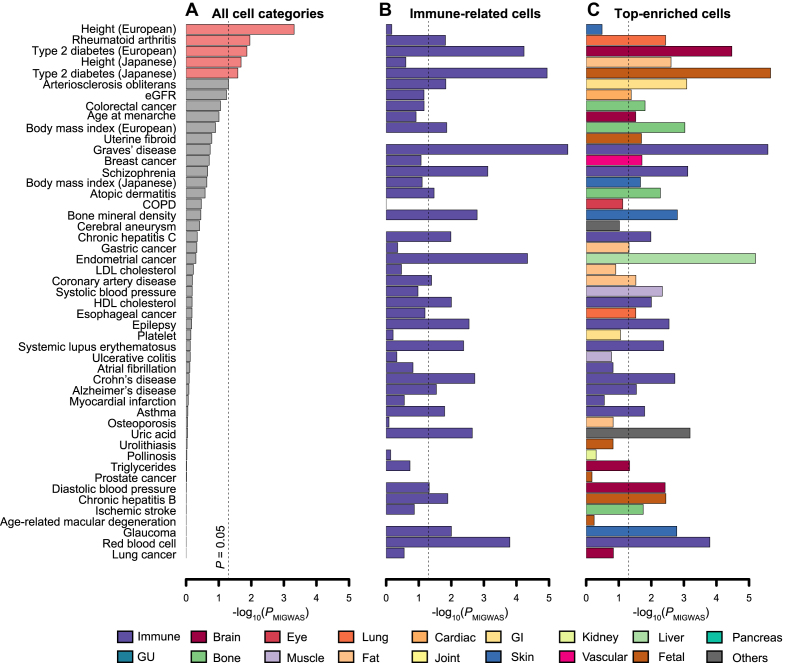
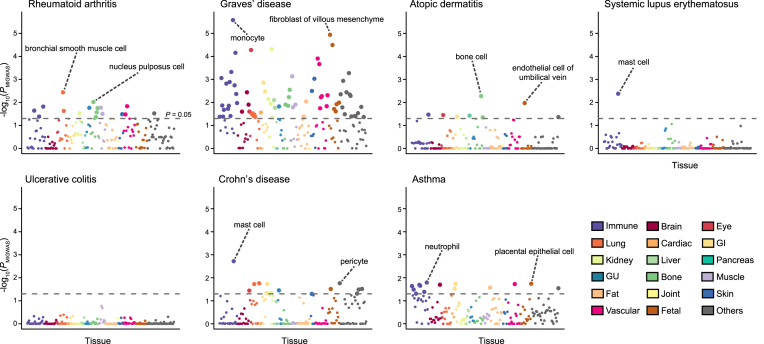
MicroRNAs (miRNAs) modulate the post-transcriptional regulation of target genes and are related to biology of complex human traits, but genetic landscape of miRNAs remains largely unknown. Given the strikingly tissue-specific miRNA expression profiles, we here expand a previous method to quantitatively evaluate enrichment of genome-wide association study (GWAS) signals on miRNA-target gene networks (MIGWAS) to further estimate tissue-specific enrichment. Our approach integrates tissue-specific expression profiles of miRNAs (∼1800 miRNAs in 179 cells) with GWAS to test whether polygenic signals enrich in miRNA-target gene networks and whether they fall within specific tissues. We applied MIGWAS to 49 GWASs (nTotal = 3 520 246), and successfully identified biologically relevant tissues. Further, MIGWAS could point miRNAs as candidate biomarkers of the trait. As an illustrative example, we performed differentially expressed miRNA analysis between rheumatoid arthritis (RA) patients and healthy controls (n = 63). We identified novel biomarker miRNAs (e.g. hsa-miR-762) by integrating differentially expressed miRNAs with MIGWAS results for RA, as well as novel associated loci with significant genetic risk (rs56656810 at MIR762 at 16q11; n = 91 482, P = 3.6 × 10⁻⁸). Our result highlighted that miRNA-target gene network contributes to human disease genetics in a cell type-specific manner, which could yield an efficient screening of miRNAs as promising biomarkers.
微小 RNA(miRNA)调节靶基因的转录后调控,与复杂人类特征的生物学有关,但 miRNA 的遗传景观在很大程度上仍然未知。鉴于 miRNA 表达谱具有明显的组织特异性,我们在此扩展了之前的方法,用于定量评估全基因组关联研究(GWAS)信号在 miRNA 靶基因网络(MIGWAS)上的富集,以进一步估计组织特异性富集。我们的方法将 miRNA(179 种细胞中约 1800 种 miRNA)的组织特异性表达谱与 GWAS 相结合,以测试多基因信号是否在 miRNA 靶基因网络中富集,以及它们是否位于特定组织中。我们将 MIGWAS 应用于 49 项 GWAS(nTotal = 3520246),并成功鉴定了具有生物学意义的组织。此外,MIGWAS 可以将 miRNA 作为该特征的候选生物标志物。作为一个说明性示例,我们对类风湿关节炎(RA)患者和健康对照者(n = 63)之间的差异表达 miRNA 进行了分析。我们通过将差异表达 miRNA 与 RA 的 MIGWAS 结果相结合,以及与具有显著遗传风险的新关联位点(rs56656810 位于 16q11 上的 MIR762;n = 91482,P = 3.6×10⁻⁸),鉴定了新的生物标志物 miRNA(例如 hsa-miR-762)。我们的结果强调了 miRNA 靶基因网络以细胞类型特异性的方式促进人类疾病遗传学,这可以有效地筛选 miRNA 作为有前途的生物标志物。