Radiation Countermeasures Program, Armed Forces Radiobiology Research Institute, Uniformed Services University of the Health Sciences, Bethesda, MD, United States of America.
PLoS One. 2018 Nov 8;13(11):e0207071. doi: 10.1371/journal.pone.0207071. eCollection 2018.
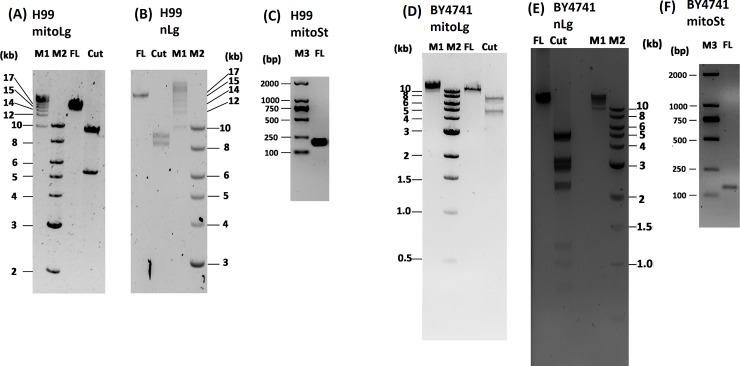
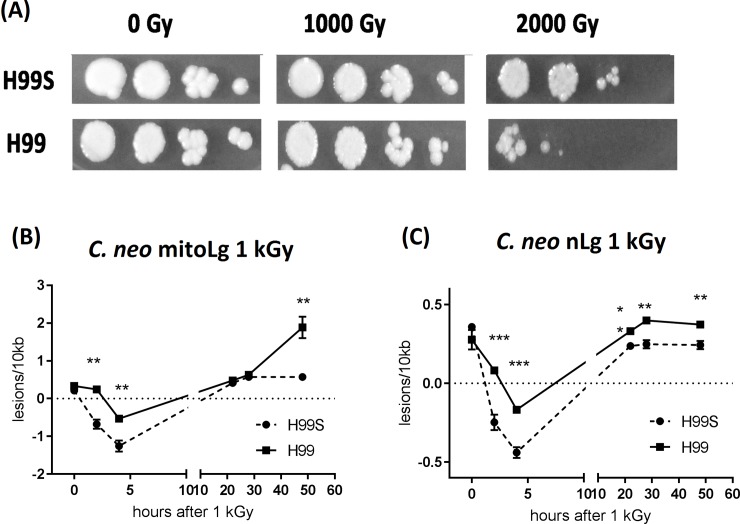
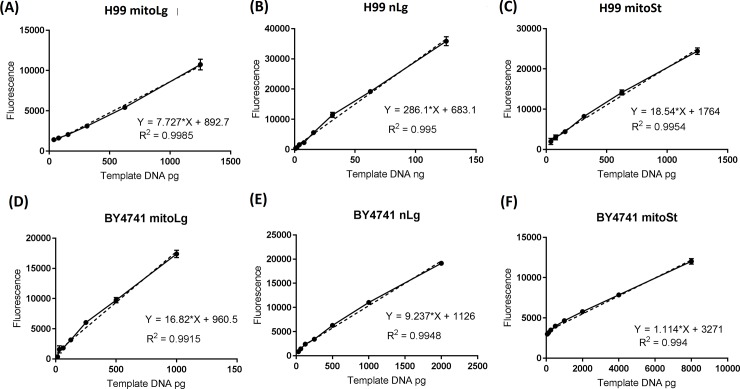
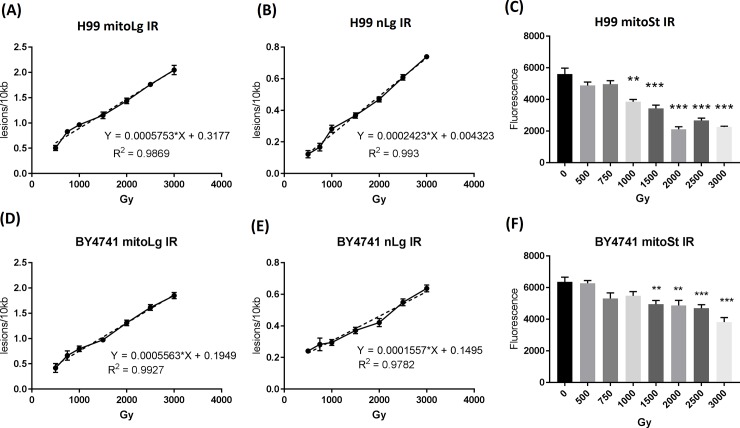
DNA damage has been considered to be the universal critical lesion in cells after exposure to ionizing radiation. Measuring radiation-induced DNA damage is important to understand the mechanisms of radiation-induced toxicity and monitor DNA damage repairs. Currently the most widely used methods to measure DNA damage are pulsed-field gel electrophoresis (PFGF) and single-cell gel electrophoresis (also known as the comet assay), both of which are technically challenging and time consuming. Long range quantitative polymerase chain reaction (LR-QPCR) has been used successfully to measure nuclear and mitochondrial DNA damage in mammalian and several model organism cells. The principle of this assay is that DNA lesions will slow down or block the progression of DNA polymerase. Therefore, the amplification efficiency of DNA with fewer lesions will be higher than DNA with more lesions under the same reaction condition. Here, we developed the LR-QPCR assay primers and reaction conditions to quantify DNA damage in Cryptococcus neoformans (C. neoformans) and Saccharomyces cerevisiae (S. cerevisiae) after gamma ray exposure. Under these conditions, long DNA targets of C. neoformans H99 and S. cerevisiae BY4741 (17.6 and 16.4 kb for nuclear DNA and 15.3 and 14.6 kb for mitochondrial DNA) were quantitatively amplified using extracted DNA templates, respectively. Two short mitochondrial DNA targets of these two species (207 bp and 154 bp) were also quantitatively amplified and used to monitor the number of mitochondria. Using the LR-QPCR method, we showed that the frequency of radiation-induced mitochondrial and nuclear DNA lesions had a significant linear correlation with the radiation doses (from 500 Gy to 3000 Gy) in both species. Furthermore, the faster disappearance of DNA damage detected in C. neoformans H99S strain compared to H99 strain may help to explain the different radiation sensitivity of these two strains. In summary, we developed a simple, sensitive method to measure radiation-induced DNA damage, which can greatly facilitate the study of radiation-induced toxicity and can be widely used as a dosimetry in radiation-induced cell damage.
DNA 损伤被认为是细胞在暴露于电离辐射后普遍存在的关键损伤。测量辐射诱导的 DNA 损伤对于理解辐射诱导毒性的机制和监测 DNA 损伤修复非常重要。目前,测量 DNA 损伤最广泛使用的方法是脉冲场凝胶电泳 (PFGE) 和单细胞凝胶电泳(也称为彗星试验),这两种方法都具有技术挑战性和耗时。长距离定量聚合酶链反应 (LR-QPCR) 已成功用于测量哺乳动物和几种模式生物细胞中的核和线粒体 DNA 损伤。该测定的原理是,DNA 损伤会减缓或阻止 DNA 聚合酶的前进。因此,在相同的反应条件下,具有较少损伤的 DNA 的扩增效率将高于具有更多损伤的 DNA。在这里,我们开发了 LR-QPCR 测定引物和反应条件,以量化 γ 射线照射后新型隐球菌 (C. neoformans) 和酿酒酵母 (S. cerevisiae) 的 DNA 损伤。在这些条件下,新型隐球菌 H99 和酿酒酵母 BY4741 的长 DNA 靶标(核 DNA 为 17.6 和 16.4 kb,线粒体 DNA 为 15.3 和 14.6 kb)分别使用提取的 DNA 模板进行定量扩增。这两个物种的两个短线粒体 DNA 靶标(207 bp 和 154 bp)也被定量扩增,并用于监测线粒体数量。使用 LR-QPCR 方法,我们表明两种物种中辐射诱导的线粒体和核 DNA 损伤的频率与辐射剂量(从 500 Gy 到 3000 Gy)之间存在显著的线性相关性。此外,与 H99 菌株相比,H99S 菌株中检测到的 DNA 损伤更快消失,这可能有助于解释这两种菌株对辐射的不同敏感性。总之,我们开发了一种简单、灵敏的方法来测量辐射诱导的 DNA 损伤,这将极大地促进辐射诱导毒性的研究,并可广泛用于辐射诱导细胞损伤的剂量测定。