Evolutionary Genetics, Heinrich Heine University Düsseldorf, Düsseldorf, Germany.
School of Life Sciences, Arizona State University, Tempe, United States.
Sci Rep. 2018 Nov 8;8(1):16534. doi: 10.1038/s41598-018-34724-w.
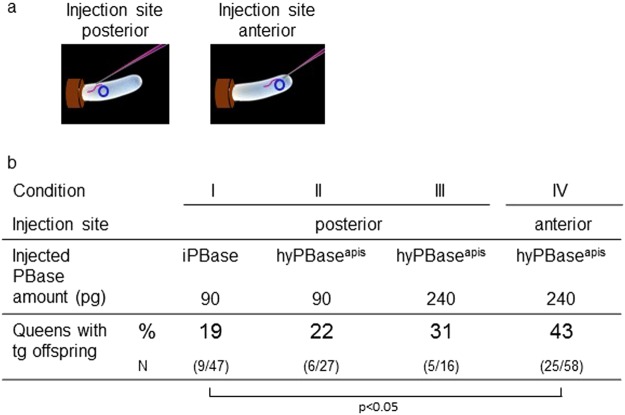
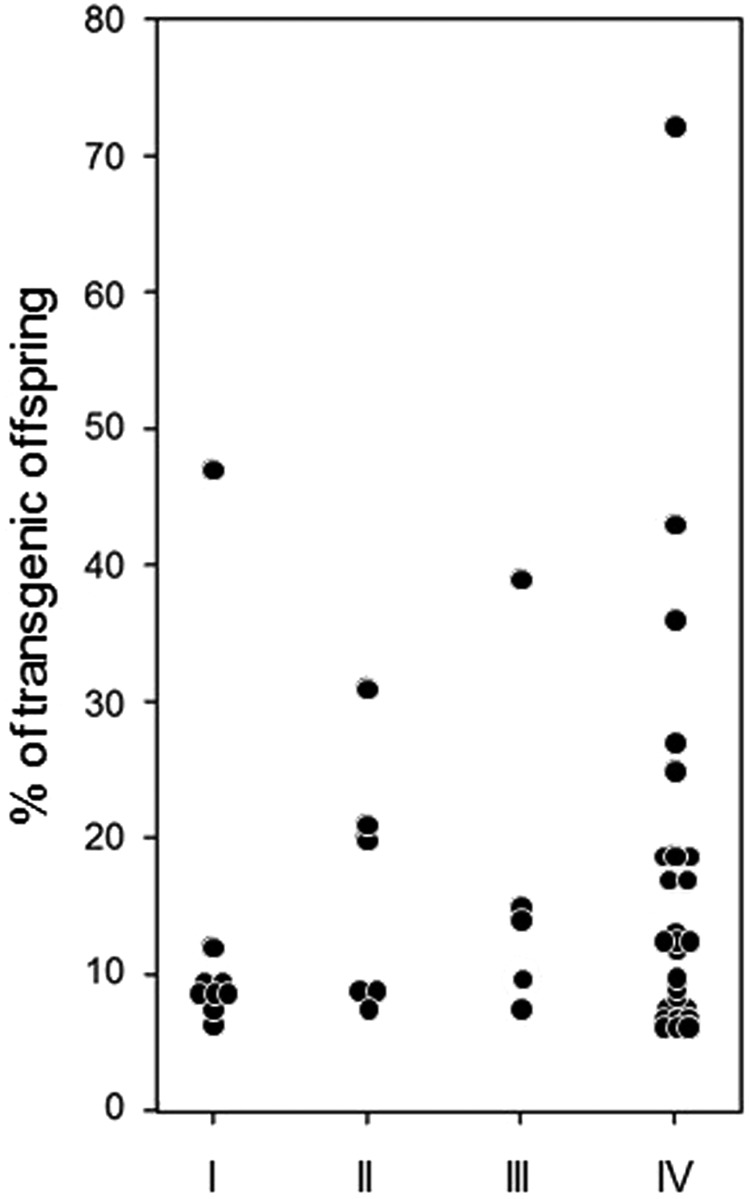
Functional genetic studies in honeybees have been limited by transformation tools that lead to a high rate of transposon integration into the germline of the queens. A high transformation rate is required to reduce screening efforts because each treated queen needs to be maintained in a separate honeybee colony. Here, we report on further improvement of the transformation rate in honeybees by using a combination of different procedures. We employed a hyperactive transposase protein (hyPBase), we tripled the amount of injected transposase mRNAs and we injected embryos into the first third (anterior part) of the embryo. These three improvements together doubled the transformation rate from 19% to 44%. We propose that the hyperactive transposase (hyPBase) and the other steps used may also help to improve the transformation rates in other species in which screening and crossing procedures are laborious.
在蜜蜂中进行功能基因研究受到转化工具的限制,这些工具会导致转座子以很高的频率整合到蜂王的生殖系中。由于需要对每个处理过的蜂王进行单独的饲养,因此需要高转化率来减少筛选工作。在这里,我们报告了通过使用不同程序的组合进一步提高蜜蜂的转化效率。我们使用了一种超活的转座酶蛋白(hyPBase),将注射的转座酶 mRNA 量增加了两倍,并将胚胎注射到胚胎的前 1/3 (前部分)。这三个改进共同将转化率从 19%提高到了 44%。我们提出,超活的转座酶(hyPBase)和使用的其他步骤也可能有助于提高在筛选和杂交过程繁琐的其他物种中的转化效率。