Department of Pathology, GROW-School for Oncology & Developmental Biology, Maastricht University Medical Center, Maastricht, The Netherlands; Institute for Biomedical Engineering, Department of Cell Biology, RWTH Aachen University Hospital, Aachen, Germany; Helmholtz Institute for Biomedical Engineering, RWTH Aachen University, Aachen, Germany.
Department of Pathology, GROW-School for Oncology & Developmental Biology, Maastricht University Medical Center, Maastricht, The Netherlands.
Neoplasia. 2018 Dec;20(12):1227-1235. doi: 10.1016/j.neo.2018.10.003. Epub 2018 Nov 7.
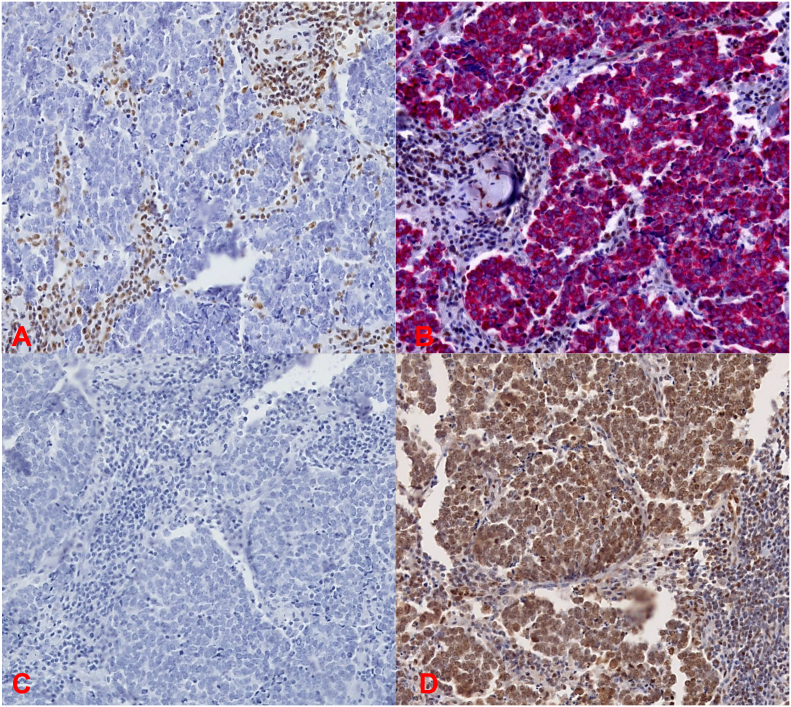
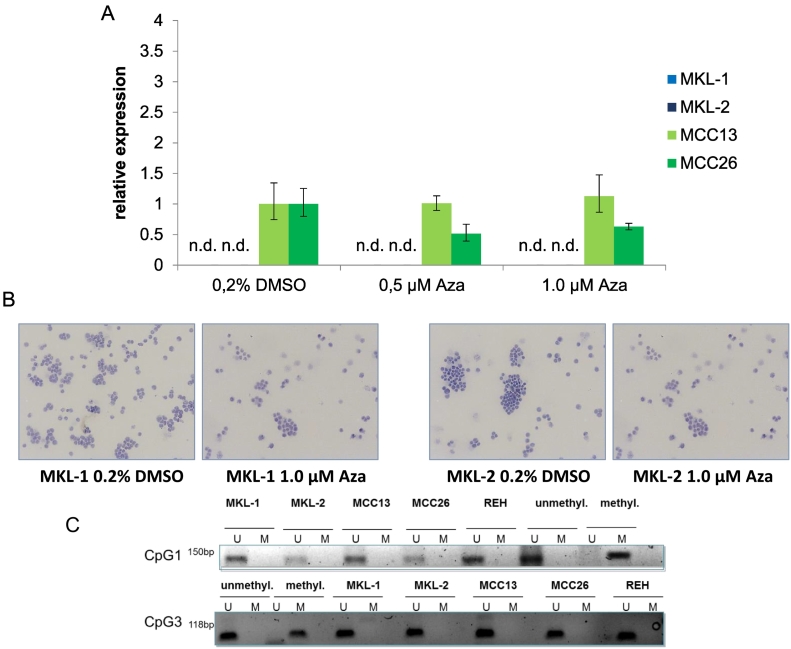
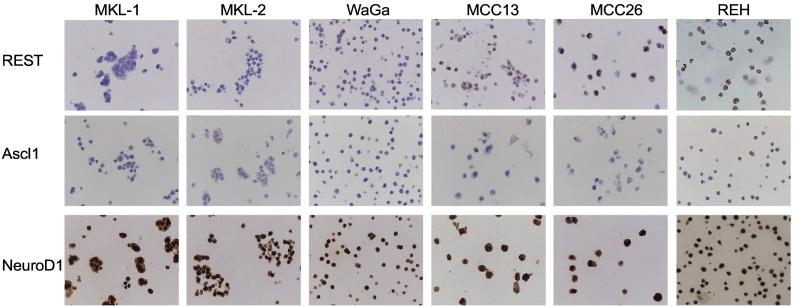
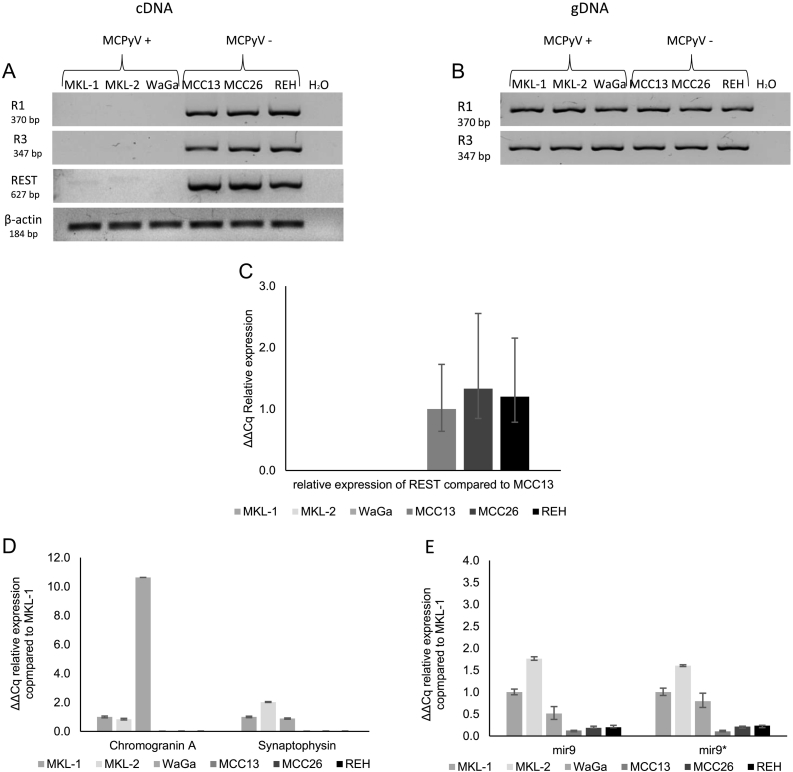
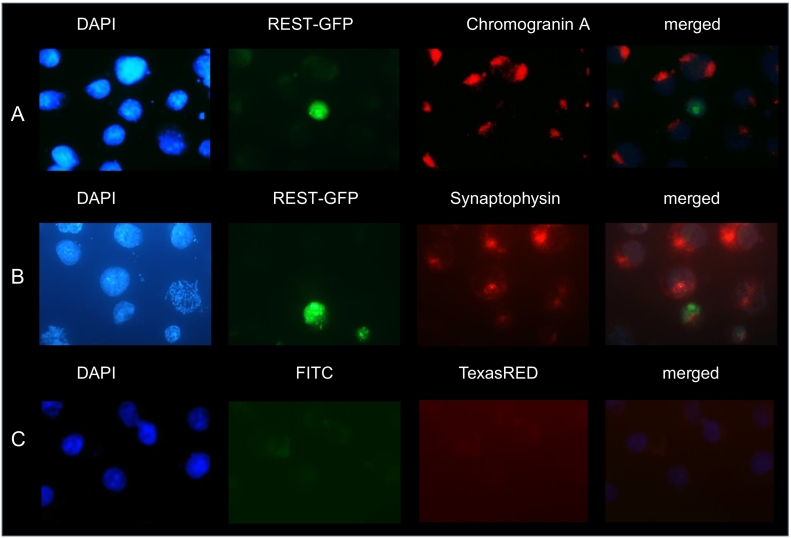
Merkel cell carcinoma (MCC) is a highly aggressive non-melanoma skin cancer of the elderly which is associated with the Merkel cell polyomavirus (MCPyV). MCC reveals a trilinear differentiation characterized by neuroendocrine, epithelial and pre/pro B-cell lymphocytic gene expression disguising the cellular origin of MCC. Here we investigated the expression of the neuroendocrine key regulators RE1 silencing transcription factor (REST), neurogenic differentiation 1 (NeuroD1) and the Achaete-scute homolog 1 (ASCL1) in MCC. All MCCs were devoid of REST and were positive for NeuroD1 expression. Only one MCC tissue revealed focal ASCL1 expression. This was confirmed in MCPyV-positive MCC cell lines. Of interest, MCPyV-negative cell lines did express REST. The introduction of REST expression in REST-negative, MCPyV-positive MCC cells downregulated the neuroendocrine gene expression. The lack of the neuroendocrine master regulator ASCL1 in almost all tested MCCs points to an important role of the absence of the negative regulator REST towards the MCC neuroendocrine phenotype. This is underlined by the expression of the REST-regulated microRNAs miR-9/9* in REST-negative MCC cell lines. These data might provide the basis for the understanding of neuroendocrine gene expression profile which is expected to help to elucidate the cellular origin of MCC.
默克尔细胞癌(Merkel cell carcinoma,MCC)是一种侵袭性很强的老年非黑色素瘤皮肤癌,与默克尔细胞多瘤病毒(Merkel cell polyomavirus,MCPyV)有关。MCC 表现出三向分化特征,其特征为神经内分泌、上皮和前/ B 细胞淋巴细胞基因表达,掩盖了 MCC 的细胞起源。在这里,我们研究了神经内分泌关键调节因子 RE1 沉默转录因子(RE1 silencing transcription factor,REST)、神经发生分化 1(neurogenic differentiation 1,NeuroD1)和 Achaete-scute 同源物 1(achaete-scute homolog 1,ASCL1)在 MCC 中的表达。所有 MCC 均缺乏 REST,且表达 NeuroD1。只有一个 MCC 组织显示出局灶性 ASCL1 表达。这在 MCPyV 阳性 MCC 细胞系中得到了证实。有趣的是,MCPyV 阴性细胞系表达 REST。在 REST 阴性、MCPyV 阳性的 MCC 细胞中引入 REST 表达,下调了神经内分泌基因的表达。几乎所有检测到的 MCC 中缺乏神经内分泌主调节因子 ASCL1,这表明缺乏负调节因子 REST 对 MCC 神经内分泌表型起着重要作用。这一点被 REST 阴性 MCC 细胞系中表达的 REST 调节的 microRNA miR-9/9*所强调。这些数据可能为理解神经内分泌基因表达谱提供基础,这有望帮助阐明 MCC 的细胞起源。