Molecular Pharmacology Program, Memorial Sloan Kettering Cancer Center, New York, NY 10065, USA.
Department of Radiology, Memorial Sloan Kettering Cancer Center, New York, NY 10065, USA.
Theranostics. 2018 Oct 6;8(18):5106-5125. doi: 10.7150/thno.26585. eCollection 2018.
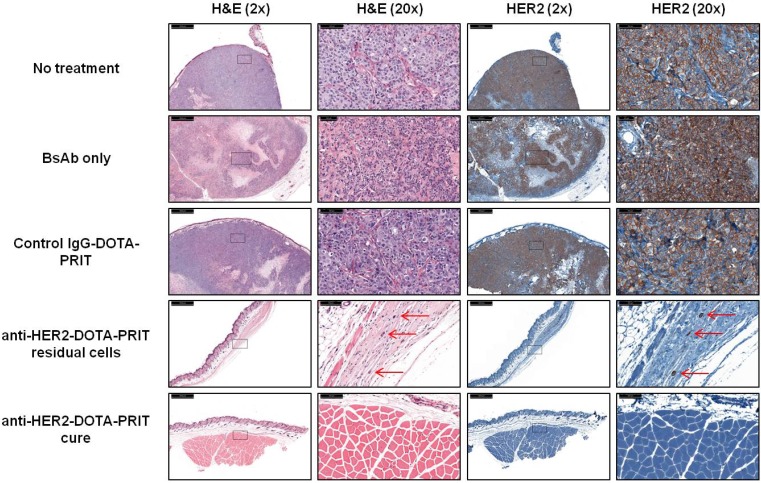
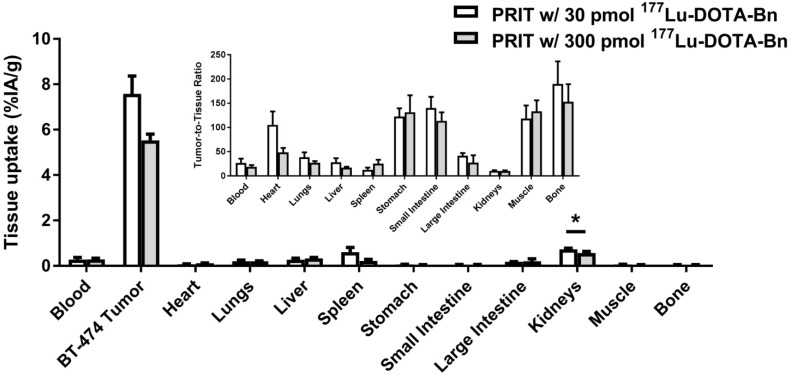
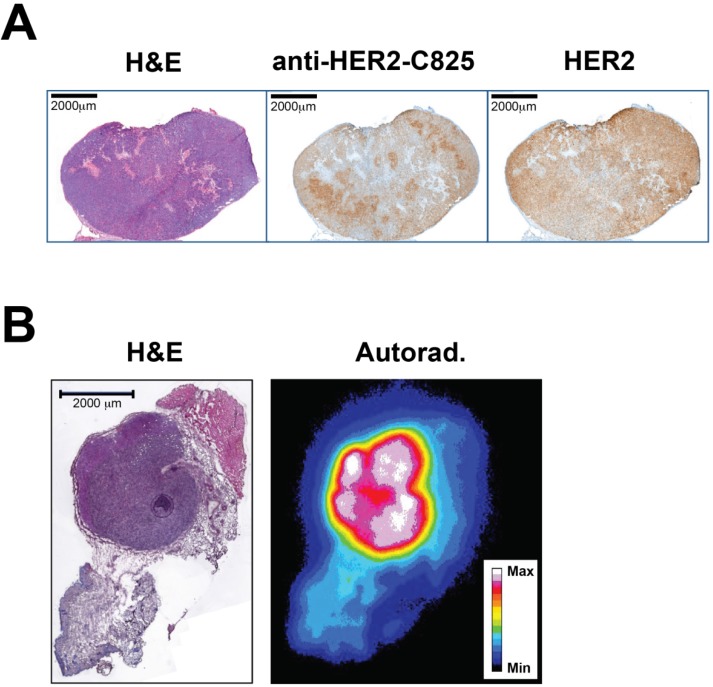
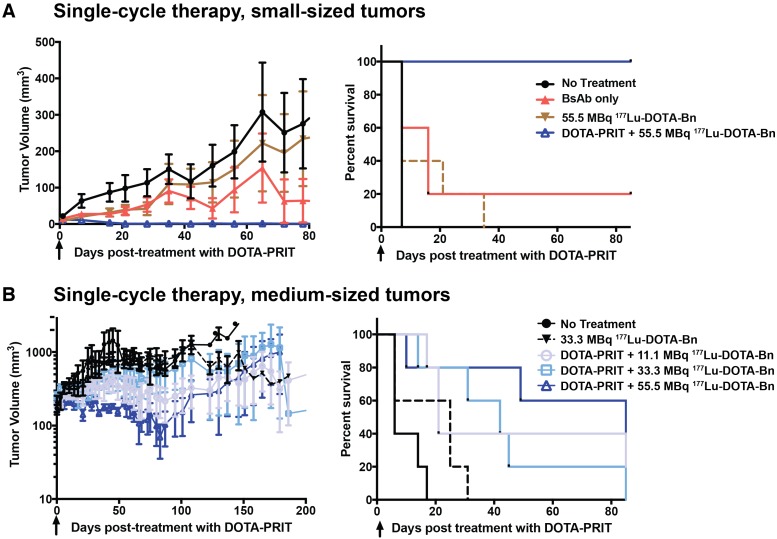
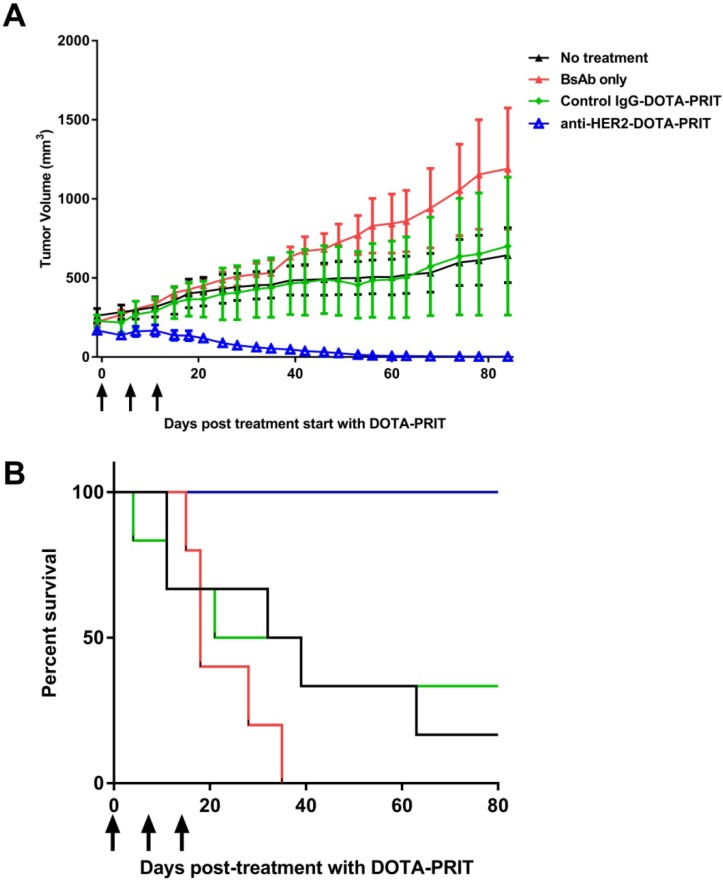
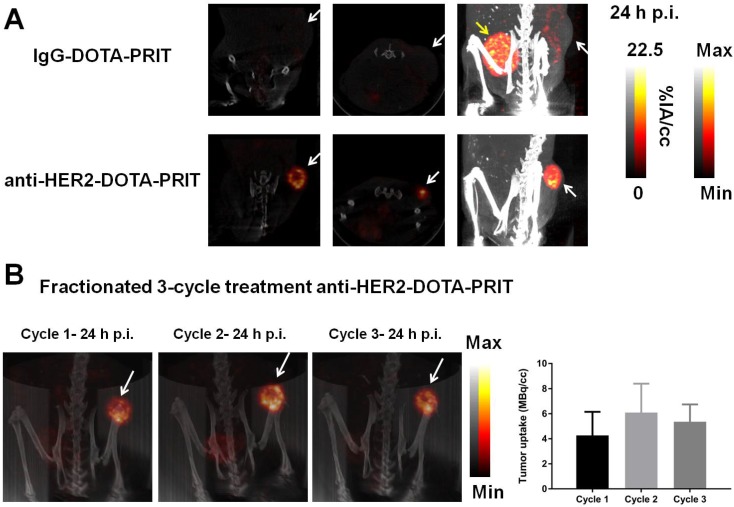
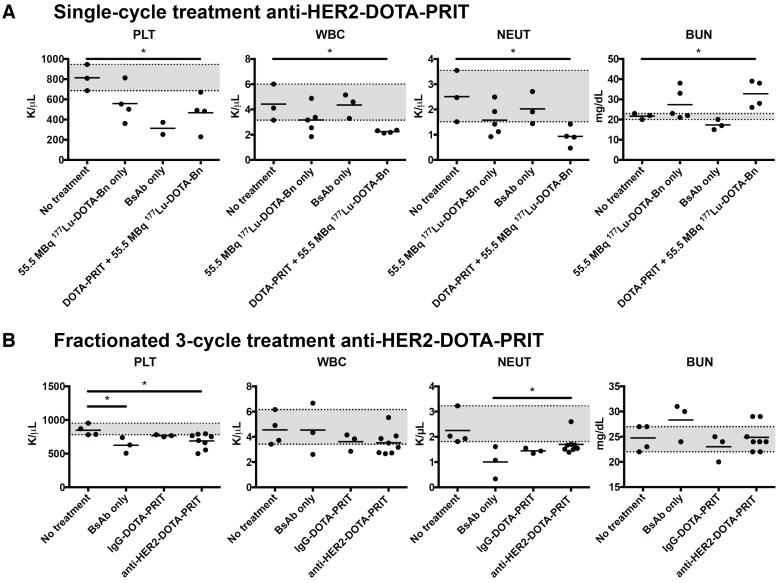
In recent reports, we have shown that optimized pretargeted radioimmunotherapy (PRIT) based on molecularly engineered antibody conjugates and Lu-DOTA chelate (DOTA-PRIT) can be used to cure mice bearing human solid tumor xenografts using antitumor antibodies to minimally internalizing membrane antigens, GPA33 (colon) and GD2 (neuroblastoma). However, many solid tumor membrane antigens are internalized after antibody binding and it is generally believed that internalizing tumor membrane antigens are not suitable targets for PRIT. In this study, we tested the hypothesis that DOTA-PRIT can be performed successfully to target HER2, an internalizing membrane antigen widely expressed in breast, ovarian, and gastroesophageal junction cancers. DOTA-PRIT was carried out in athymic nude mice bearing BT-474 xenografts, a HER2-expressing human breast cancer, using a three-step dosing regimen consisting of sequential intravenous administrations of: 1) a bispecific IgG-scFv (210 kD) format (BsAb) carrying the IgG sequence of the anti-HER2 antibody trastuzumab and the scFv "C825" with high-affinity, hapten-binding antibody for Bn-DOTA (metal) (BsAb: anti-HER2-C825), 2) a 500 kD dextran-based clearing agent, followed by 3) Lu-DOTA-Bn. At the time of treatment, athymic nude mice bearing established subcutaneous BT-474 tumors (medium- and smaller-sized tumors with tumor volumes of 209 ± 101 mm and ranging from palpable to 30 mm, respectively), were studied along with controls. We studied single- and multi-dose regimens. For groups receiving fractionated treatment, we verified quantitative tumor targeting during each treatment cycle using non-invasive imaging with single-photon emission computed tomography/computed tomography (SPECT/CT). We achieved high therapeutic indices (TI, the ratio of radiation-absorbed dose in tumor to radiation-absorbed dose to critical organs, such as bone marrow) for targeting in blood (TI = 28) and kidney (TI = 7), while delivering average radiation-absorbed doses of 39.9 cGy/MBq to tumor. Based on dosimetry estimates, we implemented a curative fractionated therapeutic regimen for medium-sized tumors that would deliver approximately 70 Gy to tumors, which required treatment with a total of 167 MBq Lu-DOTA-Bn/mouse (estimated absorbed tumor dose: 66 Gy). This regimen was well tolerated and achieved 100% complete responses (CRs; defined herein as tumor volume equal to or smaller than 4.2 mm), including 62.5% histologic cure (5/8) and 37.5% microscopic residual disease (3/8) at 85 days (d). Treatment controls showed tumor progression to 207 ± 201% of pre-treatment volume at 85 d and no CRs. Finally, we show that treatment with this curative Lu regimen leads to a very low incidence of histopathologic abnormalities in critical organs such as bone marrow and kidney among survivors compared with non-treated controls. Contrary to popular belief, we demonstrate that DOTA-PRIT can be successfully adapted to an internalizing antigen-antibody system such as HER2, with sufficient TIs and absorbed tumor doses to achieve a high probability of cures of established human breast cancer xenografts while sparing critical organs of significant radiotoxicity.
在最近的报告中,我们已经表明,基于分子工程抗体偶联物和 Lu-DOTA 螯合物(DOTA-PRIT)的优化前靶向放射免疫疗法(PRIT)可用于使用针对最小内化膜抗原的抗肿瘤抗体来治愈携带人实体瘤异种移植物的小鼠,这些抗体包括 GPA33(结肠)和 GD2(神经母细胞瘤)。然而,许多实体瘤膜抗原在抗体结合后会被内化,并且普遍认为内化的肿瘤膜抗原不适合作为 PRIT 的靶点。在这项研究中,我们测试了这样一个假设,即 DOTA-PRIT 可以成功地靶向 HER2,这是一种广泛表达于乳腺癌、卵巢癌和胃食管交界处癌的内化膜抗原。在携带 BT-474 异种移植物的裸鼠中进行 DOTA-PRIT,BT-474 是一种表达 HER2 的人乳腺癌,使用三步骤给药方案,包括连续静脉注射:1)携带抗 HER2 抗体曲妥珠单抗 IgG 序列和具有高亲和力、半抗原结合抗体的 scFv“C825”的双特异性 IgG-scFv(210 kD)格式(BsAb)用于 Bn-DOTA(金属)(BsAb:抗 HER2-C825),2)500 kD 葡聚糖基清除剂,随后 3)Lu-DOTA-Bn。在治疗时,研究了携带已建立的皮下 BT-474 肿瘤(中等大小和较小大小的肿瘤,肿瘤体积分别为 209 ± 101 mm,从可触及到 30 mm 不等)的裸鼠以及对照组。我们研究了单剂量和多剂量方案。对于接受分阶段治疗的组,我们使用单光子发射计算机断层扫描/计算机断层扫描(SPECT/CT)进行非侵入性成像,在每个治疗周期中验证定量肿瘤靶向。 我们实现了针对血液(TI = 28)和肾脏(TI = 7)的高治疗指数(TI,肿瘤中吸收的辐射剂量与骨髓等关键器官中吸收的辐射剂量之比),同时将平均辐射吸收剂量输送至肿瘤 39.9 cGy/MBq。基于剂量学估计,我们为中等大小的肿瘤实施了治愈性分阶段治疗方案,该方案将向肿瘤提供约 70 Gy 的剂量,这需要总共 167 MBq Lu-DOTA-Bn/小鼠(估计吸收的肿瘤剂量:66 Gy)。该方案耐受性良好,实现了 100%的完全缓解(CR;定义为肿瘤体积等于或小于 4.2 mm),包括 62.5%的组织学缓解(5/8)和 37.5%的显微镜下残留疾病(3/8)在 85 天(d)。治疗对照组显示肿瘤进展至治疗前体积的 207 ± 201%,且无 CR。最后,我们表明,与未经治疗的对照组相比,用这种治疗性 Lu 方案治疗可导致幸存者关键器官(如骨髓和肾脏)的组织病理学异常发生率非常低。 与普遍的看法相反,我们证明 DOTA-PRIT 可以成功地适应内化抗原抗体系统,如 HER2,具有足够的 TI 和吸收的肿瘤剂量,以实现高概率治愈已建立的人乳腺癌异种移植物,同时避免关键器官受到显著的放射性毒性。