The Florey Institute of Neuroscience and Mental Health, Melbourne Brain Centre, Austin Campus, Heidelberg, Australia.
The Commonwealth Scientific and Industrial Research Organisation (CSIRO), Sydney, Australia.
PLoS One. 2018 Nov 15;13(11):e0206321. doi: 10.1371/journal.pone.0206321. eCollection 2018.
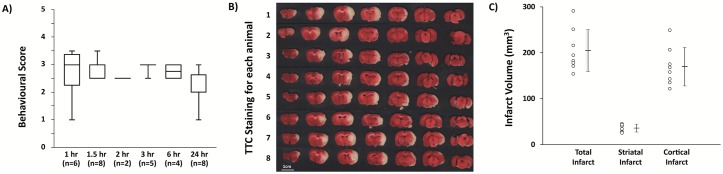
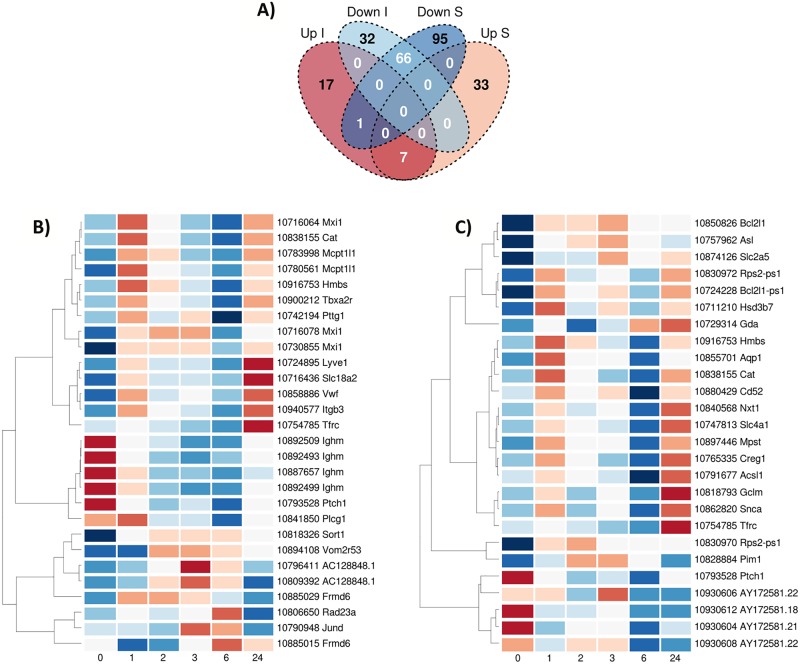
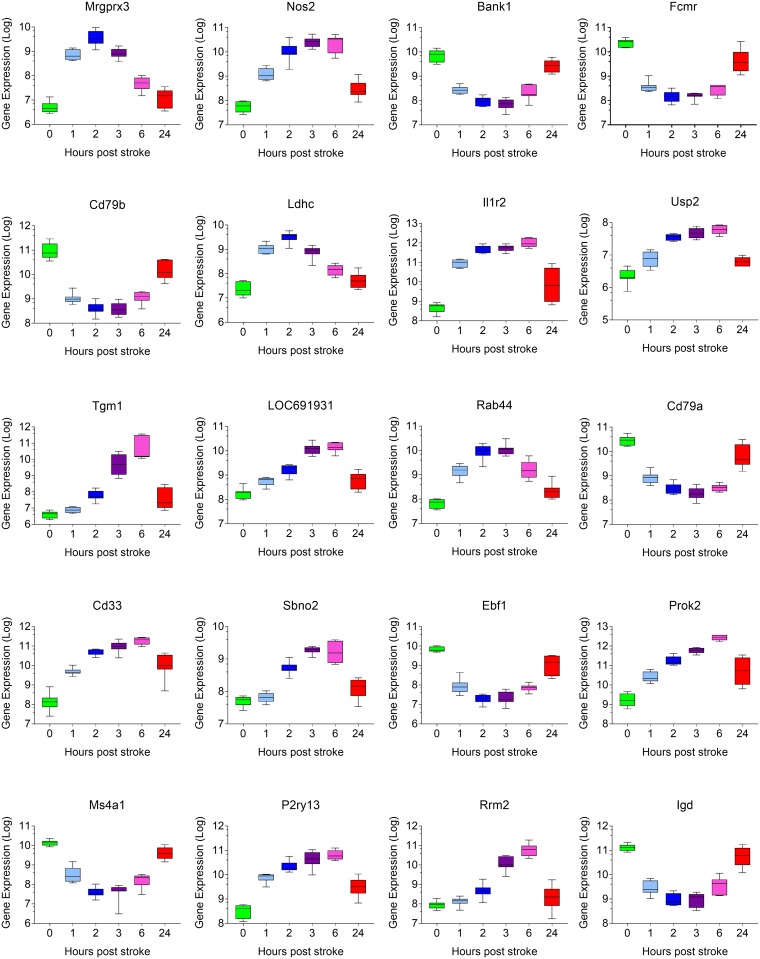
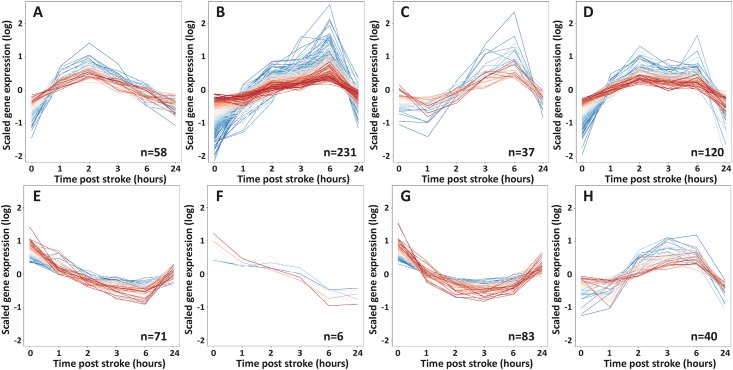
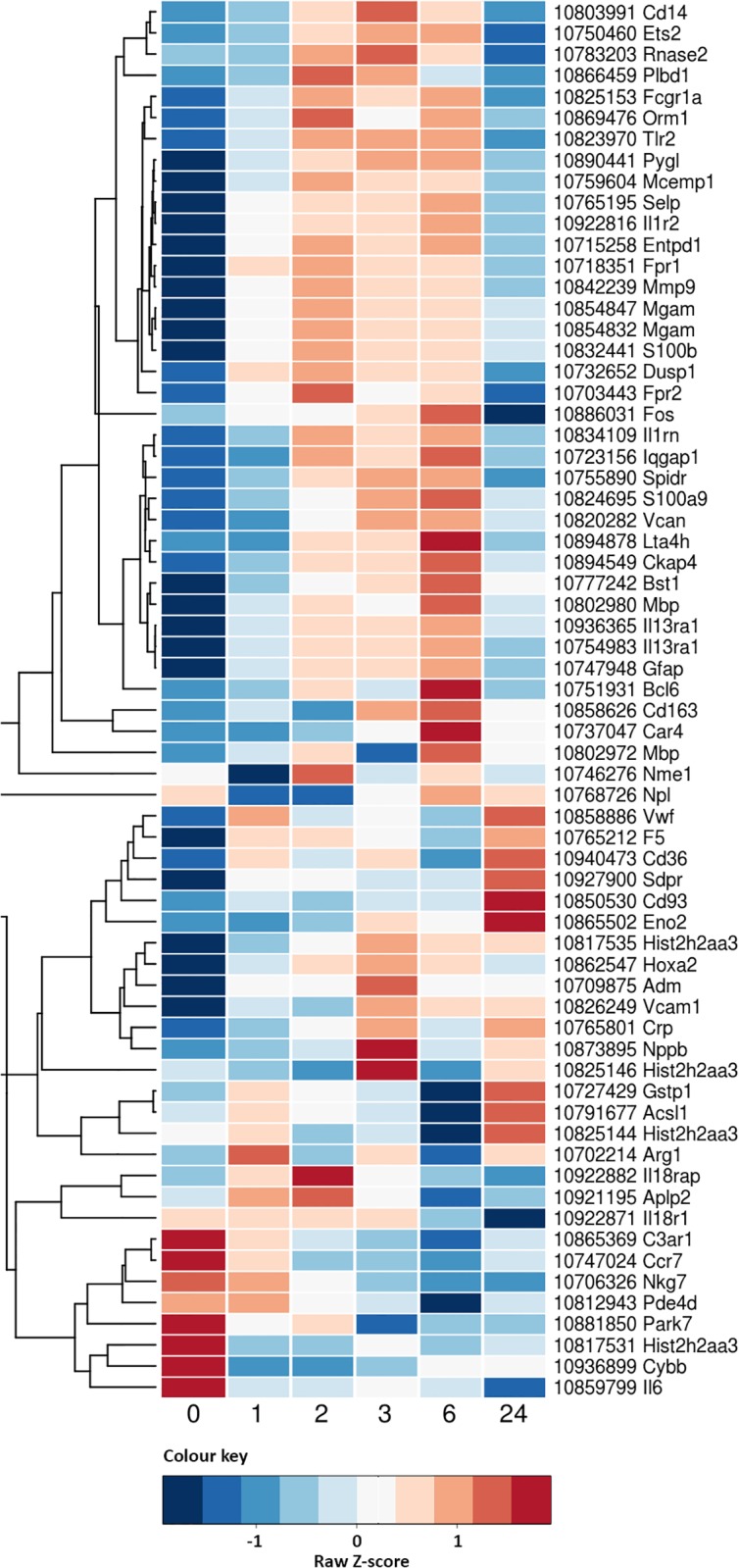
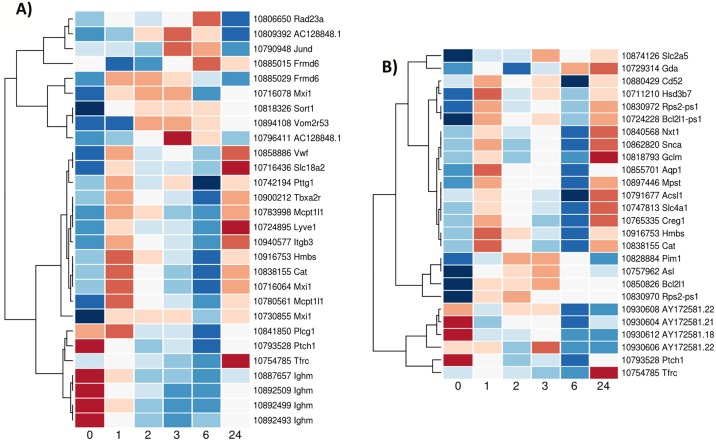
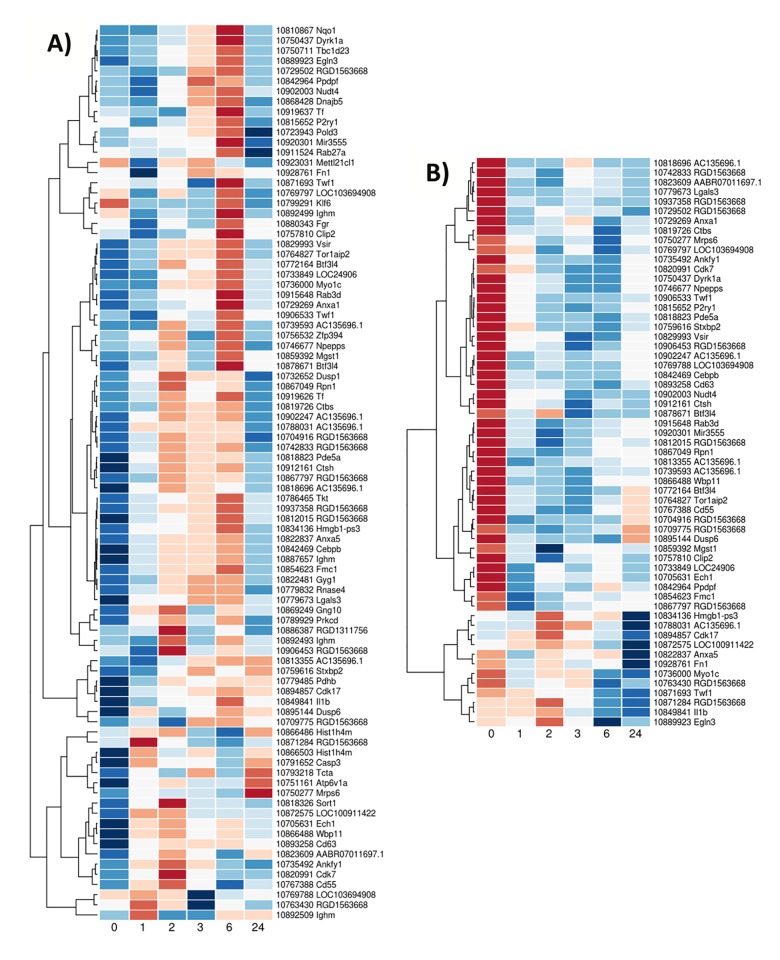
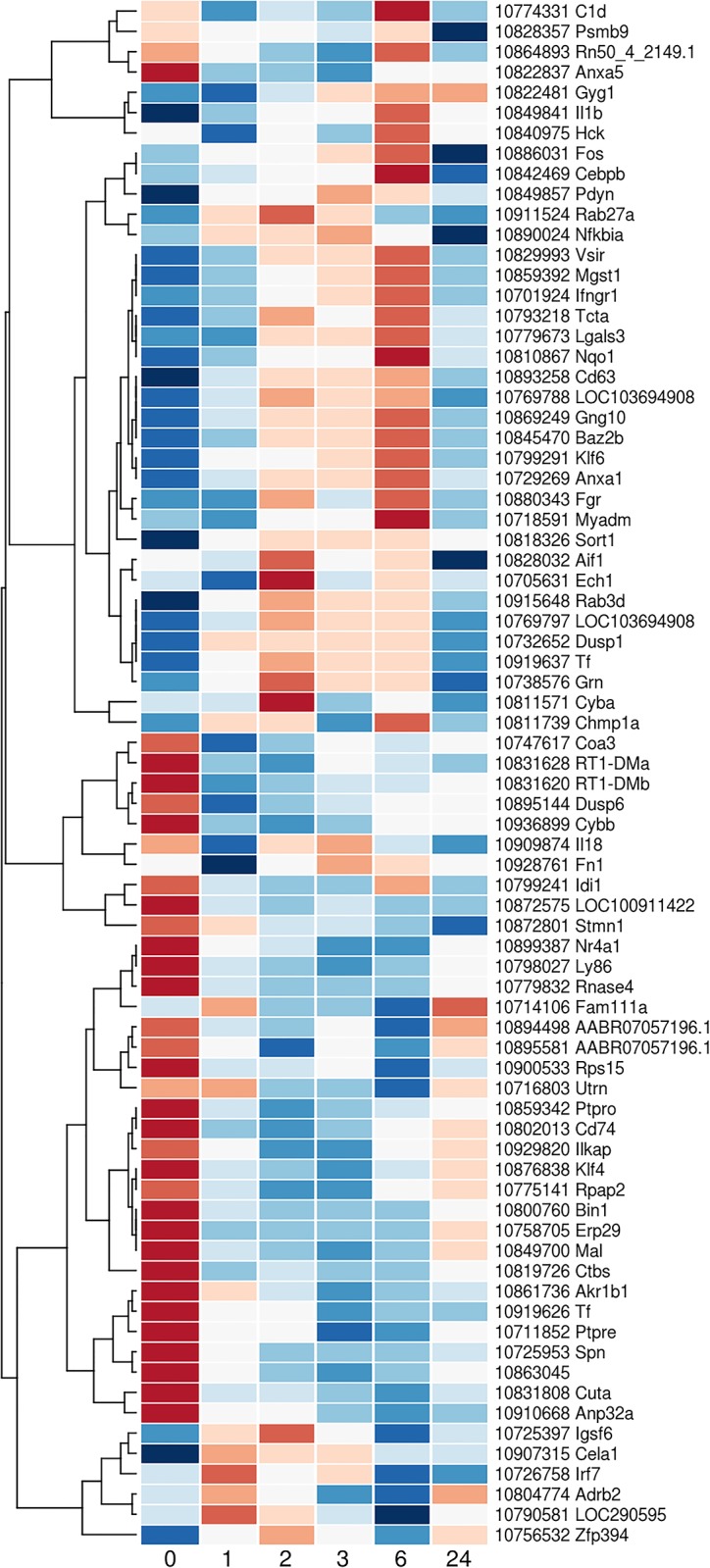
Stroke evolution is a highly dynamic but variable disease which makes clinical decision making difficult. Biomarker discovery programs intended to aid clinical decision making have however largely ignored the rapidity of stroke evolution. We have used gene array technology to determine blood mRNA expression changes over the first day after stroke in rats. Blood samples were collected from 8 male spontaneously hypertensive rats at 0, 1, 2, 3, 6 and 24h post stroke induction by middle cerebral artery occlusion. RNA was extracted from whole blood stabilized in PAXgene tubes and mRNA expression was detected by oligonucleotide Affymetrix microarray. Using a pairwise comparison model, 1932 genes were identified to vary significantly over time (p≤0.5x10(-7)) within 24h after stroke. Some of the top20 most changed genes are already known to be relevant to the ischemic stroke physiopathology (e.g. Il-1R, Nos2, Prok2). Cluster analysis showed multiple stereotyped and time dependent profiles of gene expression. Direction and rate of change of expression for some profiles varied dramatically during these 24h. Profiles with potential clinical utility including hyper acute or acute transient upregulation (with expression peaking from 2 to 6h after stroke and normalisation by 24h) were identified. We found that blood gene expression varies rapidly and stereotypically after stroke in rats. Previous researchers have often missed the optimum time for biomarker measurement. Temporally overlapping profiles have the potential to provide a biological "stroke clock" able to tell the clinician how far an individual stroke has evolved.
中风演变是一种高度动态但可变的疾病,这使得临床决策变得困难。旨在帮助临床决策的生物标志物发现计划在很大程度上忽略了中风演变的速度。我们使用基因芯片技术来确定大鼠中风后第一天血液 mRNA 表达的变化。在通过大脑中动脉闭塞诱导中风后 0、1、2、3、6 和 24 小时,从 8 只雄性自发性高血压大鼠中采集血液样本。从 PAXgene 管稳定的全血中提取 RNA,并通过寡核苷酸 Affymetrix 微阵列检测 mRNA 表达。使用成对比较模型,在中风后 24 小时内,有 1932 个基因被确定为随时间显著变化(p≤0.0001)。一些前 20 个变化最大的基因已经被认为与缺血性中风病理生理学有关(例如,IL-1R、NOS2、Prok2)。聚类分析显示基因表达存在多种刻板和时间依赖性的模式。在这 24 小时内,一些表达模式的方向和变化率发生了巨大变化。鉴定出了一些具有潜在临床应用价值的表达模式,包括超急性或急性短暂上调(中风后 2 至 6 小时表达峰值,并在 24 小时内恢复正常)。我们发现,大鼠中风后血液基因表达迅速且刻板地变化。先前的研究人员经常错过生物标志物测量的最佳时间。时间重叠的表达模式有可能提供一个生物“中风时钟”,能够告诉临床医生个体中风已经发展到什么程度。