Pediatric Hematology-Oncology and Stem Cell Transplantation, Ghent University Hospital, Ghent, Belgium.
Center for Primary Immune Deficiency Ghent, Ghent University Hospital, Ghent, Belgium.
Front Immunol. 2018 Nov 1;9:2544. doi: 10.3389/fimmu.2018.02544. eCollection 2018.
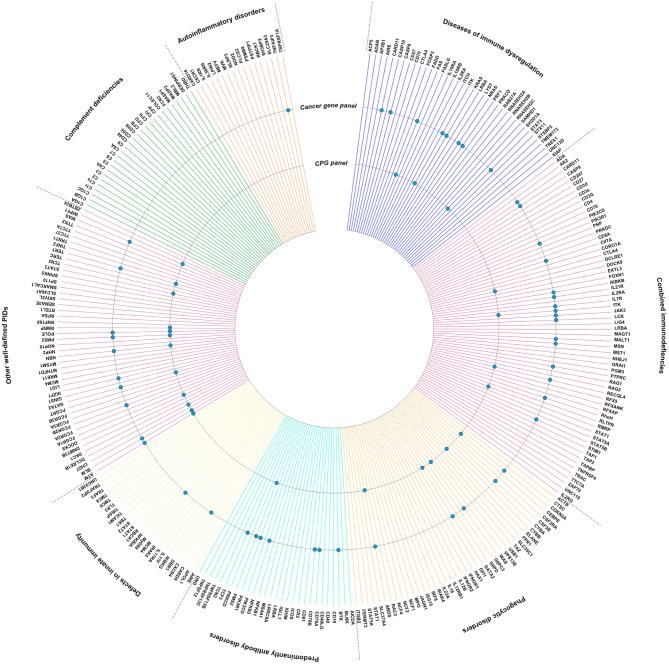
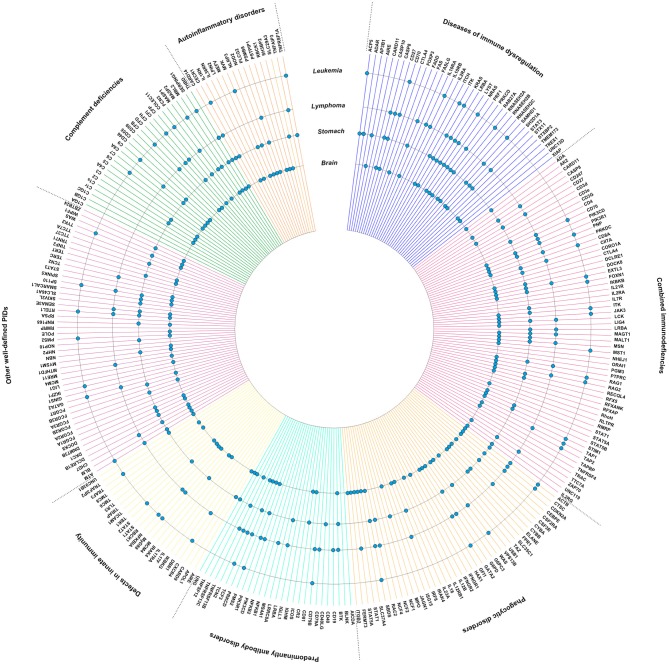
Primary immunodeficiencies (PIDs) are a heterogeneous group of inherited disorders affecting one or multiple components of the innate and/or adaptive immune system. Currently, over 300 underlying genetic defects have been discovered. The most common clinical findings in patients with PIDs are infections, autoimmunity, and malignancies. Despite international efforts, the cancer risk associated with PIDs, given the heterogeneous character of this group of diseases, is difficult to estimate. The diverse underlying mechanisms of cancer in PID add another layer of complexity. Treatment of cancer within a context of PID is complicated by serious toxicities and long-term effects, including second malignancies. This review will focus on the little-known crossroad between PID and cancer genes and the value thereof for directing future research on our understanding of cancer in PID and for the identification of early cancer biomarkers in PID patients.
原发性免疫缺陷病(PID)是一组异质性遗传性疾病,影响固有和/或适应性免疫系统的一个或多个成分。目前已发现超过 300 种潜在的遗传缺陷。PID 患者最常见的临床发现是感染、自身免疫和恶性肿瘤。尽管国际上做出了努力,但鉴于该组疾病的异质性,PID 相关的癌症风险难以估计。PID 中癌症的不同潜在机制增加了复杂性。PID 背景下的癌症治疗因严重的毒性和长期影响(包括第二恶性肿瘤)而变得复杂。这篇综述将重点关注 PID 和癌症基因之间鲜为人知的交叉点及其对指导我们对 PID 中癌症的理解的未来研究以及 PID 患者早期癌症生物标志物的识别的价值。