Dankbaar Jan Willem, Pameijer Frank A, Hendrikse Jeroen, Schmalfuss Ilona M
Department of Radiology, University Medical Center Utrecht, (HP E01.132), PO Box 85500, 3508, GA, Utrecht, The Netherlands.
Department of Radiology, University of Florida College of Medicine, Gainesville, FL, USA.
Insights Imaging. 2018 Dec;9(6):1089-1095. doi: 10.1007/s13244-018-0672-8. Epub 2018 Nov 16.
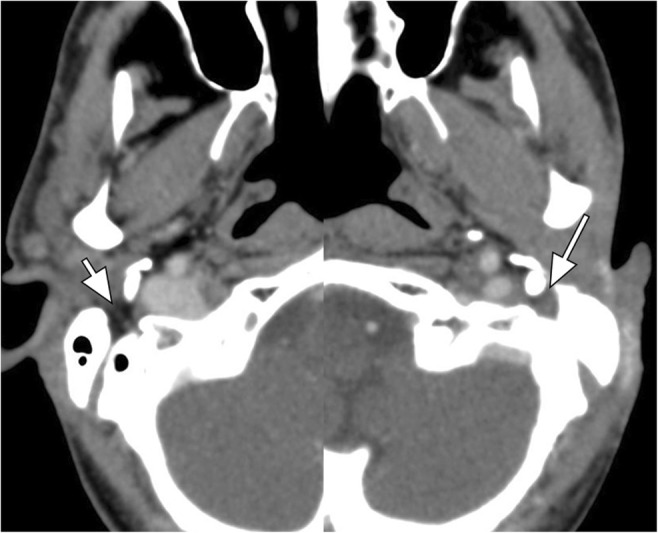
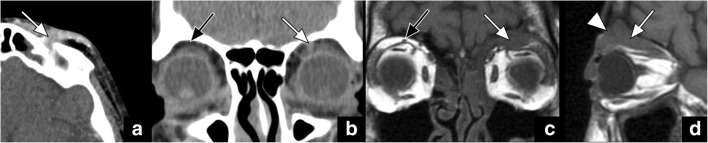
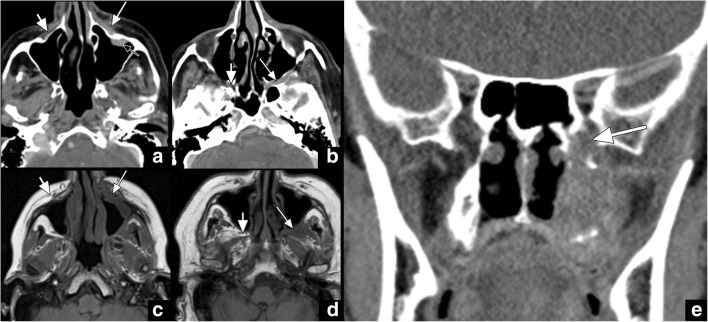
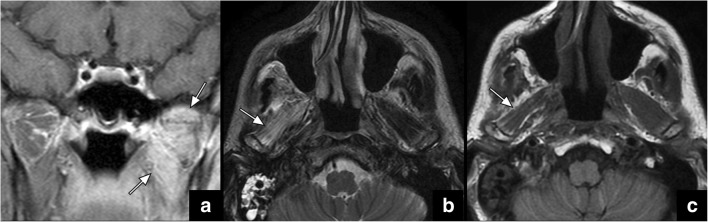
Perineural tumour spread (PNTS) in head and neck oncology is most often caused by squamous cell carcinoma. The most frequently affected nerves are the trigeminal and facial nerves. Up to 40% of patients with PNTS may be asymptomatic. Therefore, the index of suspicion should be high when evaluating imaging studies of patients with head and neck cancer. This review describes a "quick search checklist" of easily detected imaging signs of PNTS. TEACHING POINTS: • A distinctive feature of head and neck tumours is growth along nerves. • Perineural tumour spread is most often caused by squamous cell carcinoma. • There are several key findings for the detection of perineural tumour spread.
头颈部肿瘤学中的神经周围肿瘤扩散(PNTS)最常见的原因是鳞状细胞癌。最常受累的神经是三叉神经和面神经。高达40%的PNTS患者可能无症状。因此,在评估头颈部癌症患者的影像学检查时,怀疑指数应较高。本综述描述了一份易于检测到的PNTS影像学征象的“快速搜索清单”。教学要点:•头颈部肿瘤的一个显著特征是沿神经生长。•神经周围肿瘤扩散最常见的原因是鳞状细胞癌。•检测神经周围肿瘤扩散有几个关键发现。