Siviter Harry, Koricheva Julia, Brown Mark J F, Leadbeater Ellouise
School of Biological Sciences Royal Holloway University of London Surrey UK.
J Appl Ecol. 2018 Nov;55(6):2812-2821. doi: 10.1111/1365-2664.13193. Epub 2018 Jul 10.
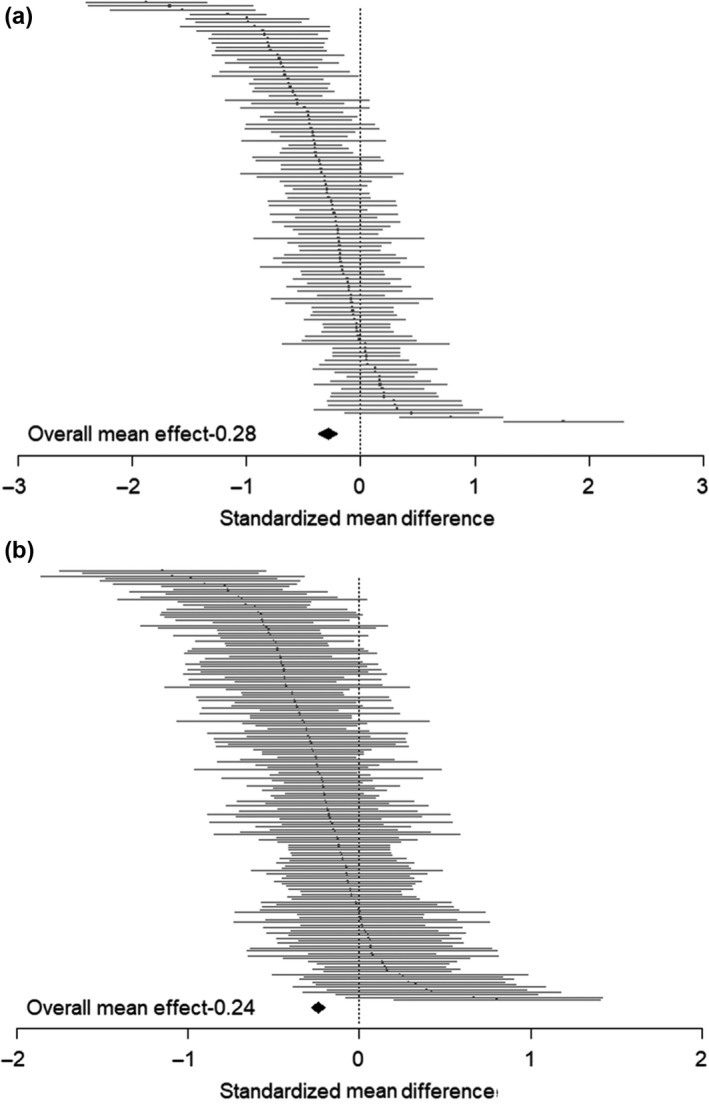
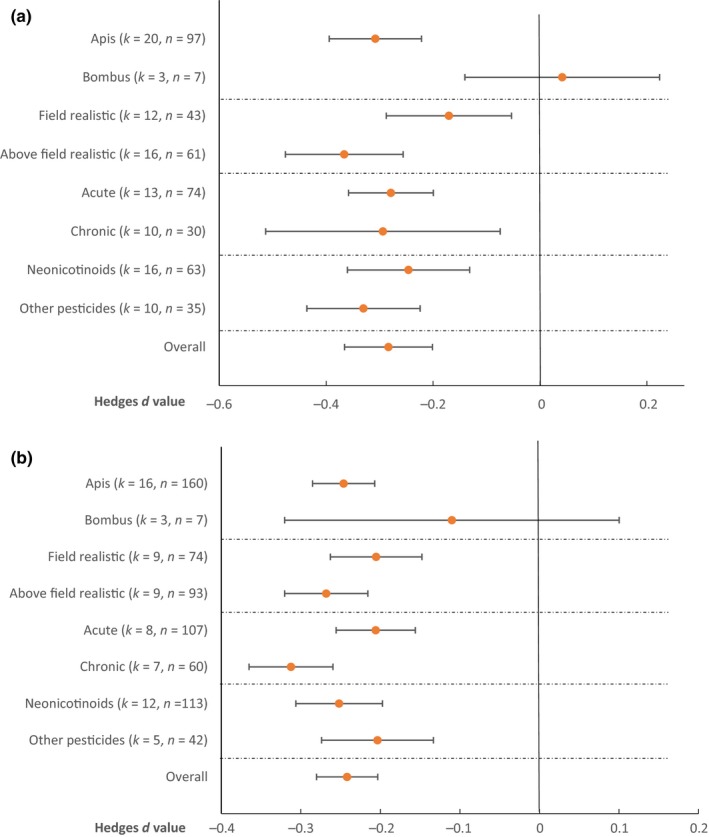
Most insecticides are insect neurotoxins. Evidence is emerging that sublethal doses of these neurotoxins are affecting the learning and memory of both wild and managed bee colonies, exacerbating the negative effects of pesticide exposure and reducing individual foraging efficiency.Variation in methodologies and interpretation of results across studies has precluded the quantitative evaluation of these impacts that is needed to make recommendations for policy change. It is not clear whether robust effects occur under acute exposure regimes (often argued to be more field-realistic than the chronic regimes upon which many studies are based), for field-realistic dosages, and for pesticides other than neonicotinoids.Here we use meta-analysis to examine the impact of pesticides on bee performance in proboscis extension-based learning assays, the paradigm most commonly used to assess learning and memory in bees. We draw together 104 (learning) and 167 (memory) estimated effect sizes across a diverse range of studies.We detected significant negative effects of pesticides on learning and memory (i) at field realistic dosages, (ii) under both chronic and acute application, and (iii) for both neonicotinoid and non-neonicotinoid pesticides groups.We also expose key gaps in the literature that include a critical lack of studies on non- bees, on larval exposure (potentially one of the major exposure routes), and on performance in alternative learning paradigms. . Procedures for the registration of new pesticides within EU member states now typically require assessment of risks to pollinators if potential target crops are attractive to bees. However, our results provide robust quantitative evidence for subtle, sublethal effects, the consequences of which are unlikely to be detected within small-scale prelicensing laboratory or field trials, but can be critical when pesticides are used at a landscape scale. Our findings highlight the need for long-term postlicensing environmental safety monitoring as a requirement within licensing policy for plant protection products.
大多数杀虫剂都是昆虫神经毒素。越来越多的证据表明,这些神经毒素的亚致死剂量正在影响野生蜂群和人工养殖蜂群的学习和记忆能力,加剧了农药暴露的负面影响,并降低了个体的觅食效率。由于各项研究的方法和结果解释存在差异,无法对这些影响进行定量评估,而这是为政策变革提供建议所必需的。目前尚不清楚在急性暴露条件下(通常认为比许多研究所基于的慢性暴露条件更符合实际田间情况)、实际田间剂量以及除新烟碱类农药以外的其他农药是否会产生显著影响。在此,我们使用荟萃分析来研究农药对基于喙伸展的学习试验中蜜蜂行为表现的影响,这是评估蜜蜂学习和记忆最常用的范式。我们汇总了来自各种不同研究的104个(学习方面)和167个(记忆方面)效应量估计值。我们发现,(i)在实际田间剂量下,(ii)在慢性和急性施用条件下,以及(iii)对于新烟碱类和非新烟碱类农药组,农药对学习和记忆均有显著的负面影响。我们还揭示了文献中的关键空白,包括对非蜜蜂物种、幼虫暴露(可能是主要暴露途径之一)以及其他学习范式下的行为表现缺乏关键研究。欧盟成员国目前新农药登记程序通常要求,如果潜在目标作物对蜜蜂有吸引力,需评估对传粉者的风险。然而,我们的结果为微妙的亚致死效应提供了有力的定量证据,这些效应在小规模的许可前实验室或田间试验中不太可能被检测到,但在农药用于景观尺度时可能至关重要。我们的研究结果强调了在植物保护产品许可政策中,需要进行长期的许可后环境安全监测。