Gu Chao, Hu Qingsong, Wu Jiayuan, Mu Chenchen, Ren Haigang, Liu Chun-Feng, Wang Guanghui
Laboratory of Molecular Neuropathology, Jiangsu Key laboratory of Translational Research and Therapy for Neuropsychiatric Disorders & Department of Pharmacology, College of Pharmaceutical Sciences, Soochow University, Suzhou, China.
The Key Laboratory, The Second Affiliated Hospital of Jiaxing University, Hangzhou, China.
Front Cell Neurosci. 2018 Nov 5;12:400. doi: 10.3389/fncel.2018.00400. eCollection 2018.
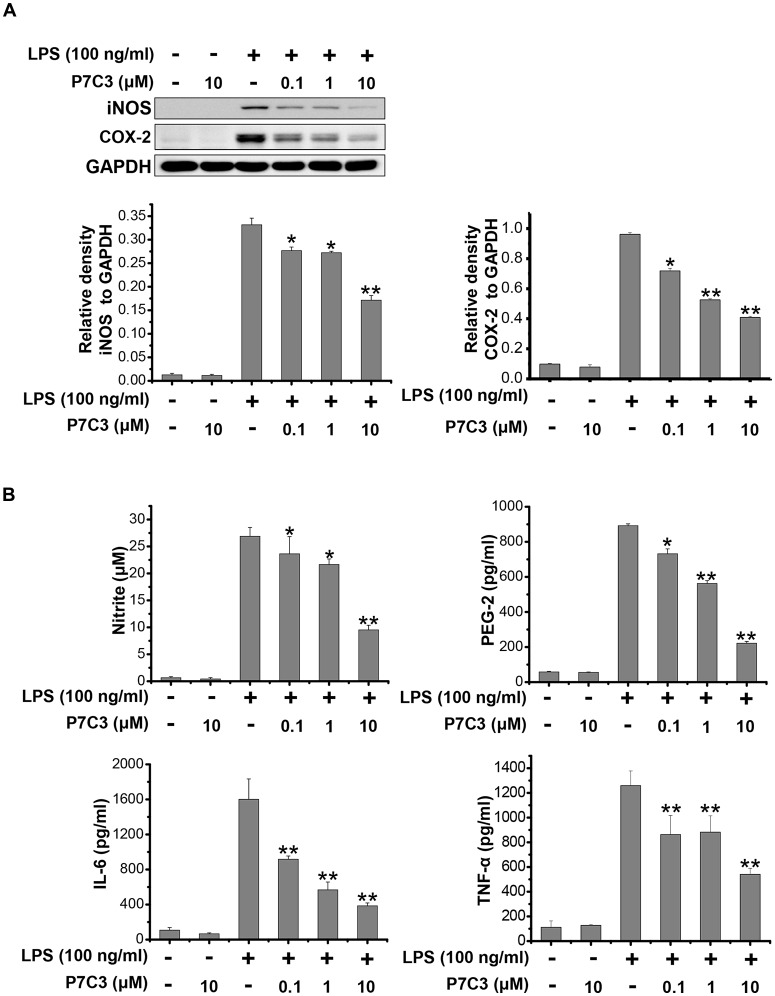
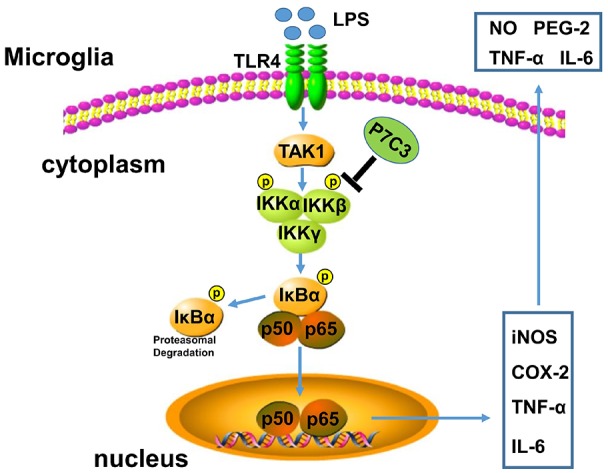
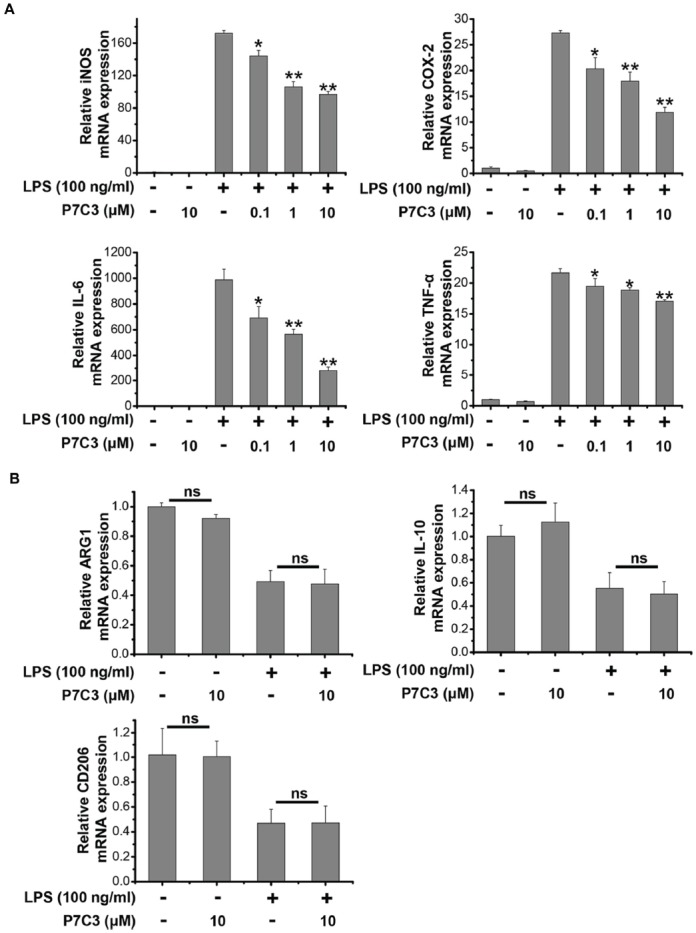
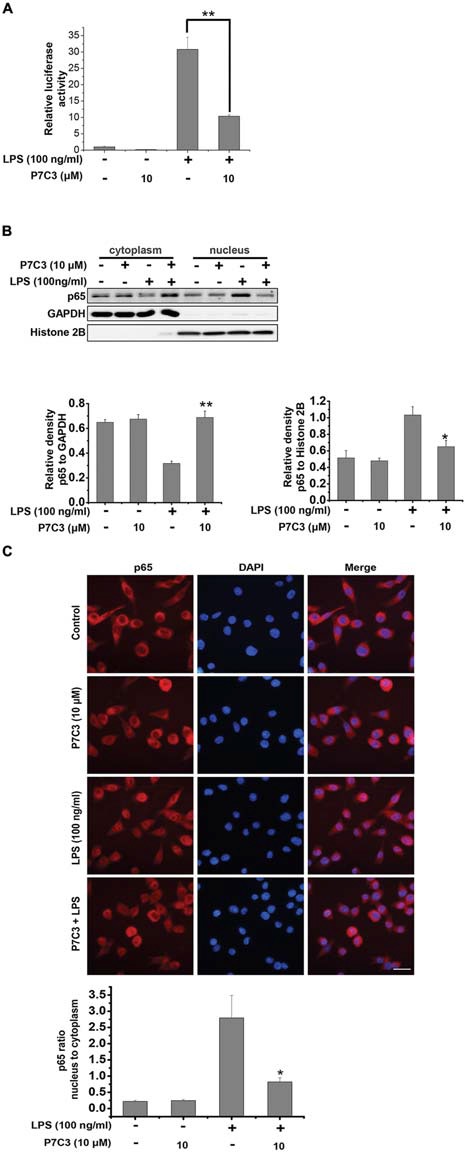
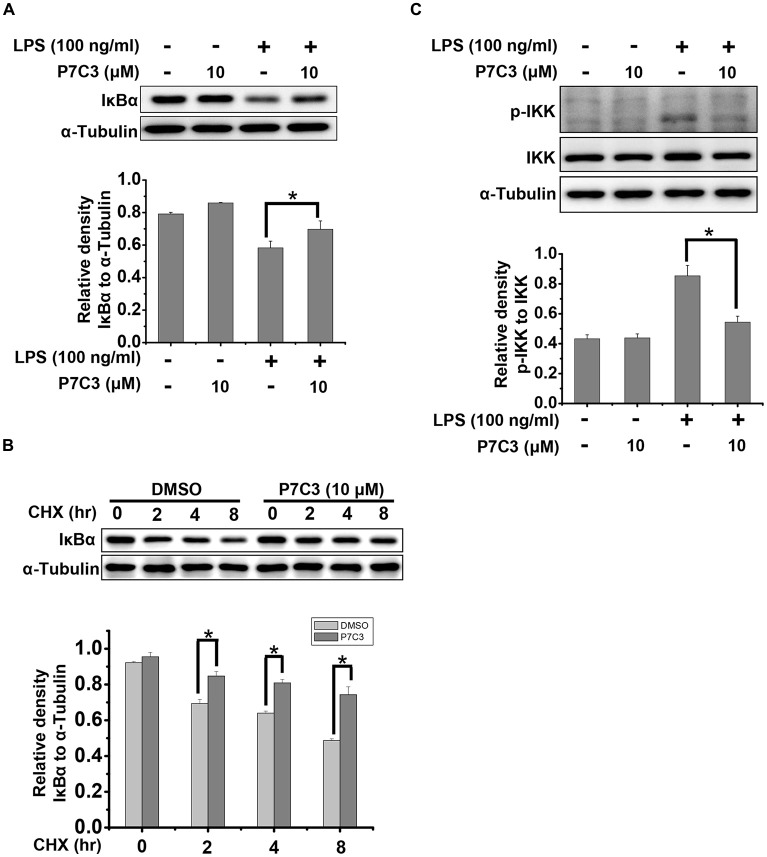
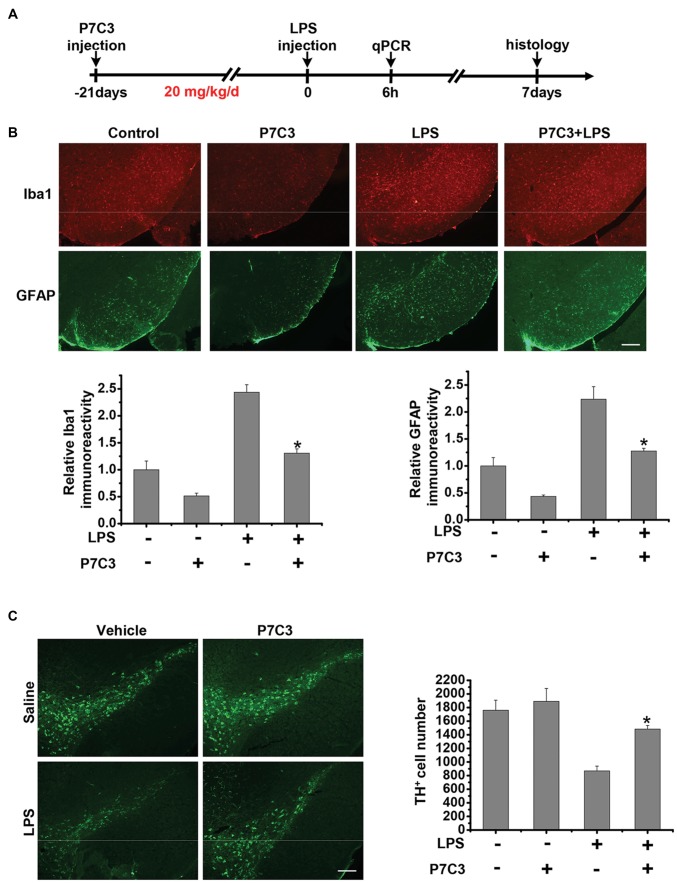
Parkinson's disease (PD) is the second most common neurodegenerative disorder. Although its pathogenesis remains unclear, growing evidencce suggests that microglia-mediated neuroinflammation contributes greatly to the progression of PD. P7C3, an aminopropyl carbazole, possesses significant neuroprotective effects in several neurodegenerative disease animal models, including PD. In this study, we designed to investigate the effects of P7C3 on neuroinflammation. We showed that P7C3 specially suppressed the expression of lipopolysaccharide (LPS)-induced pro-inflammatory factors but not influenced the anti-inflammatory factors in microglia. The inhibition of the nuclear factor κB (NF-κB) signaling pathway was involved in the mechanisms of the anti-inflammatory effects by P7C3. LPS-induced activation of IκB kinase (IKK), degradation of the inhibitory κB alpha (IκBα) and nuclear translocation of NF-κB can be attenuated by the pretreatment of P7C3 in microglia. Furthermore, in LPS-treated microglia, P7C3-pretreatment decreased the toxicity of conditioned media to MES23.5 cells (a dopaminergic (DA) cell line). Most importantly, the anti-inflammatory effects of P7C3 were observed in LPS-stimulated mouse model. In general, our study demonstrates that P7C3 inhibits LPS-induced microglial activation through repressing the NF-κB pathway both and , providing a theoretical basis for P7C3 in anti-inflammation.
帕金森病(PD)是第二常见的神经退行性疾病。尽管其发病机制尚不清楚,但越来越多的证据表明,小胶质细胞介导的神经炎症在PD的进展中起很大作用。P7C3,一种氨丙基咔唑,在包括PD在内的几种神经退行性疾病动物模型中具有显著的神经保护作用。在本研究中,我们旨在研究P7C3对神经炎症的影响。我们发现P7C3特别抑制脂多糖(LPS)诱导的促炎因子的表达,但不影响小胶质细胞中的抗炎因子。核因子κB(NF-κB)信号通路的抑制参与了P7C3抗炎作用的机制。P7C3预处理可减弱LPS诱导的小胶质细胞中IκB激酶(IKK)的激活、抑制性κBα(IκBα)的降解以及NF-κB的核转位。此外,在LPS处理的小胶质细胞中,P7C3预处理降低了条件培养基对MES23.5细胞(一种多巴胺能(DA)细胞系)的毒性。最重要的是,在LPS刺激的小鼠模型中观察到了P7C3的抗炎作用。总的来说,我们的研究表明,P7C3通过抑制NF-κB途径抑制LPS诱导的小胶质细胞激活,为P7C3的抗炎作用提供了理论基础。