Bossù Paola, Salani Francesca, Ciaramella Antonio, Sacchinelli Eleonora, Mosca Alessandra, Banaj Nerisa, Assogna Francesca, Orfei Maria Donata, Caltagirone Carlo, Gianni Walter, Spalletta Gianfranco
Laboratory of Experimental Neuropsychobiology, Department of Clinical and Behavioral Neurology, IRCCS Santa Lucia Foundation, Rome, Italy.
Laboratory of Neuropsychiatry, Department of Clinical and Behavioral Neurology, IRCCS Santa Lucia Foundation, Rome, Italy.
Front Aging Neurosci. 2018 Nov 2;10:285. doi: 10.3389/fnagi.2018.00285. eCollection 2018.
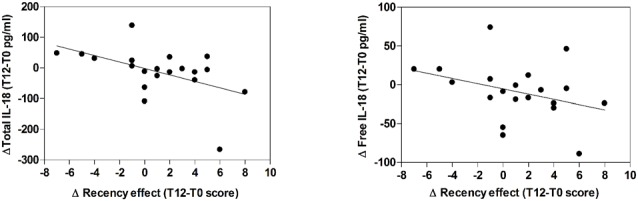
Alzheimer's disease (AD) is a fatal dementing neurodegenerative disease, currently lacking an efficacious disease-modifying therapy. In the last years, there has been some interest in the use of homotaurine as a potential therapeutic compound for AD, but more work is still needed to prove its efficacy as disease modifier in dementia. Since inflammation is believed to play a key role in AD development, we sought to investigate here the homotaurine effect on inflammatory response in patients at the earliest stages of AD, i.e., suffering from amnestic mild cognitive impairment (aMCI). Thus, the present study aims to evaluate the effects of homotaurine supplementation on cytokine serum levels and memory performances in MCI patients. Neuropsychological, clinical and cytokine assessment was performed at baseline (T0) and after 1 year (T12) of homotaurine supplementation in 20 patients categorized as carriers ( = 9) or no carriers ( = 11) of the ε4 allele of the apolipoprotein E (APOE) gene, the strongest genetic risk factor for AD. The serum levels of the pro-inflammatory mediators Interleukin (IL) 1β, Tumor necrosis factor-alpha (TNFα), IL-6 and IL-18, contextually with the anti-inflammatory molecules IL-18 binding protein (IL-18BP) and Transforming growth factor-beta (TGFβ), were analyzed to explore significant differences in the inflammatory status between T0 and T12 in the two APOE variant carrier groups. No significant differences over time were observed in patients as for most cytokines, except for IL-18. Following homotaurine supplementation, patients carrying the APOEε4 allele showed a significant decrease in IL-18 (both in its total and IL-18BP unbound forms), in turn associated with improved short-term episodic memory performance as measured by the recency effect of the Rey 15-word list learning test immediate recall. Thus, homotaurine supplementation in individuals with aMCI may have a positive consequence on episodic memory loss due, at least in part, to homotaurine anti-inflammatory effects. This study strongly suggests that future research should focus on exploring the mechanisms by which homotaurine controls brain inflammation during AD progression.
阿尔茨海默病(AD)是一种致命的痴呆性神经退行性疾病,目前缺乏有效的疾病修饰疗法。在过去几年中,人们对使用高牛磺酸作为AD的潜在治疗化合物产生了一些兴趣,但仍需要更多工作来证明其作为痴呆症疾病修饰剂的疗效。由于炎症被认为在AD发展中起关键作用,我们在此试图研究高牛磺酸对AD最早阶段患者,即患有遗忘型轻度认知障碍(aMCI)患者炎症反应的影响。因此,本研究旨在评估补充高牛磺酸对MCI患者细胞因子血清水平和记忆表现的影响。对20名被分类为载脂蛋白E(APOE)基因ε4等位基因携带者(n = 9)或非携带者(n = 11)的患者在基线(T0)和补充高牛磺酸1年后(T12)进行了神经心理学、临床和细胞因子评估,APOE基因ε4等位基因是AD最强的遗传风险因素。分析促炎介质白细胞介素(IL)1β、肿瘤坏死因子-α(TNFα)、IL-6和IL-18以及抗炎分子IL-18结合蛋白(IL-18BP)和转化生长因子-β(TGFβ)的血清水平,以探讨两个APOE变异携带者组在T0和T12之间炎症状态的显著差异。除IL-18外,大多数细胞因子在患者中未观察到随时间的显著差异。补充高牛磺酸后,携带APOEε4等位基因的患者IL-18(包括其总形式和未结合IL-18BP的形式)显著降低,这反过来又与通过雷伊15词表学习测试即时回忆的近期效应测量的短期情景记忆表现改善相关。因此,对aMCI个体补充高牛磺酸可能对情景记忆丧失有积极影响,至少部分是由于高牛磺酸的抗炎作用。本研究强烈表明,未来的研究应侧重于探索高牛磺酸在AD进展过程中控制脑部炎症的机制。