College of Forestry, Northwest A&F University, Yangling, Shaanxi 712100, China.
Int J Mol Sci. 2018 Nov 20;19(11):3673. doi: 10.3390/ijms19113673.
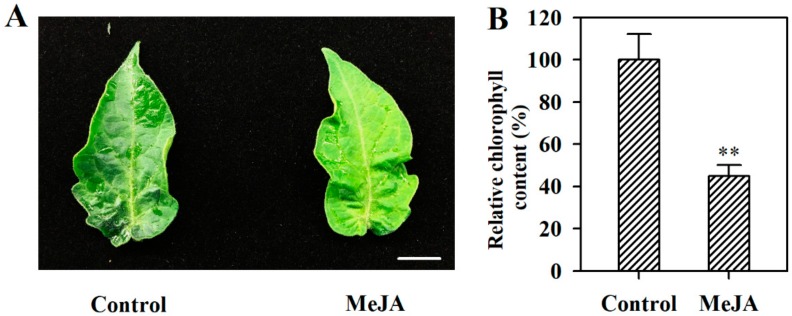
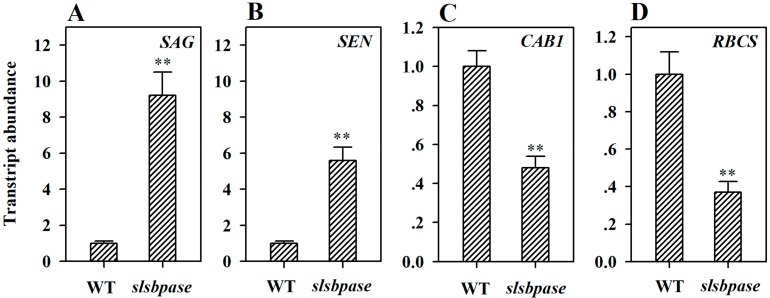
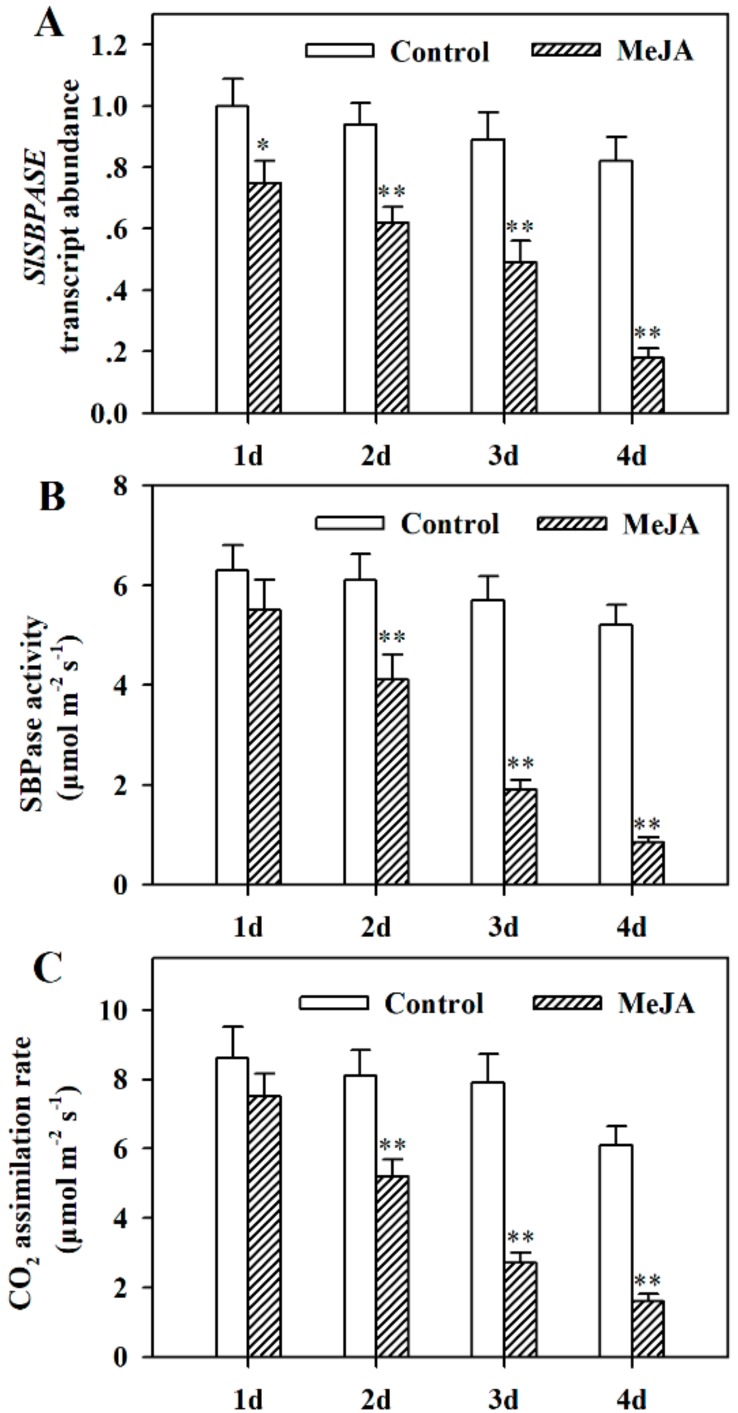
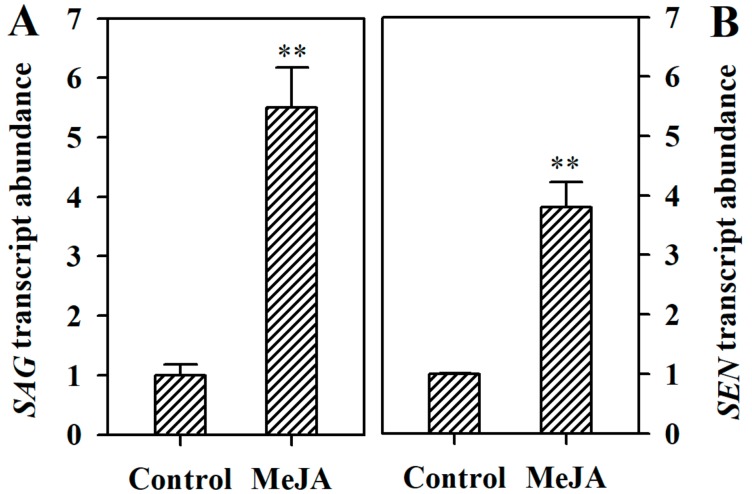
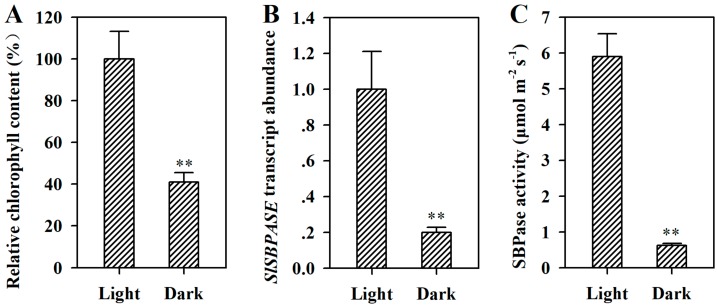
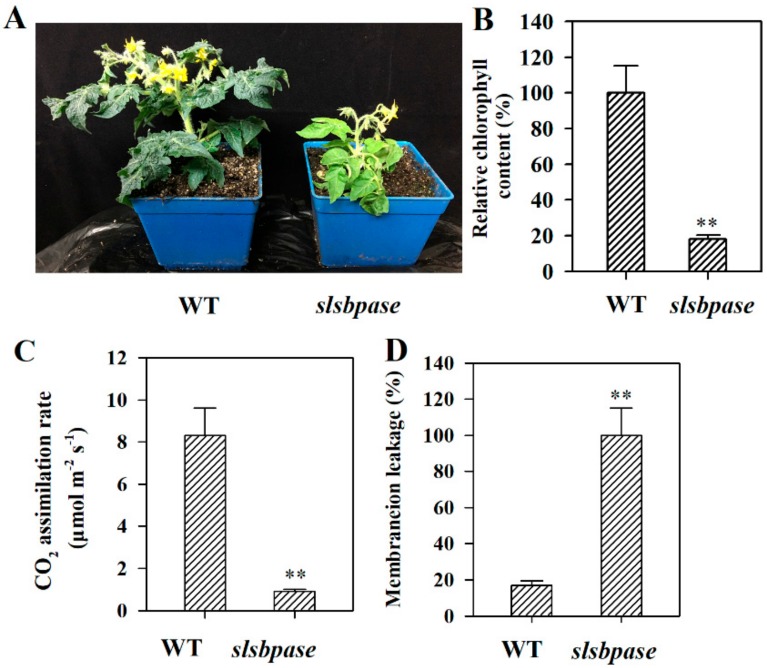
Leaf senescence represents the final stage of leaf development and is regulated by diverse internal and environmental factors. Jasmonates (JAs) have been demonstrated to induce leaf senescence in several species; however, the mechanisms of JA-induced leaf senescence remain largely unknown in tomato plants (). In the present study, we tested the hypothesis that sedoheptulose-1,7-bisphosphatase (SBPase), an enzyme functioning in the photosynthetic carbon fixation in the Calvin⁻Benson cycle, was involved in methyl jasmonate (MeJA)- and dark-induced leaf senescence in tomato plants. We found that MeJA and dark induced senescence in detached tomato leaves and concomitantly downregulated the expression of and reduced SBPase activity. Furthermore, CRISPR/Cas9 (clustered regularly interspaced short palindromic repeats (CRISPR)/CRISPR-associated protein 9)-mediated mutagenesis of led to senescence-associated characteristics in mutant plants, including loss of chlorophyll, repressed photosynthesis, increased membrane ion leakage, and enhanced transcript abundance of senescence-associated genes. Collectively, our data suggest that repression of SBPase by MeJA and dark treatment plays a role in JA- and dark-induced leaf senescence.
叶片衰老代表了叶片发育的最后阶段,受到多种内部和环境因素的调控。茉莉酸(JAs)已被证明能诱导多种物种的叶片衰老;然而,在番茄植物中,JA 诱导的叶片衰老的机制在很大程度上仍然未知()。在本研究中,我们检验了这样一个假设,即作为卡尔文-本森循环中光合作用碳固定作用的酶之一的 1,7-二磷酸景天庚酮糖酶(SBPase),参与了甲基茉莉酸(MeJA)和黑暗诱导的番茄叶片衰老。我们发现,MeJA 和黑暗诱导了离体番茄叶片的衰老,并同时下调了 和减少 SBPase 活性的表达。此外,CRISPR/Cas9(成簇规律间隔短回文重复(CRISPR)/CRISPR 相关蛋白 9)介导的 基因的突变导致 突变体植物出现衰老相关特征,包括叶绿素丧失、光合作用受抑制、膜离子泄漏增加和衰老相关基因的转录丰度增加。总的来说,我们的数据表明,MeJA 和黑暗处理对 SBPase 的抑制作用在 JA 和黑暗诱导的叶片衰老中发挥了作用。