Department of Pharmacology and Physiology, Saint Louis University School of Medicine, 1402 South Grand Boulevard, St. Louis, MO, 63104, USA.
Celprogen Inc., 3914 Del Amo Blvd, Suite 901, Torrance, CA, 90503, USA.
J Neuroinflammation. 2018 Nov 21;15(1):325. doi: 10.1186/s12974-018-1353-8.
The ATP-gated ionotropic P2X7 receptor (P2X7R) has the unusual ability to function as a small cation channel and a trigger for permeabilization of plasmalemmal membranes. In murine microglia, P2X7R-mediated permeabilization is fundamental to microglial activation, proliferation, and IL-1β release. However, the role of the P2X7R in primary adult human microglia is poorly understood.
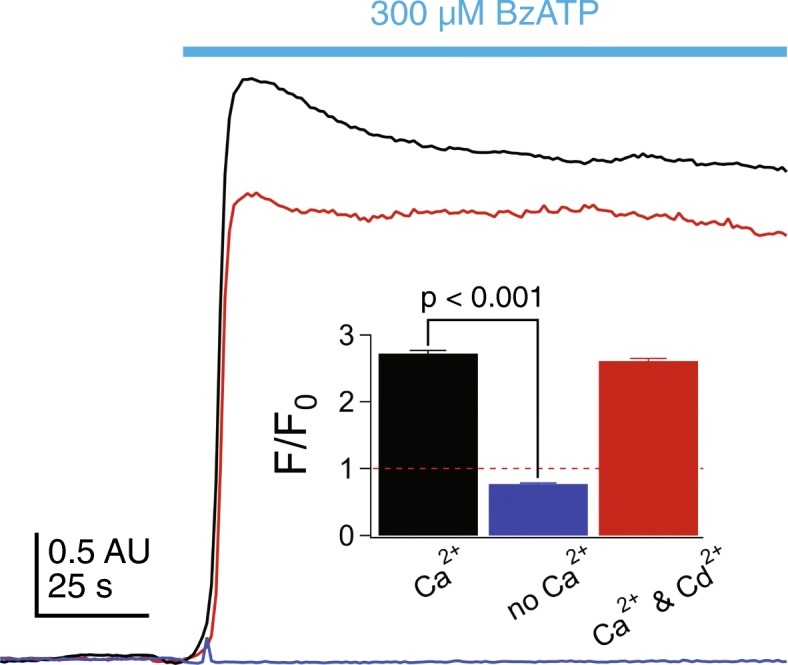
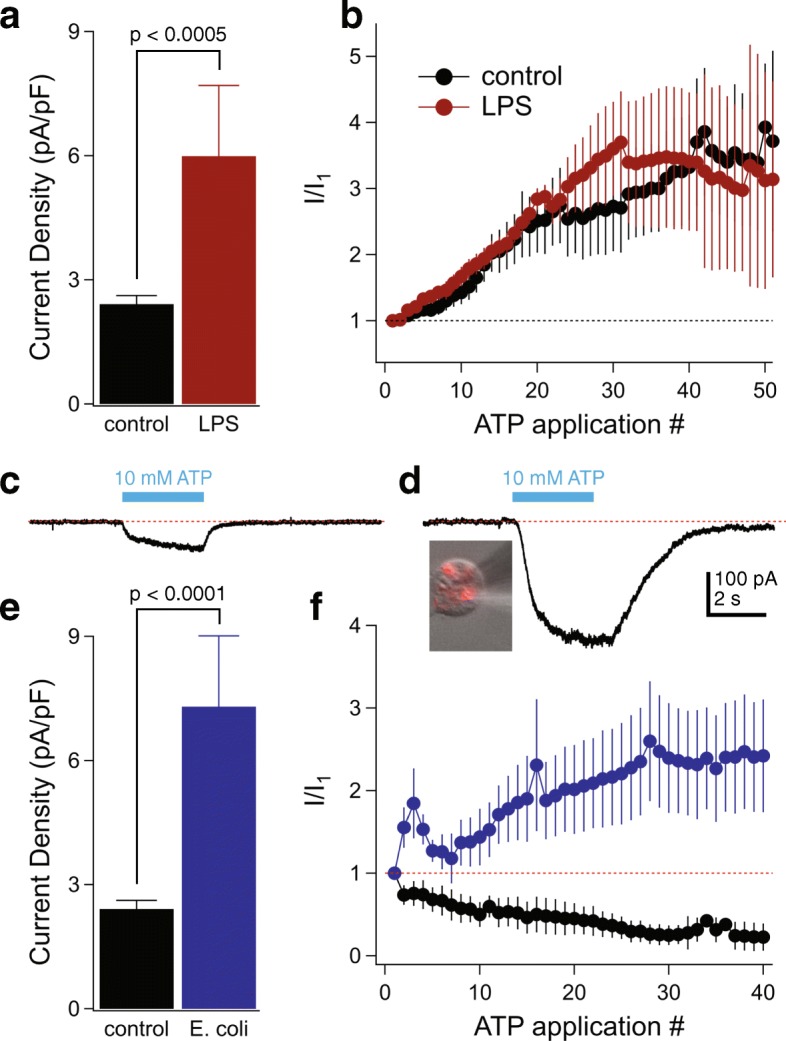
We used patch-clamp electrophysiology to record ATP-gated current in cultured primary human microglia; confocal microscopy to measure membrane blebbing; fluorescence microscopy to demonstrate membrane permeabilization, caspase-1 activation, phosphatidylserine translocation, and phagocytosis; and kit-based assays to measure cytokine levels.
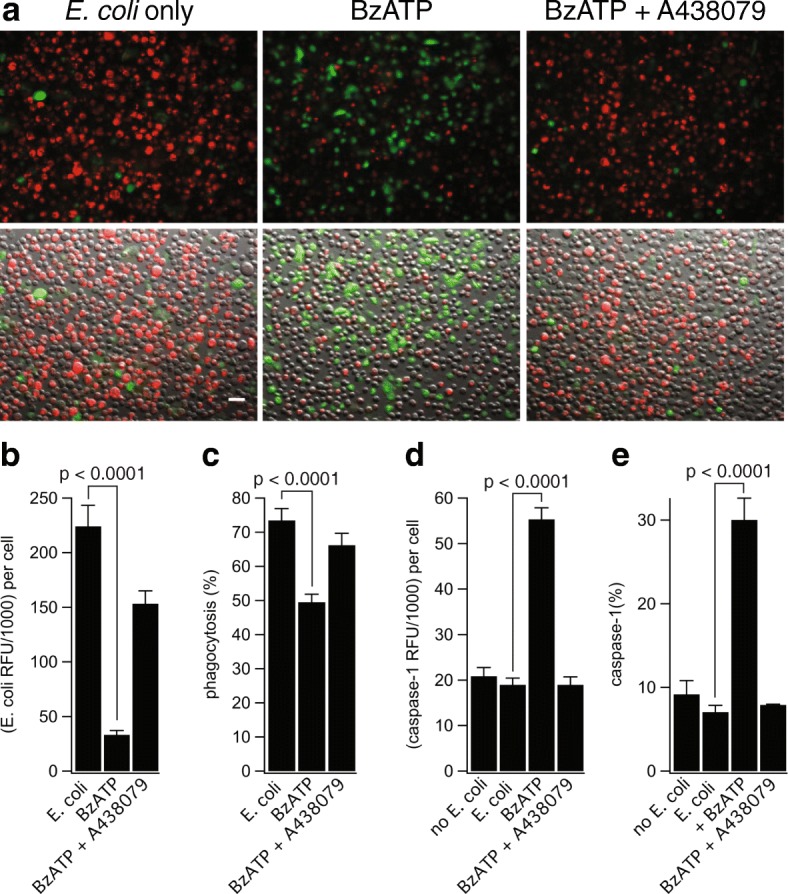
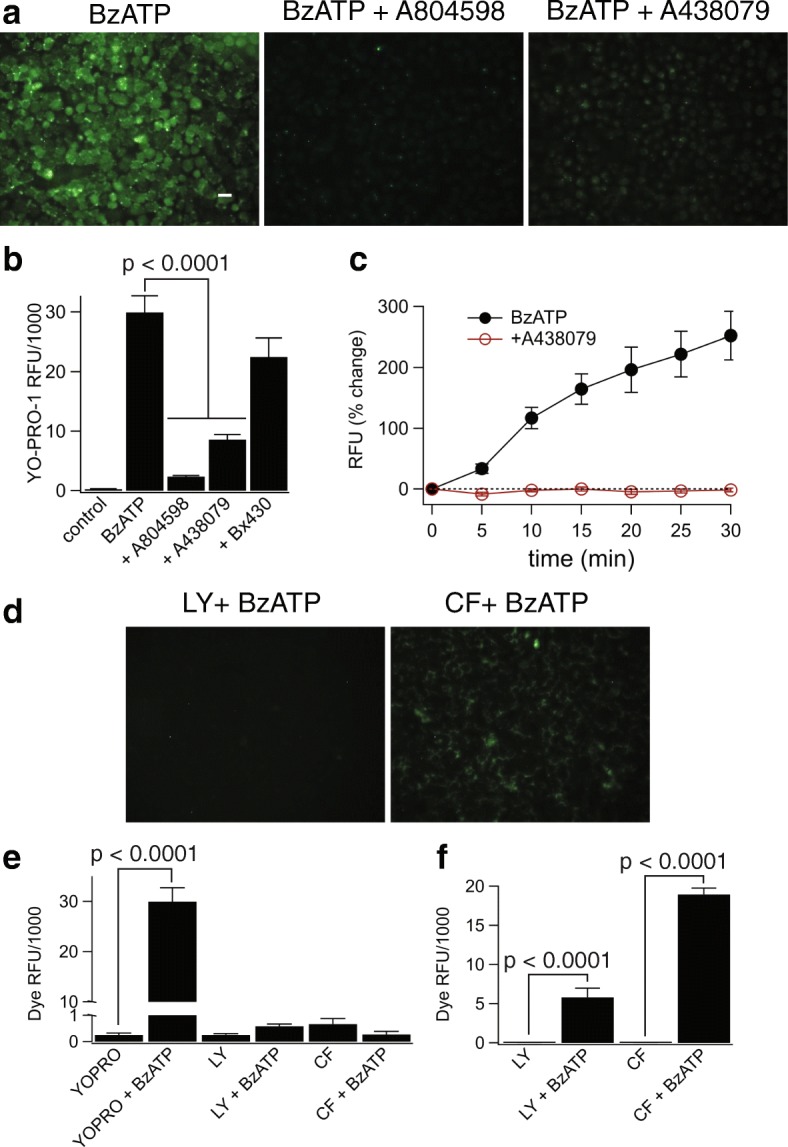
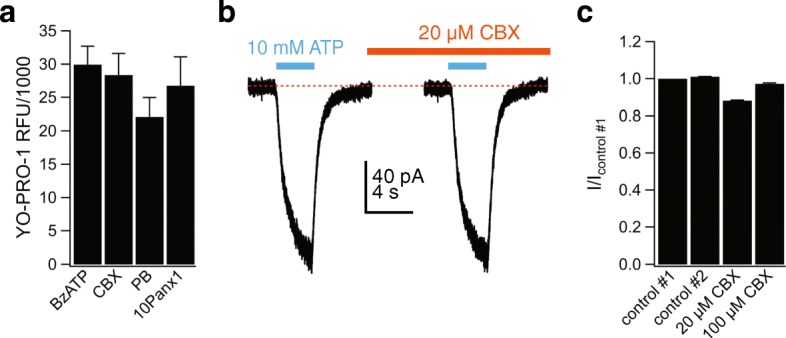
We found that ATP-gated inward currents facilitated with repetitive applications of ATP as expected for current through P2X7Rs and that P2X7R antagonists inhibited these currents. P2X7R antagonists also prevented the ATP-induced uptake of large cationic fluorescent dyes whereas drugs that target pannexin-1 channels had no effect. In contrast, ATP did not induce uptake of anionic dyes. The uptake of cationic dyes was blocked by drugs that target Cl channels. Finally, we found that ATP activates caspase-1 and inhibits phagocytosis, and these effects are blocked by both P2X7R and Cl channel antagonists.
Our results demonstrate that primary human microglia in culture express functional P2X7Rs that stimulate both ATP-gated cationic currents and uptake of large molecular weight cationic dyes. Importantly, our data demonstrate that hypotheses drawn from work on murine immune cells accurately predict the essential role of P2X7Rs in a number of human innate immune functions such as phagocytosis and caspase-1 activation. Therefore, the P2X7R represents an attractive target for therapeutic intervention in human neuroinflammatory disorders.
三磷酸腺苷门控离子型 P2X7 受体(P2X7R)具有独特的功能,既能作为小阳离子通道,又能触发质膜的通透性。在鼠小胶质细胞中,P2X7R 介导的通透性是小胶质细胞激活、增殖和白细胞介素-1β释放的基础。然而,P2X7R 在原代成人小胶质细胞中的作用还知之甚少。
我们使用膜片钳电生理学记录培养的原代人小胶质细胞中 ATP 门控电流;使用共聚焦显微镜测量膜泡形成;使用荧光显微镜显示膜通透性、半胱天冬酶-1 激活、磷脂酰丝氨酸易位和吞噬作用;使用试剂盒测定细胞因子水平。
我们发现,ATP 门控内向电流如预期的那样,通过 P2X7R 促进重复应用 ATP,并且 P2X7R 拮抗剂抑制这些电流。P2X7R 拮抗剂也阻止了 ATP 诱导的大阳离子荧光染料的摄取,而针对 pannexin-1 通道的药物则没有作用。相反,ATP 不能诱导阴离子染料的摄取。氯通道靶向药物阻断阳离子染料的摄取。最后,我们发现 ATP 激活半胱天冬酶-1 并抑制吞噬作用,这些作用被 P2X7R 和氯通道拮抗剂阻断。
我们的结果表明,培养的原代人小胶质细胞表达功能性 P2X7R,刺激 ATP 门控阳离子电流和大分子量阳离子染料的摄取。重要的是,我们的数据表明,从对鼠免疫细胞的研究中得出的假说准确地预测了 P2X7R 在人类固有免疫功能中的许多重要作用,如吞噬作用和半胱天冬酶-1 激活。因此,P2X7R 是治疗人类神经炎症性疾病的一个有吸引力的靶点。