Fernández-Castaño Romera Marcos, Lou Xianwen, Schill Jurgen, Ter Huurne Gijs, Fransen Peter-Paul K H, Voets Ilja K, Storm Cornelis, Sijbesma Rint P
SupraPolix BV , Horsten 1 , 5612 AX , Eindhoven , The Netherlands.
J Am Chem Soc. 2018 Dec 19;140(50):17547-17555. doi: 10.1021/jacs.8b09289. Epub 2018 Dec 6.
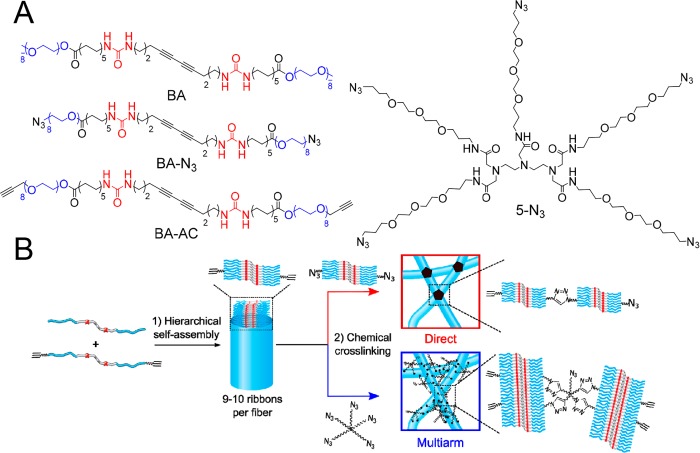
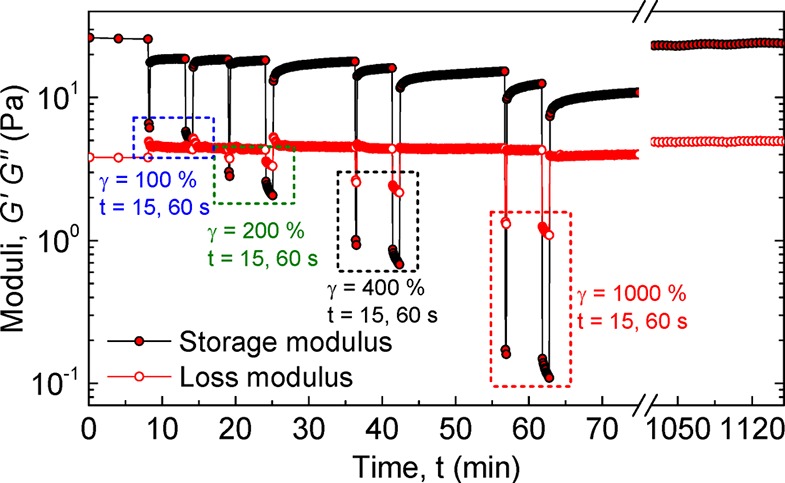
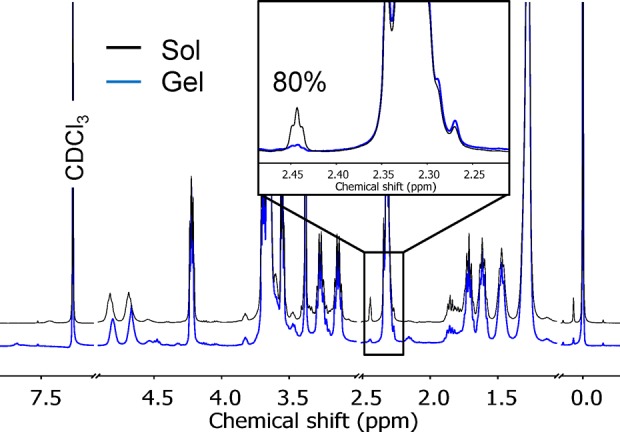
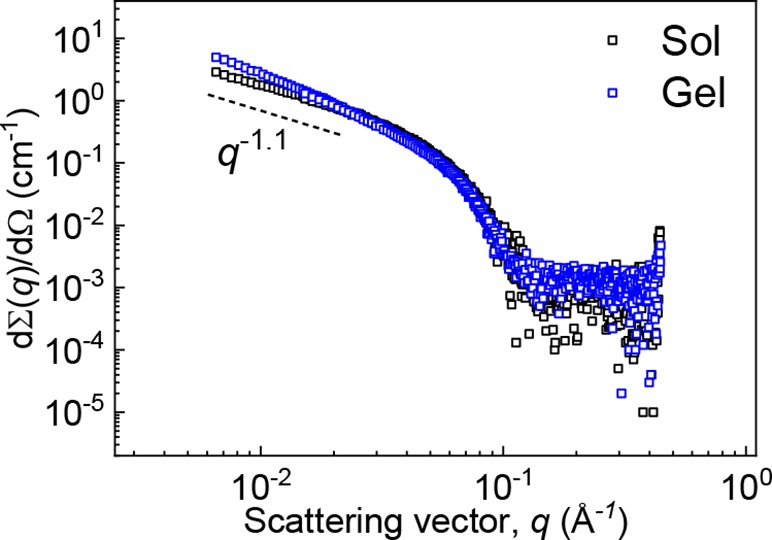
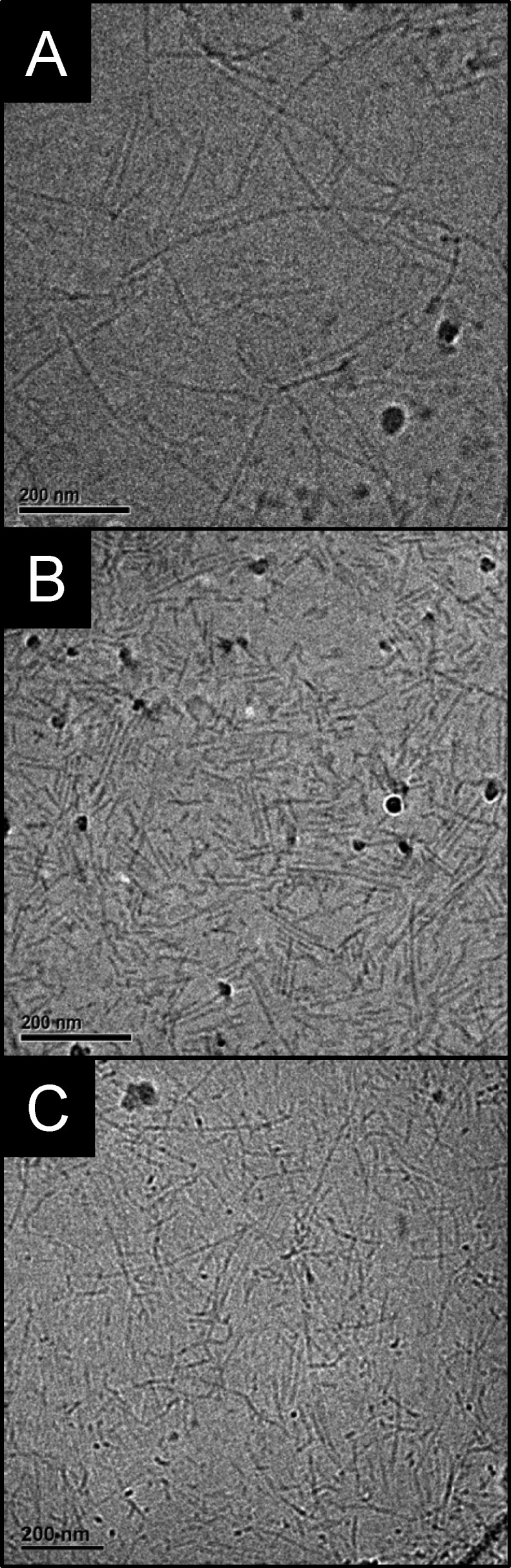
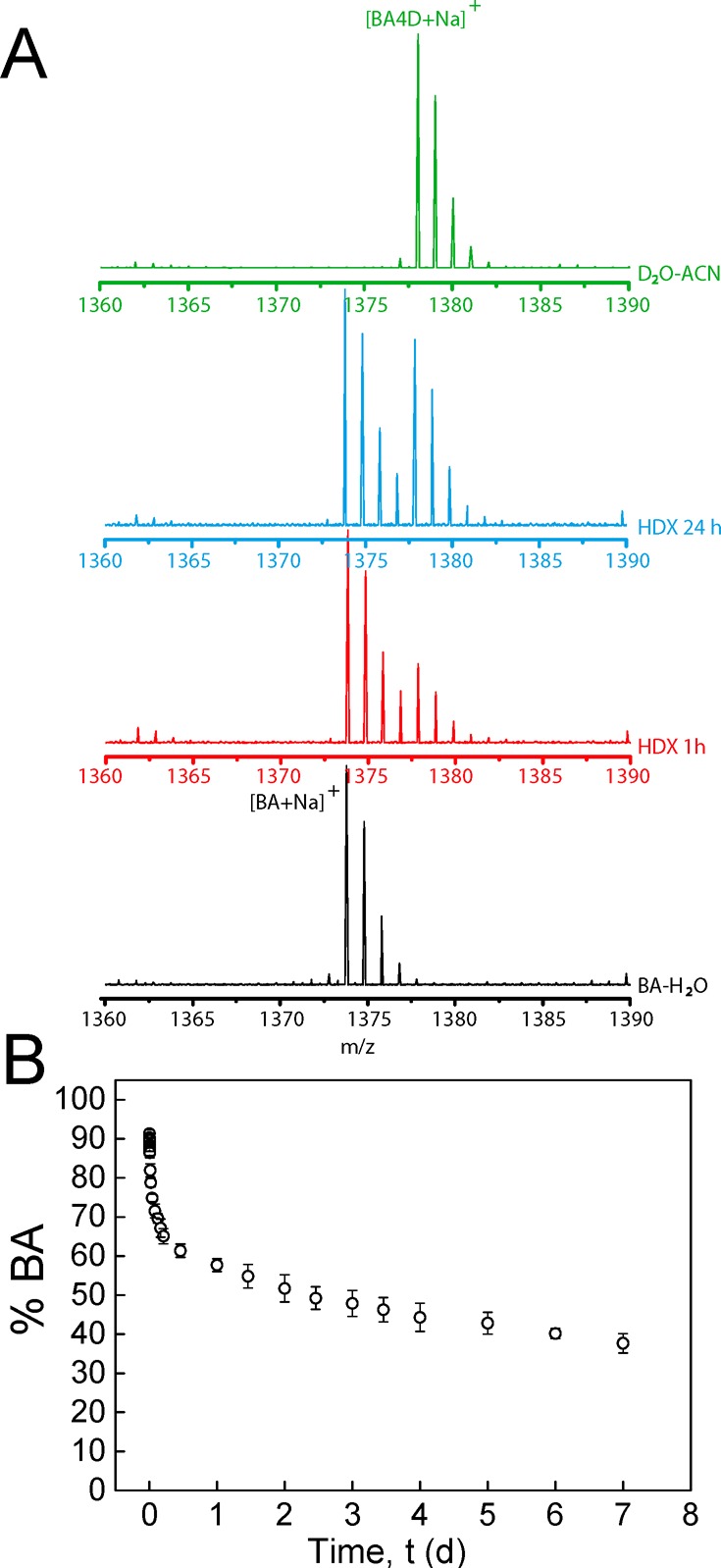
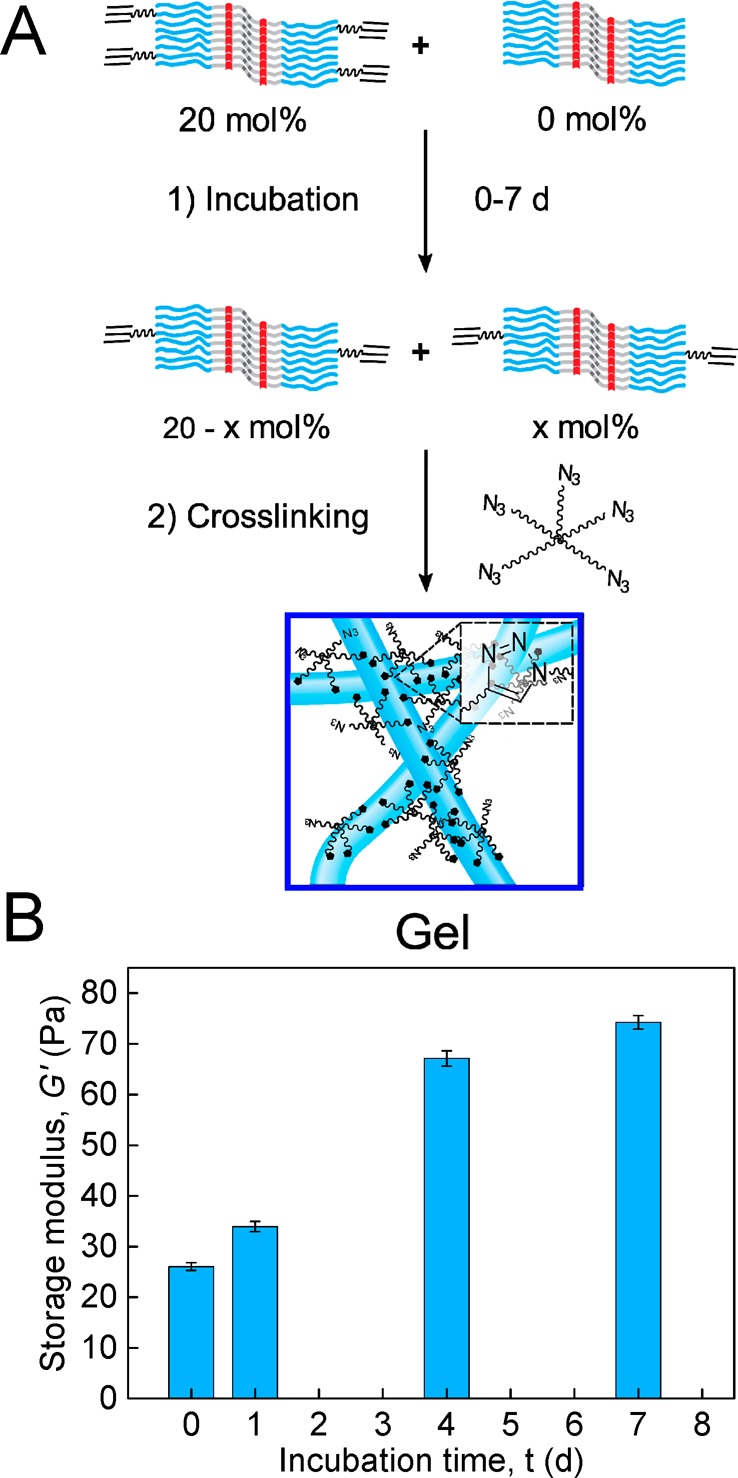
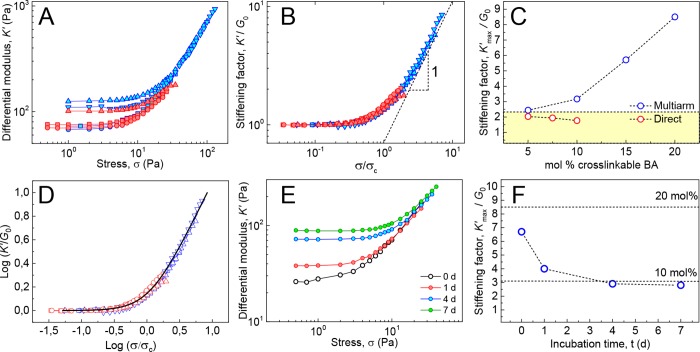
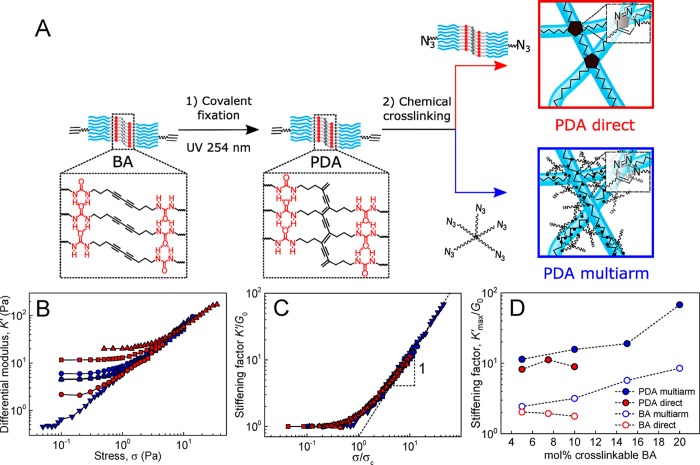
The cytoskeleton is a highly adaptive network of filamentous proteins capable of stiffening under stress even as it dynamically assembles and disassembles with time constants of minutes. Synthetic materials that combine reversibility and strain-stiffening properties remain elusive. Here, strain-stiffening hydrogels that have dynamic fibrous polymers as their main structural components are reported. The fibers form via self-assembly of bolaamphiphiles (BA) in water and have a well-defined cross-section of 9 to 10 molecules. Fiber length recovery after sonication, H/D exchange experiments, and rheology confirm the dynamic nature of the fibers. Cross-linking of the fibers yields strain-stiffening, self-healing hydrogels that closely mimic the mechanics of biological networks, with mechanical properties that can be modulated by chemical modification of the components. Comparison of the supramolecular networks with covalently fixated networks shows that the noncovalent nature of the fibers limits the maximum stress that fibers can bear and, hence, limits the range of stiffening.
细胞骨架是一个高度适应性的丝状蛋白质网络,即使它在数分钟的时间常数内动态组装和拆卸,也能在压力下变硬。兼具可逆性和应变硬化特性的合成材料仍然难以实现。在此,报道了以动态纤维聚合物为主要结构成分的应变硬化水凝胶。这些纤维通过双性离子两亲分子(BA)在水中的自组装形成,具有明确的由9至10个分子组成的横截面。超声处理后的纤维长度恢复、氢/氘交换实验和流变学证实了纤维的动态性质。纤维的交联产生了应变硬化、自愈合的水凝胶,其紧密模拟生物网络的力学性能,其机械性能可通过对成分进行化学修饰来调节。将超分子网络与共价固定网络进行比较表明,纤维的非共价性质限制了纤维能够承受的最大应力,因此也限制了硬化范围。