Favier Leslie A, Ting Tracy V, Modi Avani C
Cincinnati Children's Hospital Medical Center, Department of Pediatric Rheumatology, 3333 Burnet Ave, MLC 4010, Cincinnati, OH, 45229, USA.
Cincinnati Children's Hospital Medical Center, Behavioral Medicine and Clinical Psychology, Center for Adherence and Self-Management, 3333 Burnet Ave, MLC 7039, Cincinnati, OH, 45229, USA.
Pediatr Rheumatol Online J. 2018 Nov 22;16(1):75. doi: 10.1186/s12969-018-0292-3.
Non-adherence is a prevalent and modifiable issue in juvenile idiopathic arthritis (JIA) that currently lacks provider-based intervention. Education surrounding disease status is one way in which families remain engaged in their care. Musculoskeletal ultrasound is one such form of demonstrative, real-time education that may impact the way patients and caregivers self-manage their disease. The aims of this study are to 1) assess the feasibility, acceptability and perceived usefulness of musculoskeletal ultrasound as a non-adherence intervention tool and 2) to examine changes in methotrexate adherence in adolescents with JIA following the ultrasound.
Eight adolescents with polyarticular or extended oligoarticular JIA and their caregivers completed this 12 week study. A within subject design was used to compare baseline and post-intervention adherence, quality of life and disease activity indices. Adherence measures included electronic measurement of methotrexate in addition to self-reported adherence questionnaires. The ultrasound intervention included a one-time, rheumatologist provided, educational examination of three or more currently or historically active joints.
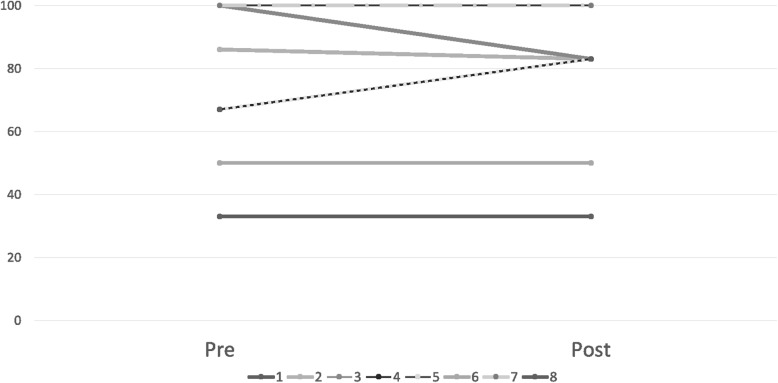
The ultrasound intervention was found to be both feasible and acceptable. One hundred percent of eligible participants completed the ultrasound intervention. The ultrasound was well received by patients and caregivers, with most believing this to be a helpful tool. Baseline adherence was 75.3% among participants, with half of the participants being classified as non-adherent. Electronically measured and self-reported adherence measures did not show significant changes during the post-intervention period. Two participants improved, four participants maintained, and two participants decreased adherence. On ultrasound, 18/27 (66.7%) of the examined joints displayed abnormalities, with 63% being discrepant and additive to the rheumatologist's physical examination.
While our intervention did not show any changes in adherence, quality of life or disease activity indices in this proof-of-concept trial, the intervention does show promise in acceptability measures and merits future study in a more robust trial design. An additional study benefit was that the musculoskeletal ultrasound intervention was able to demonstrate subclinical disease, leading to clinically impactful therapeutic changes in several participants.
不依从是幼年特发性关节炎(JIA)中一个普遍且可改变的问题,目前缺乏基于医疗服务提供者的干预措施。围绕疾病状况的教育是家庭持续参与其护理的一种方式。肌肉骨骼超声是一种示范性的实时教育形式,可能会影响患者和护理人员自我管理疾病的方式。本研究的目的是:1)评估肌肉骨骼超声作为一种不依从干预工具的可行性、可接受性和感知有用性;2)检查超声检查后JIA青少年甲氨蝶呤依从性的变化。
八名患有多关节型或扩展性少关节型JIA的青少年及其护理人员完成了这项为期12周的研究。采用受试者内设计比较基线和干预后的依从性、生活质量和疾病活动指数。依从性测量包括除自我报告的依从性问卷外,对甲氨蝶呤进行电子测量。超声干预包括由风湿病学家提供的一次性对三个或更多当前或既往有活动的关节进行的教育性检查。
发现超声干预是可行且可接受的。百分之百的符合条件的参与者完成了超声干预。患者和护理人员对超声的接受度很高,大多数人认为这是一个有用的工具。参与者的基线依从性为75.3%,其中一半参与者被归类为不依从。在干预后期间,电子测量和自我报告的依从性测量均未显示出显著变化。两名参与者的依从性提高,四名参与者维持不变,两名参与者的依从性下降。在超声检查中,18/27(66.7%)的检查关节显示异常,其中63%与风湿病学家的体格检查结果不一致且为额外发现。
虽然在这项概念验证试验中,我们的干预在依从性、生活质量或疾病活动指数方面未显示出任何变化,但该干预在可接受性测量方面确实显示出前景,值得在更强大的试验设计中进行未来研究。另一项研究益处是,肌肉骨骼超声干预能够显示亚临床疾病,导致几名参与者在临床上有意义的治疗改变。